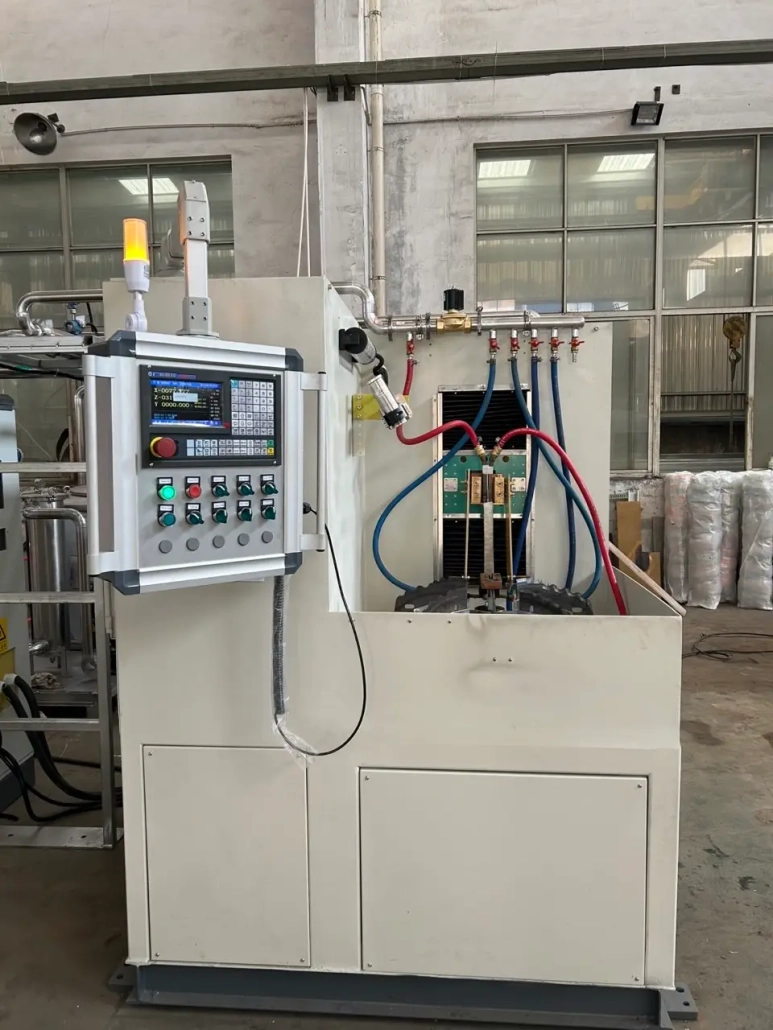
آلة تصلب الشفرات بالتردد التلقائي
Ⅰ. شاهد آلة تصلب الشفرة أثناء التشغيل
The two videos show the same induction hardening system processing two different blade designs.
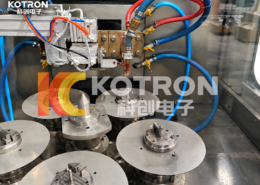
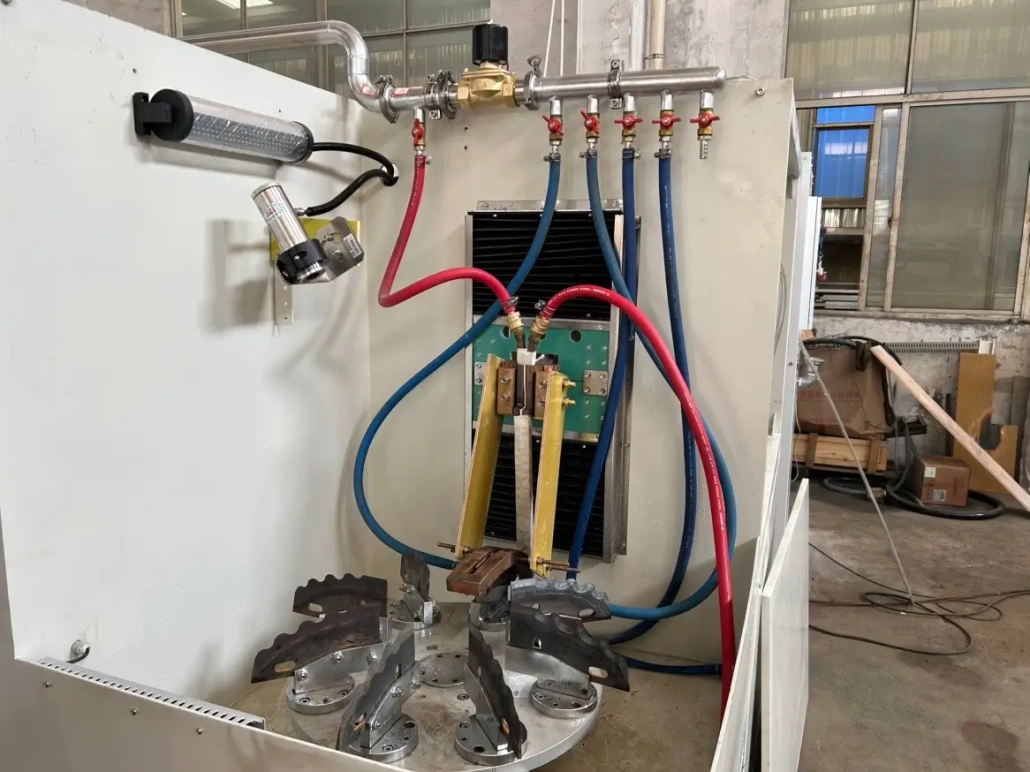
The first application uses a dedicated fixture and compact inductor for an irregular-profile cutting blade. Several blades are positioned in the fixture for repeated edge hardening.
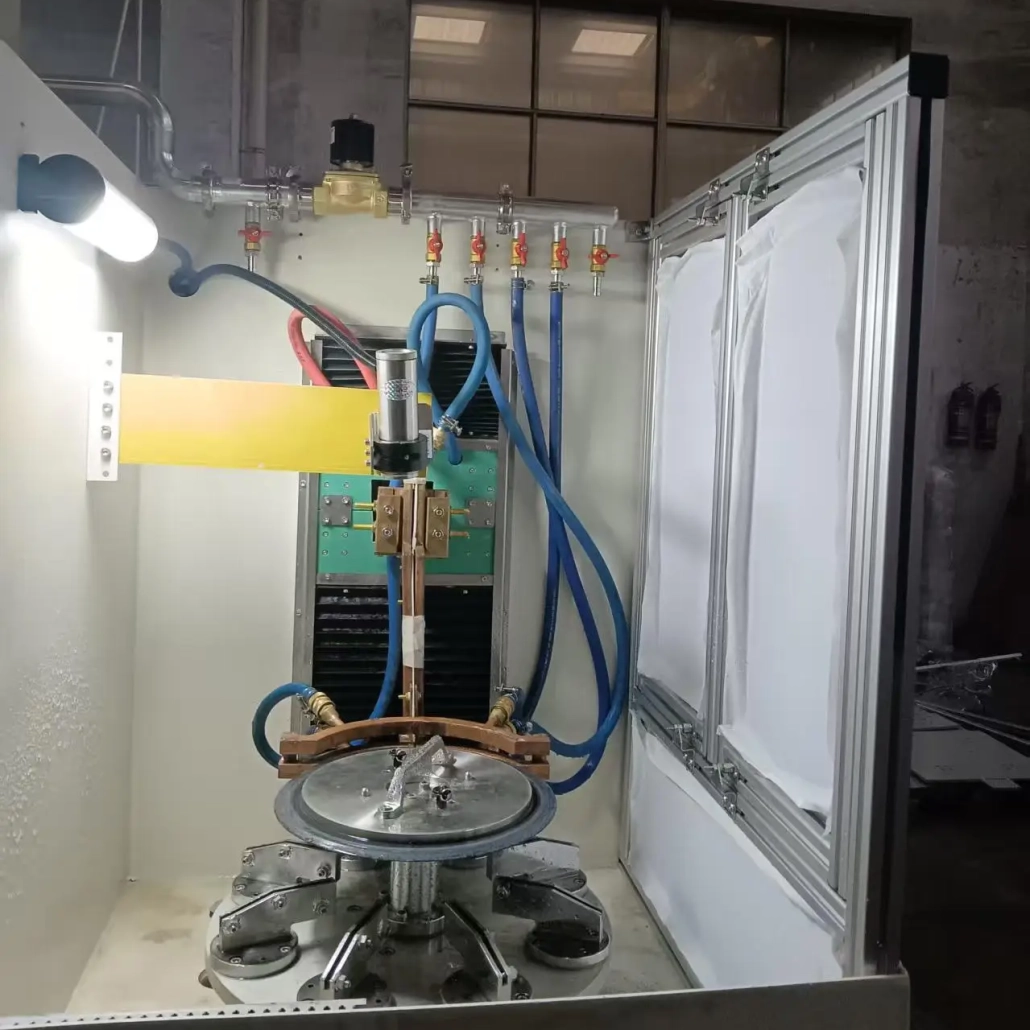
The second application uses a different support arrangement for a circular blade. Its outer edge passes through an inductor positioned around the blade edge while the workpiece rotates through the heating zone.
The machine platform is the same. The tooling and hardening method change with the blade.
Irregular Blade Induction Hardening Machine | Custom Hardening Solution
Circular Blade Induction Hardening Machine | Edge Hardening Process
Ⅱ. Two Blade Profiles, Two Hardening Approaches
يوضح هذان التطبيقان لماذا لا يمكن التعامل مع تصلب الشفرة كعملية قياسية واحدة.
للشفرة غير النظامية, تتبع حافة القطع محيطًا محددًا. يتم وضع قطعة العمل في أداة تثبيت مخصصة بحيث تظل منطقة الحافة المطلوبة في موضعها الصحيح بالنسبة للمحرِّض.
مغو مدمج يركز التسخين على منطقة القطع, بينما يتم وضع ترتيب التبريد بالقرب من منطقة التسخين. وهذا يسمح بتبريد الحافة الساخنة مباشرة بعد دورة التسخين المطلوبة.
تتطلب الشفرة الدائرية حلاً مختلفًا.
يتم دعمه حول المركز بينما تمر الحافة الخارجية عبر محث متوضع على جانبي حافة الشفرة. لا يقوم المحث بتثبيت قطعة العمل ميكانيكيًا; a controlled gap is maintained between the blade and the heating element.
As the blade rotates, the circumference passes continuously through the same heating zone.
The two processes are different, but the engineering principle is the same:
Blade profile → تركيبات → اللفة → Movement → Heating zone → البرودة
Ⅲ. Why Use Localized Edge Hardening?
The cutting edge and the blade body do different jobs.
After grinding, the cutting edge has a relatively thin geometry and is the part directly exposed to friction, wear and repeated contact during operation. It therefore requires sufficient hardness and wear resistance to maintain its cutting performance.
The blade body, لكن, still needs suitable toughness for mechanical loading, vibration or impact.
التسخين بالحث allows the thermal input to be concentrated on the selected edge area instead of heating the complete blade in the same way.
For blade applications, the objective is not simply to increase hardness across the whole workpiece. The process is developed around the area that actually needs hardening.
Ⅳ. Custom Fixture and Inductor Design
The fixture and ملف الحث are two of the most important parts of a blade hardening solution.
A blade with an irregular edge cannot be positioned in the same way as a circular blade. Their heating paths, support points and available space around the cutting edge are different.
The fixture establishes the relationship between the blade and the induction coil during processing. اعتمادا على الشغل, it may need to provide:
يتم بعد ذلك تصميم ملف الحث حول المنطقة التي يجب تسخينها.
بالنسبة للشفرة غير المنتظمة الموضحة في الفيديو الأول, يتركز المحث حول منطقة تسخين حافة صغيرة نسبيًا.
للشفرة الدائرية, يحيط المحث بالحافة الخارجية من كلا الجانبين بينما تدور قطعة العمل عبر منطقة التسخين.
لا يوجد مثبت عالمي للشفرة أو ملف تحريضي مناسب لكل هندسة شفرة.
Ⅴ. مصممة لتصلب الشفرة دفعة واحدة
النظام مخصص لإنتاج الشفرة بشكل متكرر بدلاً من التسخين اليدوي العرضي.
في التطبيق الأول, يتم وضع عدة شفرات في تركيبات مخصصة. يتيح ذلك إنشاء العلاقة بين كل حافة القطع وموضع التصلب بواسطة الأدوات بدلاً من إعادة إنشائها يدويًا لكل جزء.
لـ المعالجة الحرارية دفعة, هذا الوضع المتكرر مهم.
يمكن أن تؤثر التغييرات الصغيرة في المسافة أو الاتجاه بين حافة القطع وملف الحث على حالة التسخين. تساعد التركيبات المصممة لهذا الغرض على تقليل هذا الاختلاف من قطعة عمل إلى أخرى.
يمكن تطوير ترتيب الإنتاج النهائي وفقًا لذلك:
لا يلزم أن يظل تخطيط المعدات متطابقًا لكل مشروع نصلي.
Ⅵ. الطاقة الحثية الرقمية والتحكم في العمليات
يجب أن يتطابق تحديد المواقع المتكرر مع التسخين التعريفي المتحكم فيه.
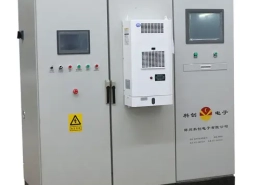
The digital induction power system can display and monitor operating information such as:
These operating values help the operator follow the heating process and check whether the equipment is running within the established production condition.
Different blade geometries may require different heating settings. The values shown in the video are therefore the real-time operating condition of that particular process, not universal specifications for every blade.
Additional recipe management, إنذار, data-recording or automation functions can be configured according to the final control system required for the project.
Ⅶ. A Hardening Solution Configured Around Your Blade
The two blade applications shown on this page were processed on the same equipment platform, but they do not use the same tooling or heating method.
That is the point of the system.
For a new blade, the process starts with the workpiece rather than with a fixed machine specification.
We evaluate factors such as:
من هذه المعلومات, التركيب, ملف الحث, موقف التدفئة, movement and quenching arrangement can be developed together.
Some new products may require only a different fixture and inductor. Others may require changes to the workpiece support, motion or production sequence.
The machine is therefore better understood as a proven blade-hardening platform that can be adapted to different cutting-tool applications.
Ⅷ. What We Need From Your Blade
A workpiece drawing is usually the best starting point for a blade hardening project.
يرجى تقديم المعلومات التالية حيثما كانت متاحة:
للشفرات غير المنتظمة, يعد تحديد المنطقة الصلبة المطلوبة مباشرة على الرسم مفيدًا بشكل خاص.
وبناء على هذه المعلومات, يمكننا تقييم طريقة العمل, ملف الحث, عملية التسخين, ترتيب التبريد وتكوين الإنتاج معا.
Ⅸ. الأسئلة المتداولة
انقر فوق سؤال لتوسيع الإجابة.
يمكن لآلة واحدة معالجة ملفات تعريف الشفرة المختلفة?
هل تحتاج كل شفرة إلى ملف تحريضي مختلف؟?
لا يمكن إلا أن تصلب حافة القطع?
What determines the hardened depth?
Can the system be automated further?
Request a Custom Hardening Solution for Your Blade
Send your blade drawing and requirements. We will evaluate the fixture, ملف الحث, heating process and quenching arrangement together.
Send Your Blade Drawing →
Request a Custom Hardening Solution