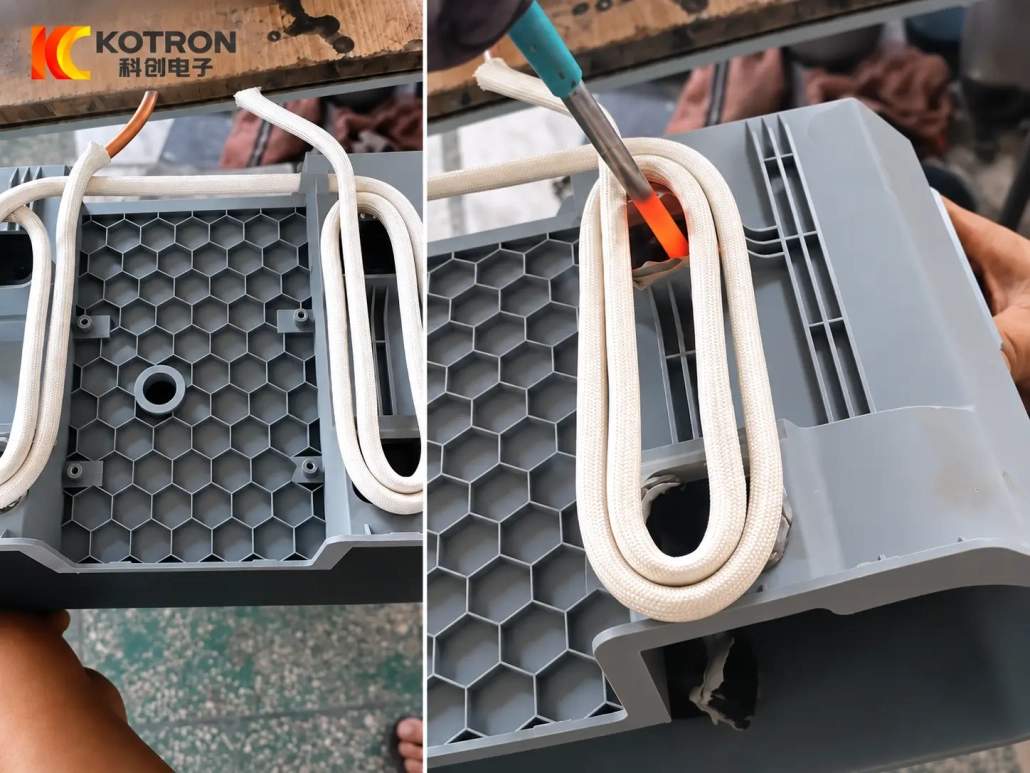
Máquina de aquecimento por indução para remoção de insertos de metal de peças plásticas
Ⅰ. See Metal Insert Removal from Plastic Using Induction Heating
Metal Insert Removal from Plastic
Using Induction Heating
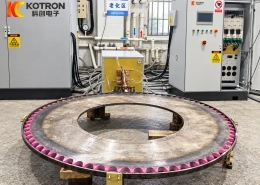
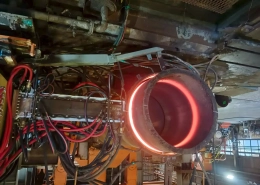
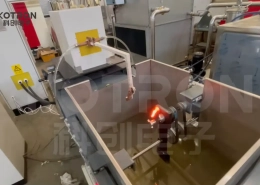
The video shows aquecimento por indução localizado of a metal component embedded in a plastic part. The metal is heated first, while the adjacent plastic receives heat mainly through conduction from the insert.
Once the local interface reaches a suitable condition, the insert can be removed with an appropriate mechanical tool or fixture.
The required heating cycle depends on the metal insert, plastic material, insertion method, embedded depth and removal requirement.
Ⅱ. Which Plastic Parts and Metal Inserts Are Suitable?
This process is intended for assemblies where a conductive metal insert is embedded, molded or mechanically retained in a plastic component and can be accessed by an induction coil.
Typical applications may include:
•Threaded brass or steel inserts
•Molded-in metal inserts
•Threaded bushings
•Embedded metal fittings
•Similar conductive inserts used in molded plastic components
O plastic material is equally important. Thermoplastics can soften when heated, but the acceptable temperature window varies considerably between materials and part designs.
If the plastic is heat-sensitive, reinforced, filled, or must remain usable after removal, the process needs to be evaluated on the actual component.
The insert retention method also matters. An insert held by knurls, serrations, undercuts or other mechanical locking features can require a different heating and extraction strategy from a lightly retained fitting.
Ⅲ. How Localized Induction Heating Assists Removal
The purpose of induction heating in this application is to create a controlled local thermal condition around the metal-plastic interface.
Uma sequência típica é:
Posicionamento da peça → Induction Heating of the Metal Insert → Local Heat Transfer to the Plastic → Mechanical Extraction
Because the electromagnetic field couples primarily with the conductive metal insert, energy can be concentrated near the area that needs to be released rather than applied to the complete plastic component.
This does not mean that the surrounding plastic remains cold. Heat still conducts outward from the insert, and that thermal exposure must be controlled according to the polymer and the condition required after removal.
For rework applications, the objective may be to release the insert while limiting unnecessary deformation around the hole or surrounding surface.
For recycling applications, preserving the appearance of the plastic may be less important than separating the metal efficiently before further material processing.
Ⅳ. Indutor, Fixture and Extraction Tooling
A practical insert-removal system depends on more than the induction power supply.
O indutor has to match the insert position, geometry and available access. A small threaded insert close to the surface may require a different coil from a larger metal fitting embedded deeper in a molded housing.
Projeto da bobina typically considers:
•Insert size and material
•Embedded depth
•Available clearance around the insert
•Nearby metal features
•Plastic-part geometry
•Required heating rate
O luminária holds the plastic component in a defined position while providing access for both the inductor and extraction mechanism.
O extraction method depends on how the insert is installed and the direction in which it can be removed. Suitable methods may include pulling, unscrewing, pushing or ejecting, and fixture-assisted axial extraction.
Para produção em série, heating and extraction can be coordinated within one workstation rather than treated as two unrelated operations.
Where several insert positions are present on one component, the tooling and movement sequence can be arranged around those locations.
Ⅴ. Rework and Recycling Applications
Localized insert removal can serve two different production needs.
Manufacturing Rework
A molded component may need to be recovered because an insert, assembly operation or later manufacturing step does not meet specification.
If the plastic component is intended to remain usable, heating and extraction need to be controlled around the acceptable condition of the hole, surrounding material and visible surface.
Recycling and Material Separation
Plastic parts that contain embedded metal inserts may need metal-plastic separation before the plastic is reprocessed or recycled.
Induction heating can be used as part of that separation process when the metal insert and polymer combination respond appropriately to localized heating.
Whether the plastic or the extracted metal can be reused should be determined from the actual product and quality requirements rather than assumed from the removal process alone.
Ⅵ. Configuração de Máquina e Controle de Processo
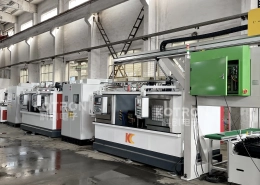
Uma induction heating system for metal insert removal can be configured as a manual, semi-automatic or automated workstation according to the required production method.
The application-specific parts of the system normally include:
•Fonte de alimentação de indução
•Customized induction coil
•Fixação da peça de trabalho
•Positioning mechanism
•Mechanical extraction mechanism
•Sistema de arrefecimento
PLC/HMI control, automated loading, multiple insert positions or other production-line functions can be added where required.
Power and frequência de operação are selected together with the metal insert material and dimensions, design da bobina, required heating rate and the thermal limits of the surrounding plastic.
The operating cycle may control heating time, potência de saída, posição, extraction timing and the sequence between multiple inserts.
The important point is that heating and removal are developed as one process. Selecting an induction power supply alone does not define whether an insert can be removed successfully.
Ⅶ. What Determines the Right Insert Removal System?
The complete metal-plastic assembly should be evaluated before the machine configuration is selected.
| Informações do projeto | Usado para determinar |
|---|---|
| Plastic part drawing or sample | Machine and fixture concept |
| Plastic material | Allowable local thermal exposure |
| Metal insert material | Induction-heating response |
| Insert dimensions | Coil and power requirements |
| Embedded depth | Heating and extraction strategy |
| Insert position and orientation | Coil access and machine layout |
| Insert installation / retention method | Required release and extraction method |
| Number of inserts per part | Process sequence and positioning |
| Required removal direction | Extraction tooling |
| Whether the plastic must remain reusable | Acceptable heating and deformation limits |
| Requisitos de produção | Manual, semi-automatic or automatic configuration |
| Linha de produção existente | Integração de equipamentos |
If the plastic part must be reused, it is also useful to define whether local deformation, surface marks or changes around the insert hole are acceptable.
For parts with several insert designs, drawings can be reviewed together to determine whether one machine can use interchangeable coils, acessórios ou programas de processo.
Ⅷ. Perguntas frequentes
Clique em uma pergunta para expandir a resposta.
Can induction heating remove threaded inserts from plastic?
It can be suitable when the insert is electrically conductive, accessible to an induction coil and the surrounding plastic has an appropriate thermal response. The retention method and extraction direction also need to be considered.
Can the plastic part be reused after the insert is removed?
Possivelmente, but this depends on the polymer, local temperature, insert geometry, retention features and extraction force. If reuse is required, that condition should be defined before the heating process is developed.
Can brass and steel inserts use the same process?
They should not automatically be treated as equivalent. Metal properties, insert geometry and coil coupling can change the heating response, so process settings and possibly the inductor may need to change.
Is this the same as induction heat staking?
Não. Induction heat staking or insert heating is commonly used to install a heated metal insert into thermoplastic. This application uses localized induction heating to assist the removal of an existing insert.
Send Us Your Plastic Part and Insert Details
Para uma avaliação inicial, por favor forneça:
Plastic Part Drawing or Photos + Plastic Material + Insert Material + Insert Dimensions + Insert Position + Removal Requirement
Where available, também inclui:
•Insert installation or retention method
•Number of inserts per part
•Whether the plastic must remain reusable
•Acceptable local deformation, if defined
•Volume de produção necessário
•Current removal method
A partir desses detalhes, a potência de indução, frequência, bobina, luminária, extraction method and automation configuration can be evaluated together.