آلة التسخين التعريفي للألواح الفولاذية
Ⅰ. Steel Plate Through Heating in Real Production
The two videos on this page show two separate steel plate through-heating projects with different equipment layouts.
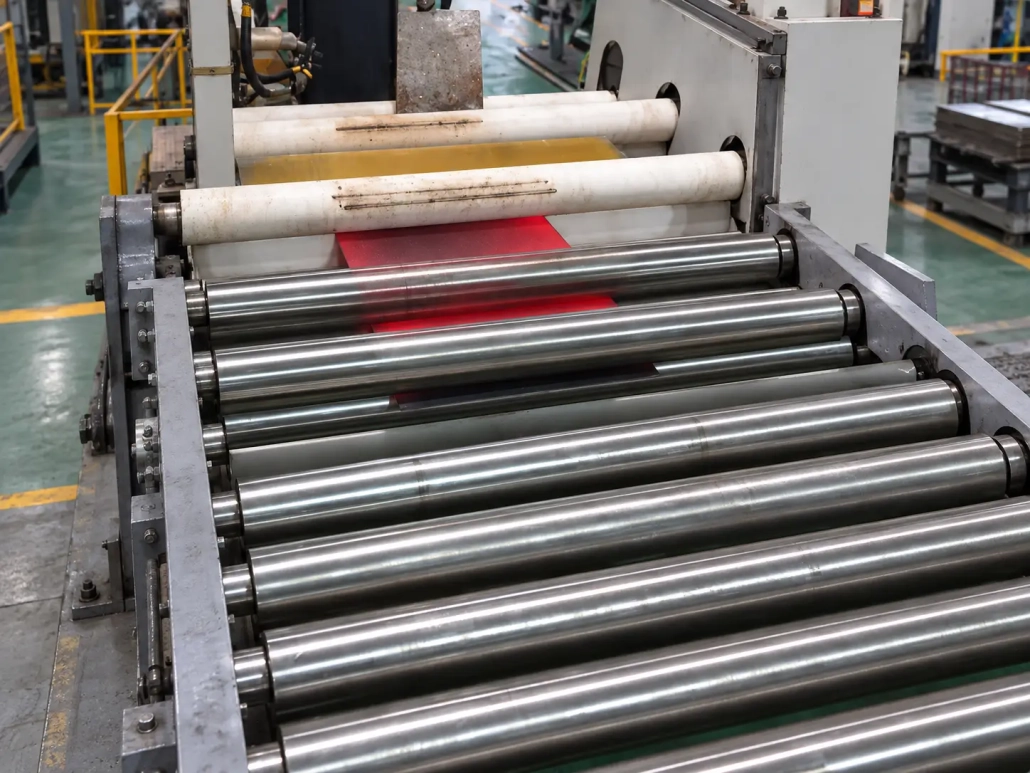
Continuous Roller Conveyor Heating Line
A heated steel plate moves through the equipment on a roller conveyor. The plate remains in motion during production, so conveying speed becomes part of the heating process.
For this type of line, plate dimensions, available heating power, effective heating length and line speed have to be considered together.
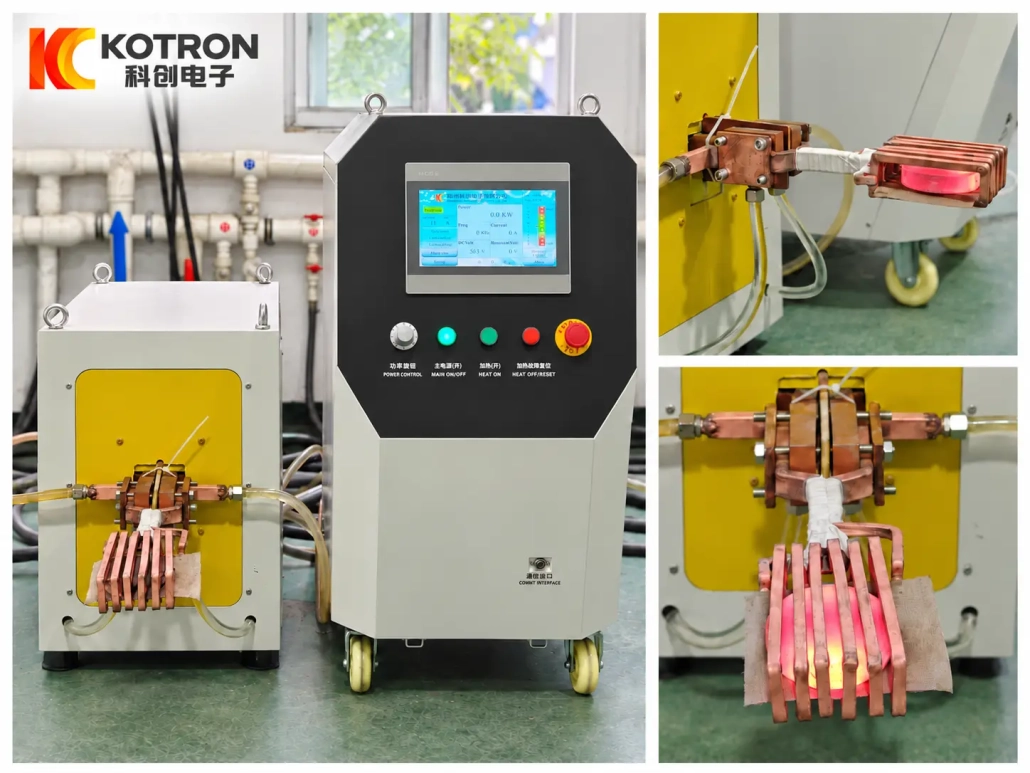
60 kW Steel Plate Through-Heating System
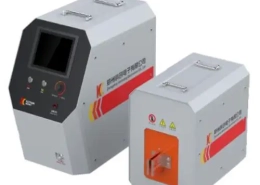
This separate project uses a 60 kW induction heating system with its own power/control unit and matched inductor arrangement.
ثم يقوم 60 kW rating is a real project configuration. It should not be treated as a general recommendation for a particular plate thickness because the actual heating requirement also depends on material, عرض, target temperature and heating cycle.
Ⅱ. What Is Steel Plate Induction Through Heating?
Steel plate through heating is intended to develop the required thermal condition through the plate thickness rather than heating only a shallow surface region.
التسخين بالحث generates heat directly in electrically conductive material. The resulting temperature distribution depends on several factors, including operating frequency, وقت التسخين, خصائص المواد, plate dimensions and inductor design.
A red-hot surface alone does not confirm that the required through-thickness temperature condition has been reached.
لهذا السبب, equipment selection should start from the actual downstream process and the temperature condition it requires.
As plate thickness increases, the relationship between surface temperature, internal temperature and available heating time becomes increasingly important.
Ⅲ. What Determines the Through-Heating Result?
Power rating is only one part of the process.
The main inputs are:
مادة + Thickness + Width + درجة الحرارة المستهدفة + Heating Cycle or Line Speed + عملية
Thickness affects how temperature develops through the plate.
Width affects the total heating area and the inductor arrangement.
Material changes the electrical and thermal response of the workpiece.
Target temperature comes from the following process.
The production method determines whether the heating system is evaluated mainly around a fixed heating cycle or around continuous line speed.
Two plates with similar thickness can therefore require very different equipment.
A wider plate, a higher target temperature or a faster production rate can all change the heating requirement.
Ⅳ. Temperature Distribution Through the Plate
For steel plate through heating, temperature should be considered in more than one direction.
Through the Thickness
Surface temperature does not always represent the temperature deeper inside the plate.
The required thermal condition through the thickness depends on the following process. Thicker plates generally require more attention to operating frequency, heating time and available power.
Across the Plate Width
The center and edges of the plate may not heat identically.
هندسة مغو, plate width and workpiece position influence the توزيع درجة الحرارة across the working area.
The heating arrangement therefore needs to match the actual plate width.
Along the Travel Direction
This becomes especially important on a continuous roller-conveyor line.
Changes in conveying speed or heating conditions can affect the temperature of material leaving the heating section.
Stable movement and repeatable heating conditions help maintain consistent production.
Ⅴ. Inductor Design for Steel Plate Heating
The inductor is designed around the plate and the required heating area. There is no universal steel plate coil suitable for every project.
Important factors include:
•سمك اللوحة
•Plate width
•مادة
•مطلوب منطقة ساخنة
•موقف الشغل
•درجة الحرارة المستهدفة
•Heating cycle
•Continuous or non-continuous production
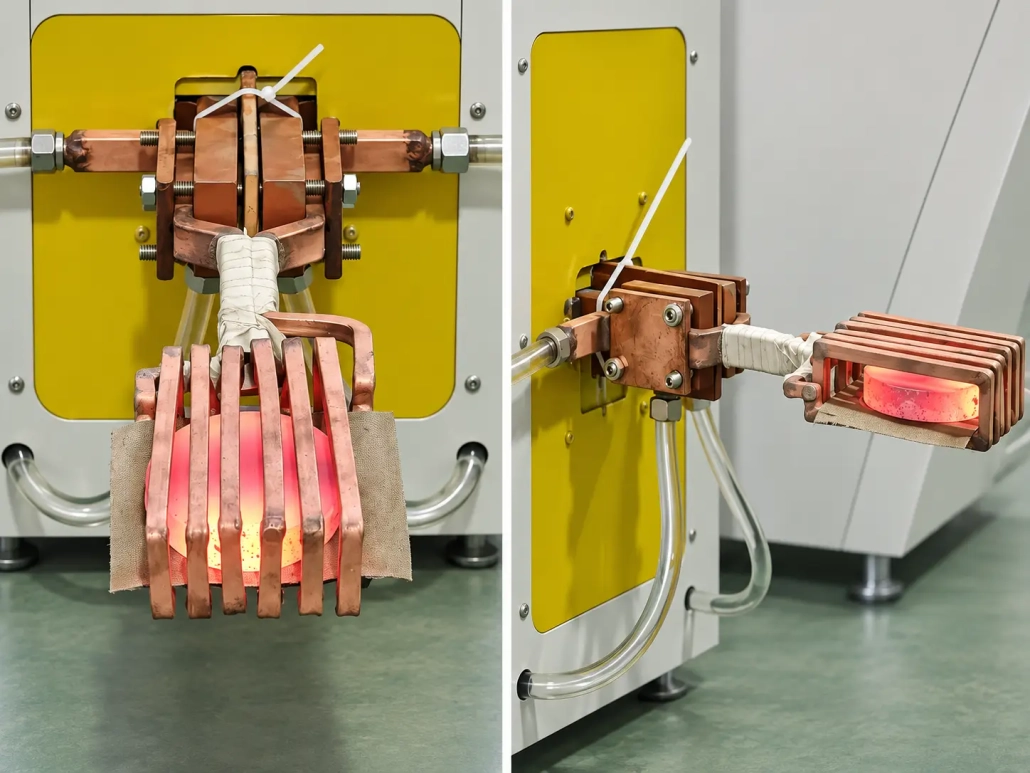
60 kW Project Inductor
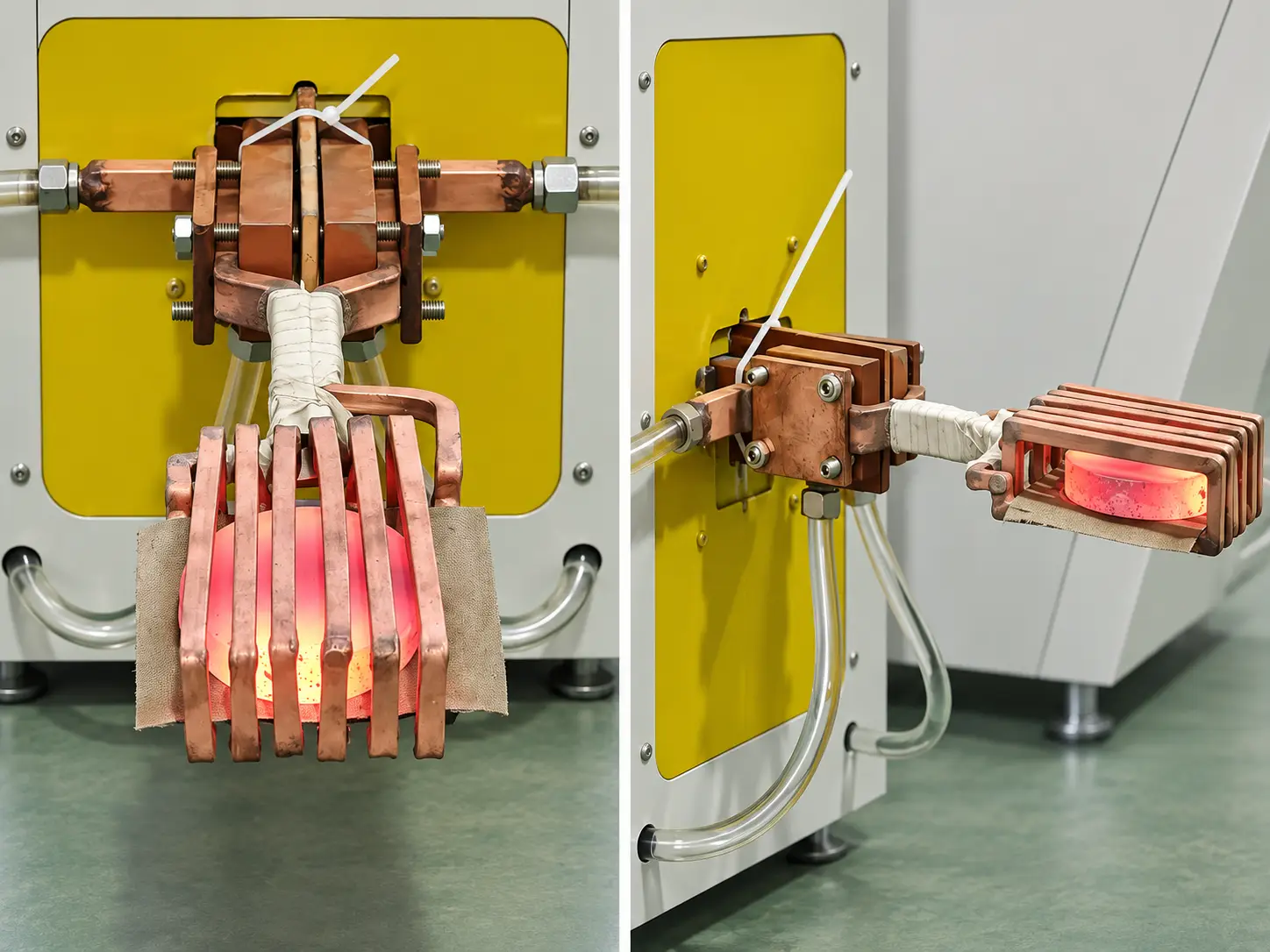
The close-up shows the inductor used in the 60 kW steel plate through-heating project shown on this page.
Its geometry is matched to that project’s workpiece and heating arrangement.
The image should not be treated as a universal steel plate coil design. A change in plate dimensions, heating area or production method can require a different inductor.
ثم يقوم 60 kW system and the continuous roller-conveyor line are separate projects, so their induction heating structures do not need to look the same.
Ⅵ. 60 kW Steel Plate Through-Heating System
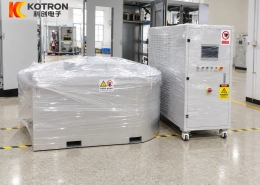
ثم يقوم 60 kW project provides an example of a steel plate heating system built around a dedicated power/control unit and matched load section.
The photographed system includes the induction power/control equipment together with the corresponding load and inductor assembly.
The available project information confirms the 60 kW power rating and its use for steel plate through heating.
سمك اللوحة, عرض, target temperature and production cycle for this specific project have not been provided, so these values should not be inferred from the photograph.
The system mainly demonstrates that steel plate through heating does not require the same mechanical arrangement as a continuous conveyor line.
Ⅶ. Continuous Roller Conveyor Heating Line
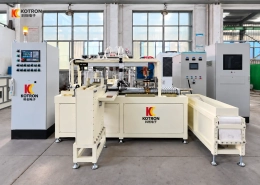
للإنتاج المستمر, steel plate can be moved through the heating section on rollers.
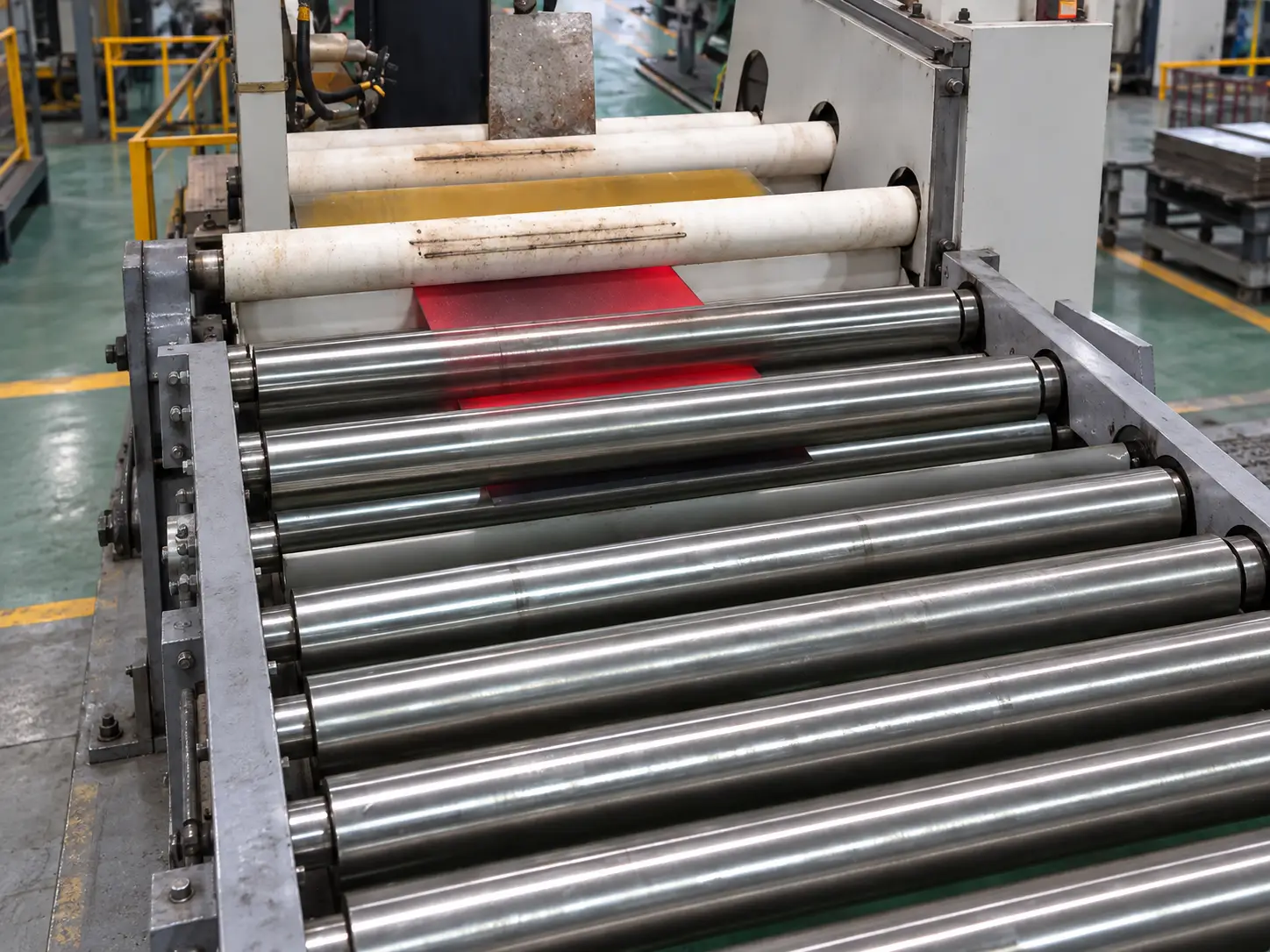
A typical production relationship is:
Feeding → Conveying → Induction Heating → Temperature Measurement → Downstream Process
The key difference is that line speed becomes part of the heating condition.
A faster plate spends less time in the effective heating area. A slower speed increases the available heating time.
Roller layout and conveying speed are matched to plate dimensions, weight and production rate.
The induction heating section can also be integrated with other equipment when the mechanical layout and control interfaces are suitable.
Ⅷ. Temperature Measurement and Process Control
Continuous steel plate heating can be equipped with non-contact infrared temperature measurement and PLC-based control.
Temperature information can be coordinated with heating output and conveying conditions rather than treated as a completely separate measurement.
For applicable closed-loop configurations, stated temperature-control accuracy can reach 0.5%.
Automatic line configurations can use a Siemens PLC-based control system. Available functions can include:
•Heating-time settings
•Segmented temperature programs
•Holding control
•Upper and lower temperature limits
•وظائف التنبيه
•Process-data recording
RS485, RS422 and MODBUS communication are available where required.
The control package is selected according to the project. A basic heating system and a fully integrated continuous line do not necessarily need the same monitoring functions.
Ⅸ. Available Induction Power Configurations
Available power-supply configurations for plate and related flat-product heating include:
| نموذج | القوة المقدرة | التردد |
|---|---|---|
| XG-30 | 30 كيلوواط | 20-40 كيلوهرتز |
| XG-60 | 60 كيلوواط | 20-40 كيلوهرتز |
| XZG-80SCZ | 80 كيلوواط | 1-50 كيلو هرتز |
| XZG-160SCZ | 160 كيلوواط | 1-50 كيلو هرتز |
| XZG-200SCN | 200 كيلوواط | 5–20 كيلو هرتز |
ثم يقوم XG-60 / 60 kW configuration is represented by the actual steel plate project shown above.
These models are not a fixed thickness-to-power selection chart.
أخير الطاقة and operating frequency depend on plate material, thickness, عرض, درجة الحرارة المستهدفة, available heating time and production rate.
The broader plate and strip heating equipment range includes applications from approximately 0.5 mm thickness upward, depending on the material and process. This does not mean every thickness uses the same equipment configuration.
Ⅹ. Typical Thermal Processing Applications
Steel plate induction heating can provide the heating stage for different thermal processes.
Typical application directions include:
•التنعيم
•تصلب
•التلطيف
•Bluing
•Stainless steel solution treatment
•Coating-related heating
These processes require different temperatures, heating conditions and downstream equipment.
على سبيل المثال, أ التقسية process requires a different complete production arrangement from a التخطيط الحراري or coating-related process, even if induction heating is used in both.
The heating system is therefore configured around the process rather than treating these applications as interchangeable operating recipes.
Ⅺ. How to Select a Steel Plate Heating Configuration
The correct configuration depends on how the plate needs to be heated and handled in production.
A project built around a defined heating cycle may use a relatively compact heating system such as the 60 kW configuration shown on this page.
Continuous production may require roller conveying, line-speed coordination, temperature measurement and integration with other equipment.
For initial evaluation, provide:
| معلومات الشغل | Process Information |
|---|---|
| • المواد والصف • Thickness • Width • طول • وزن, حيثما كان ذلك مناسبا • Drawing or photo |
• Required heating process • درجة الحرارة المستهدفة • Heating cycle or line speed • معدل الإنتاج • Continuous or non-continuous production • Existing upstream / downstream equipment |
If several plate specifications will run on the same equipment, send the complete size range.
This helps determine the required induction power, inductor arrangement and material-handling method.
Ⅻ. الأسئلة المتداولة
انقر فوق سؤال لتوسيع الإجابة.
كيف يتم اختيار قوة الحث المطلوبة؟?
Power cannot be selected from plate thickness alone. مادة, thickness, عرض, درجة الحرارة المستهدفة, heating time or line speed and production rate all affect the requirement.
Can one system heat different steel plate sizes?
ربما. The usable range depends on the plate dimensions and heating requirement. Significant changes may require different inductors or process settings.
How is through-thickness heating controlled?
The heating result is influenced by power, التردد, وقت التسخين, material properties and plate dimensions. Temperature measurement can be integrated into applicable systems, while the required thermal condition is determined by the process.
Can a steel plate induction heating system be integrated into an existing production line?
نعم, where the mechanical and electrical interfaces are suitable. Available space, conveyor height, production speed and control signals should be reviewed during project design.
ⅩⅢ. Send Us Your Steel Plate Heating Requirement
Start with the plate and the required process rather than selecting a power rating first.
من فضلك أرسل:
مادة + Thickness + Width + طول + درجة الحرارة المستهدفة + Heating Process + Heating Cycle / سرعة الخط + معدل الإنتاج + Drawing or Photo
KOTRON can then evaluate the induction power supply, تردد التشغيل, inductor and material-handling arrangement for the project.