فرن الصهر التعريفي الصناعي للمعادن والسبائك
Ⅰ. See an Actual Induction Melting System
The following videos show an actual zinc melting project. Zinc is one application of the induction melting systems supplied by Kechuang; furnace size, الطاقة, frequency and internal structure can be changed for other metals and production requirements.
Equipment Overview
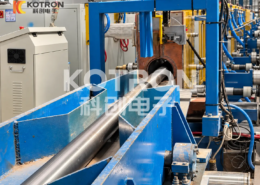
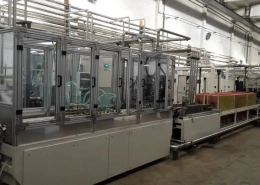
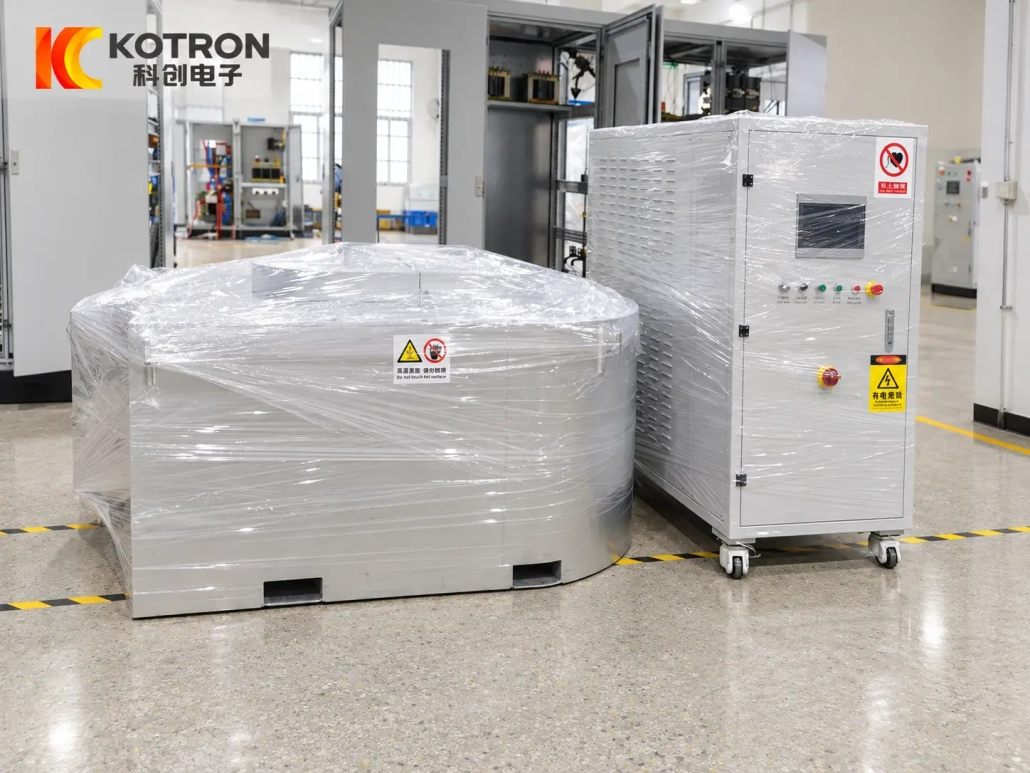
The first video shows the complete equipment, including the furnace body, induction power supply and electrical control system.
Actual Zinc Melting Process
The second video shows the molten zinc bath, temperature monitoring and manual stirring during production.
The equipment and operating conditions shown in these videos belong to this specific project and should not be treated as standard settings for every induction melting furnace.
Ⅱ. Metals and Melting Applications
الذوبان بالتحريض equipment can be configured for:
•Zinc and zinc alloys
•Aluminum and aluminum alloys
•سبائك النحاس والنحاس
•الذهب
•Other suitable metals and alloys
Typical processes include metal melting, alloy melting, remelting, casting material preparation, and melting with subsequent holding.
Different metals should not simply use the same furnace configuration. Melting temperature, وزن الدفعة, required melting time, production capacity and operating mode all influence the final equipment selection.
Ⅲ. Why Use Induction for Metal Melting?
An induction power supply and coil generate an alternating electromagnetic field to provide the heat required for melting.
For industrial production, the value of التسخين بالحث is not only the heating itself. Power input can be adjusted during operation, temperature can be monitored, and the heating process can be coordinated with repeated or continuous production.
اعتمادا على التكوين, the system can provide:
•Fast electrical heating
•Adjustable power output
•Temperature monitoring and control
•Repeated or continuous operation
•Integration with process-control equipment
Actual melting performance still depends on the complete furnace design. A higher power rating alone does not necessarily mean a higher practical melting capacity.
Ⅳ. Melting Furnace System Configuration
A complete induction melting system may include:
•التعريفي التدفئة إمدادات الطاقة
•Furnace body
•ملف الحث
•Crucible or refractory lining
•قياس درجة الحرارة
•Electrical control
•نظام التبريد
•Optional process monitoring
Furnace structure can vary considerably according to the application.
Smaller systems may use a crucible-type design. For suitable non-ferrous melting applications, SiC crucibles can be used with metals such as zinc, aluminum and copper.
Larger industrial systems may instead use a refractory-lined molten-metal bath.
The zinc furnace shown on this page is an example of a larger furnace structure and should not be treated as the same type of equipment as a compact crucible furnace.
Ⅴ. Actual Zinc Melting Case
The two videos on this page show one actual zinc melting application.
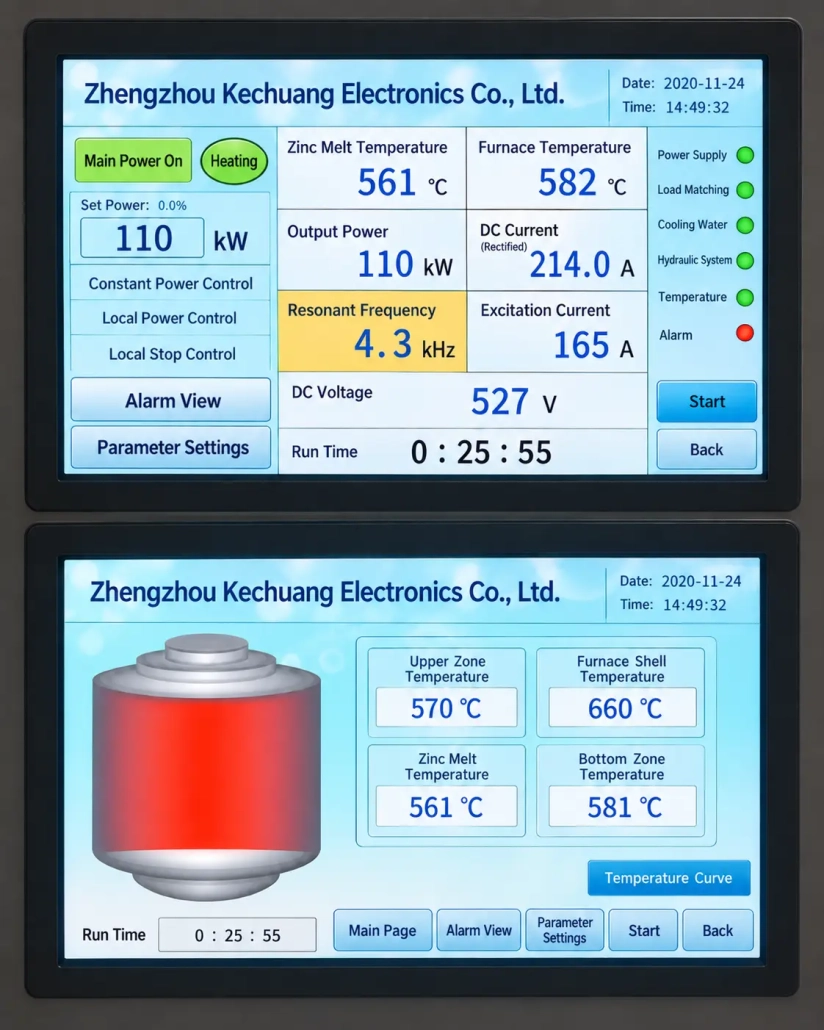
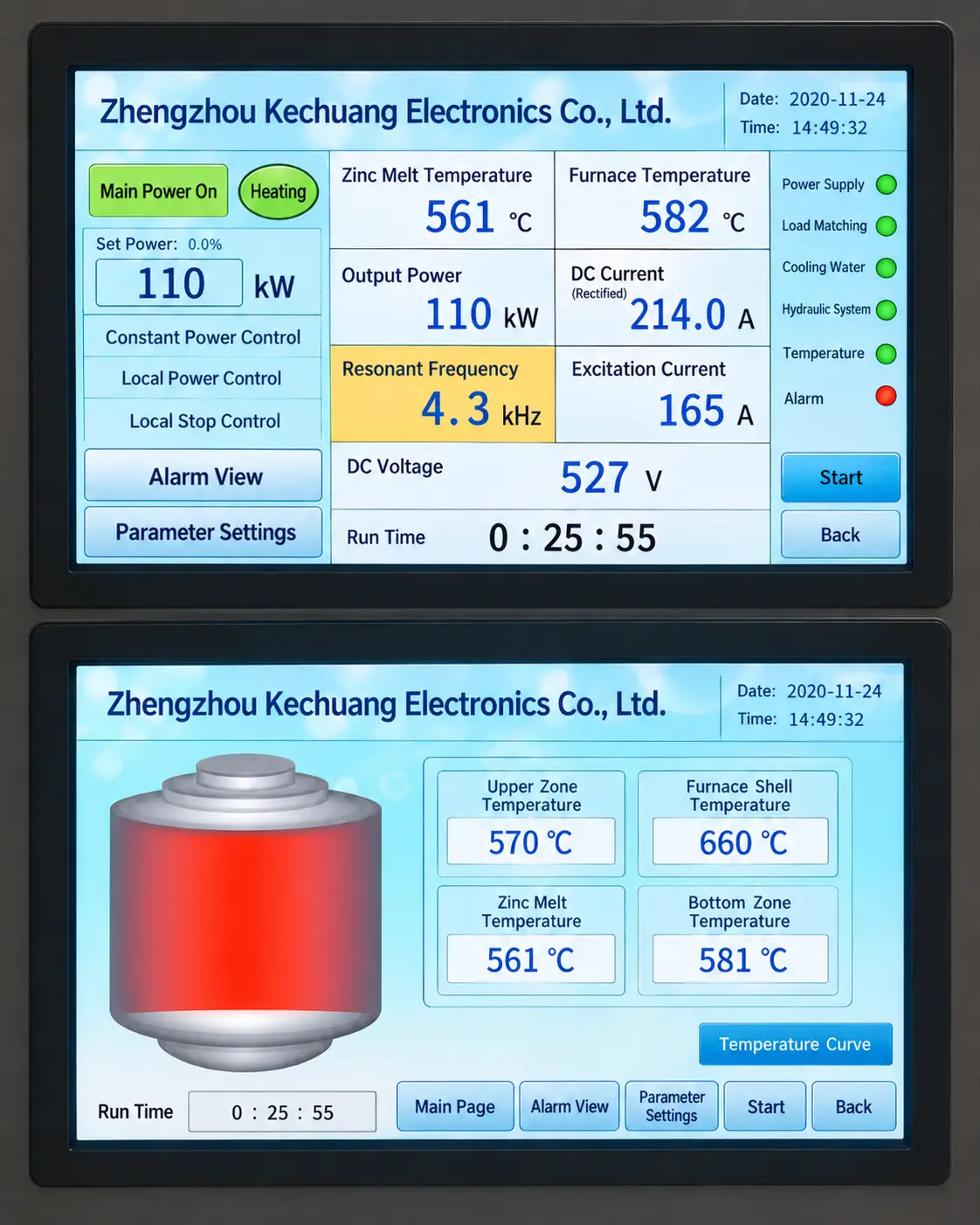
During one recorded operating condition, the control interface displayed:
These values are actual operating data from this project, not universal settings for zinc melting.
Required power, frequency and operating temperature change with the metal quantity, alloy composition, هيكل الفرن, melting time and holding requirement.
The production video also shows manual stirring and molten-bath handling during operation.
Ⅵ. Power and Temperature Control
Different melting requirements can be matched with different قوة الحث configurations.
| مصدر الطاقة | القوة المقدرة | نطاق التردد |
|---|---|---|
| XG-30 | 30 كيلوواط | 1–50 كيلوهرتز |
| XG-40 | 40 كيلوواط | 1–20 كيلوهرتز |
| XZG-60 | 60 كيلوواط | 1–50 كيلوهرتز |
| XZG-80SCZ | 80 كيلوواط | 1–50 كيلوهرتز |
| XZG-100–160SCZ | 100–160 كيلوواط | 1–50 كيلوهرتز |
These are induction power configurations rather than fixed furnace-capacity grades.
The required power needs to be evaluated together with:
Metal + Batch Weight + درجة الحرارة المستهدفة + Required Melting Time + Furnace Structure + Operating Mode
The control system can monitor electrical parameters such as voltage, التيار, طاقة الإخراج, operating frequency and heating time.
Temperature monitoring can also be integrated according to the furnace and production process.
Where additional production records are required, the monitoring system can be configured for process curves, parameter limits, alarm records and historical operating data.
Ⅶ. Melting, Holding and Production Operation
في الإنتاج الصناعي, the furnace may need to do more than melt one batch of metal.
A typical process may include:
Charging → Melting → التحكم في درجة الحرارة → Stirring / Melt Handling → عقد → Transfer or Casting
The exact sequence depends on the metal and downstream process.
Where molten metal needs to remain available for the next production step, the system can be configured for both melting and holding.
Batch melting, repeated production and longer holding periods may require different furnace structures even when the same metal is processed.
Ⅷ. How to Select the Right Induction Melting Furnace
Equipment selection should begin with the actual melting requirement rather than the power rating alone.
| معلومة | What We Need to Know |
|---|---|
| Metal | الزنك, الألومنيوم, النحاس, الذهب, السبيكة, إلخ. |
| Alloy Grade | If applicable |
| Batch Weight | kg per batch |
| قدرة الإنتاج | kg/hour or batches/day |
| Starting Material | Ingot, block, return material, إلخ. |
| درجة الحرارة المستهدفة | Required melt temperature |
| Melting Time | Required time per batch |
| Operating Mode | Batch, repeated or continuous |
| Holding Requirement | Whether molten metal must be held |
| Factory Power Supply | Available electrical conditions |
| Automation Requirement | Manual or integrated operation |
These factors are considered together when selecting:
الطاقة + التردد + Furnace Structure + اللفّة + Crucible / Lining + التحكم في درجة الحرارة + التبريد
If an existing furnace is being replaced, its current melting capacity, melting time and operating method are also useful references.
Ⅸ. الأسئلة المتداولة
انقر فوق سؤال لتوسيع الإجابة.
What metals can the induction melting furnace process?
The system can be configured for zinc, الألومنيوم, النحاس, gold and other suitable metals and alloys. The appropriate furnace and electrical configuration depend on the material and production requirement.
كيف أختار قوة الحث المطلوبة؟?
Power cannot be selected from batch weight alone. نوع المعدن, درجة الحرارة المستهدفة, required melting time, furnace structure and operating mode also need to be considered.
Can one furnace melt different metals?
ربما, but this should not be assumed automatically. Crucible or lining compatibility, operating temperature and contamination requirements need to be checked first.
Can the furnace hold molten metal after melting?
نعم. Where the production process requires it, a melting and holding configuration can be developed.
Can melting temperature be monitored?
نعم. Temperature monitoring and control can be configured according to the furnace structure and process.
يمكن تسجيل بيانات المعالجة?
مع تكوين المراقبة المقابلة, electrical parameters, الإنذارات, process curves and historical operating data can be stored for later review.
Ⅹ. Send Us Your Melting Requirement
لتقييم المعدات الأولية, provide: Metal + Batch Weight + Required Melting Time
For a more detailed proposal, you can also provide the alloy grade, درجة الحرارة المستهدفة, القدرة الإنتاجية, holding requirement, available power supply and automation requirement.
وبناء على هذه التفاصيل, Kechuang can evaluate the appropriate induction power, التردد, هيكل الفرن, الملف, crucible or lining, temperature-control method and cooling configuration.
Request an Equipment Evaluation