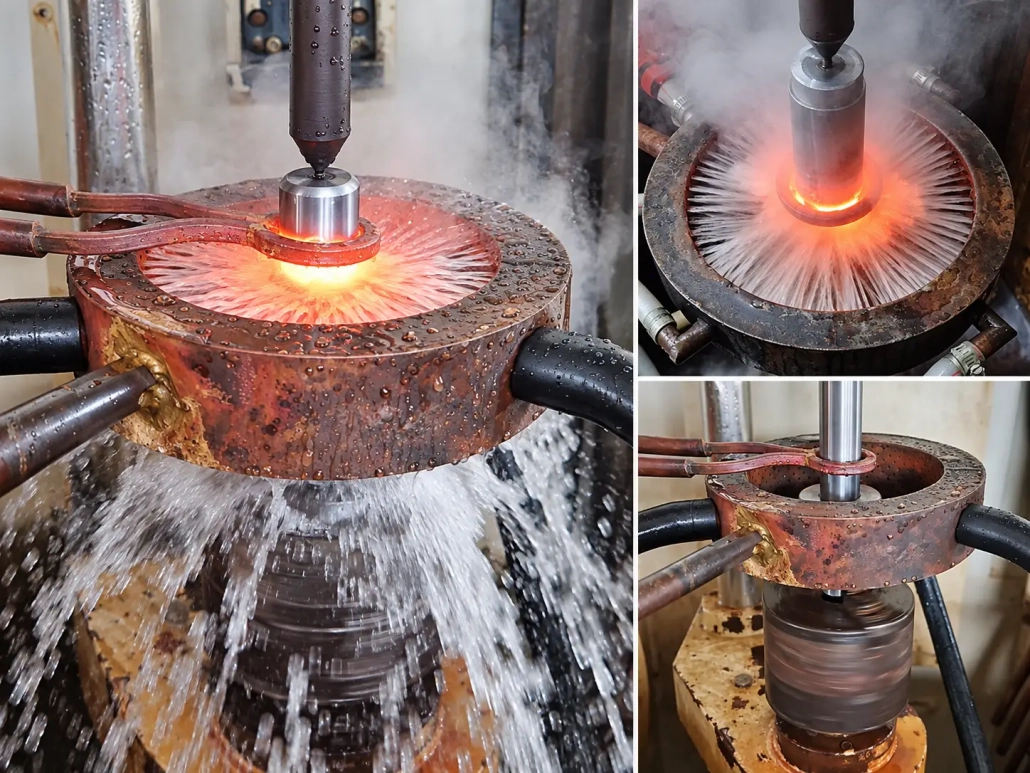
آلة تصلب قضيب المكبس للأسطوانات الهيدروليكية
Ⅰ. See the Piston Rod Induction Hardening Process
The video shows an actual piston rod during induction hardening.
The piston rod rotates while a localized surface area is induction heated and spray quenched. The heating is concentrated around the required surface region instead of heating the entire component at the same time.
Rotation can help reduce circumferential differences caused by variations in coil coupling, workpiece position and quench distribution. For cylindrical parts such as piston rods and shafts, this is useful when a consistent hardened surface is required around the circumference.
For a more detailed explanation of workpiece rotation during induction hardening, انظر: لماذا يدور العمود أثناء التصلب بالحث?
The process shown in the video represents one actual project configuration. Different piston rod dimensions or hardening requirements may require a different inductor, movement method, rotation speed or quenching arrangement.
Ⅱ. Why Piston Rods Use Surface Hardening
Piston rods are long cylindrical components used in hydraulic cylinders and other reciprocating mechanisms.
أثناء العملية, the working surface can be exposed to repeated sliding contact, friction and mechanical loading. The surface condition therefore has an important influence on wear resistance and service performance.
Induction hardening makes it possible to heat a selected surface region and then quench it without treating the whole piston rod in the same way.
The objective is to obtain the required hardened surface while retaining suitable properties in the remaining section of the component.
There is no single hardness or case-depth value that applies to every piston rod. The correct process depends on the material grade, rod diameter, الطول المقسى, drawing requirements and service conditions.
لهذا السبب, the machine and hardening process should be selected from the actual piston rod specification rather than from a fixed standard parameter.
Ⅲ. How Piston Rod Induction Hardening Works
A piston rod hardening process has to coordinate the workpiece movement, induction heating and quenching system.
الدوران
The piston rod can rotate during the heating and quenching cycle. For a cylindrical component, rotation helps average small circumferential differences in coil-to-part spacing, electromagnetic coupling and spray distribution. The required rotation speed depends on the rod diameter, induction coil and hardening process.
Localized Induction Heating
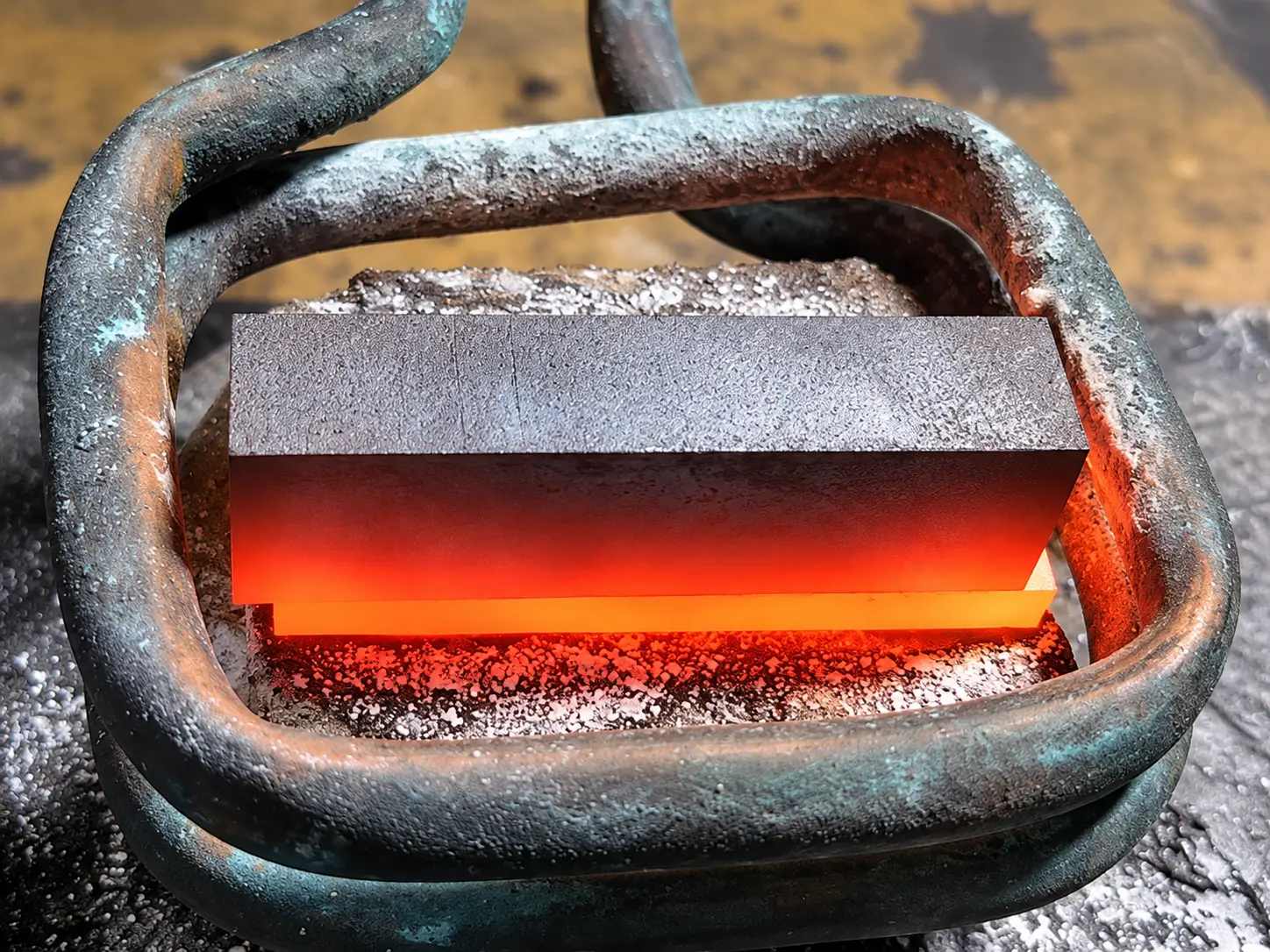
The induction coil creates an electromagnetic field around the required area of the piston rod. Heat is generated directly in the workpiece, allowing a selected surface region to be heated without heating the entire component in the same way. The inductor is therefore designed according to the piston rod diameter, required heating width and target hardened area.
Scanning for Long Hardened Zones
When the required hardened area extends over a longer axial section, the machine can be configured for scanning hardening. Instead of heating the complete length simultaneously, a limited section is heated at one time while controlled relative movement takes place between the piston rod and induction assembly. Depending on the machine structure, either the workpiece or the induction assembly may provide the axial movement.
For more detail on these two machine arrangements, انظر: لماذا تتحرك بعض آلات التصلب بالحث بالقطعة بينما تتحرك الأخرى بالمحث
The suitable arrangement depends on workpiece length, الوزن, support requirements, machine structure and production method.
رذاذ التبريد
After the required surface region has been heated, quenching liquid is applied to cool the material rapidly and produce the required hardened layer. The relationship between the heating zone and the quenching zone is especially important in a scanning process. Depending on the inductor and machine design, the quenching system can be integrated close to the induction coil or arranged as a separate following spray system.
For more information about these two approaches, انظر: تصميم ملف التصلد بالحث: نظام تبريد متكامل أم نظام تبريد منفصل?
The final hardening result depends on the combined effect of:
التردد + قوة الحث + تصميم محث + الدوران + Heating Time or Scan Speed + Quenching Conditions
These parameters should be developed as one process rather than adjusted independently.
Ⅳ. Machine and Inductor Configuration
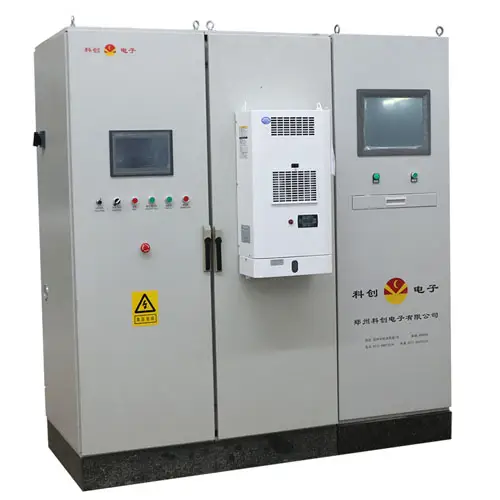
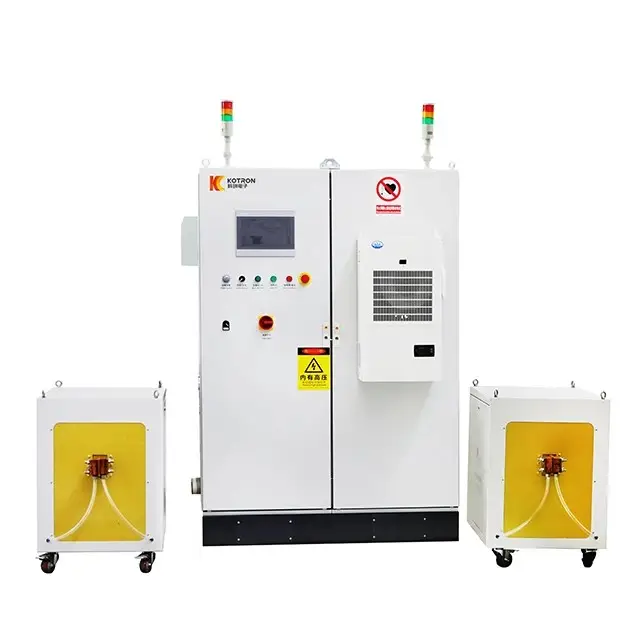
A piston rod induction hardening machine combines workpiece handling, التسخين بالحث, process movement and quenching in one controlled system.
اعتمادا على المشروع, the machine can include:
For long piston rods, machine stroke and workpiece support are particularly important. A short hydraulic cylinder rod and a long heavy-duty piston rod may require different support, clamping and travel arrangements even when they use the same basic induction hardening principle.
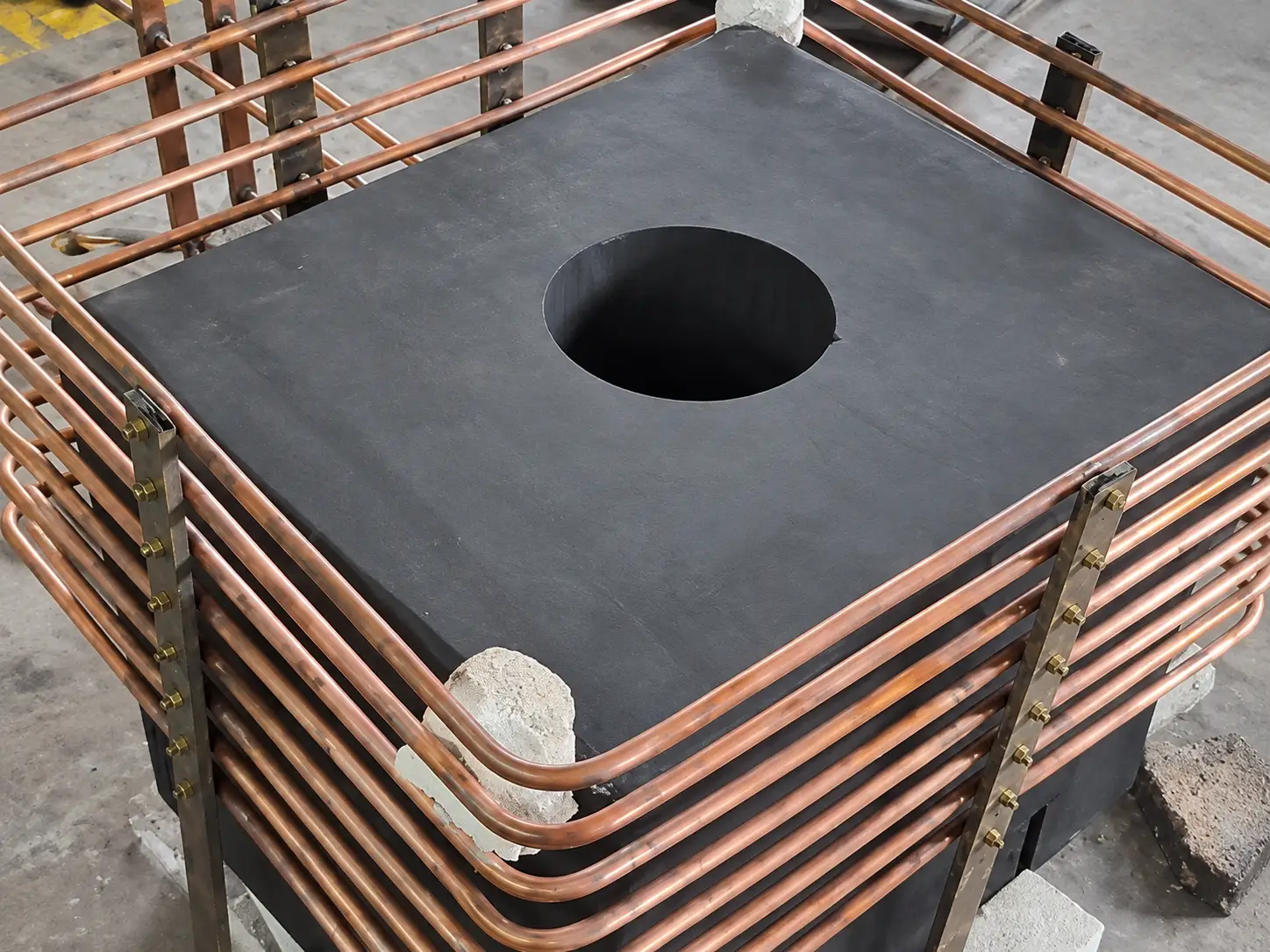
The induction coil is also designed for the actual workpiece. Coil diameter, effective heating width, coupling distance and quenching arrangement are selected according to the piston rod geometry and hardened-zone requirement. The inductor should therefore be considered part of the complete hardening process rather than simply a standard replaceable ring.
For other shafts, الدبابيس, rollers and more general shaft-hardening applications, انظر: آلة تقسية الأعمدة بالتحريض CNC
This broader machine platform covers general shaft-type components, while this page focuses specifically on piston rods and hydraulic cylinder rods.
Ⅴ. IGBT مزود الطاقة والتحكم الرقمي DSP
The induction power supply has to provide stable and controllable energy while the piston rod is being heated, rotated or scanned. Our induction heating systems use IGBT power conversion with DSP digital control. The IGBT inverter performs the high-speed power switching required by the induction heating circuit, while the DSP platform is used for control, المراقبة والحماية.
For a more detailed explanation of how the power system works, انظر: ترانزستور بوابة ثنائي القطب معزول في مزودات طاقة التسخين بالحث: كيف يعمل ولماذا يُستخدم
اعتمادا على التكوين المحدد, معلمات مثل التيار, الجهد, power and operating frequency can be monitored during production. For recurring piston rod specifications, stored process programs can also help reproduce an established hardening process without resetting every parameter manually.
The induction power rating should not be selected from piston rod diameter alone. Rod material, القطر, required hardened depth, heating width, movement speed and production rate can all influence the required power and operating frequency.
Ⅵ. Customized for Your Piston Rod
A piston rod hardening system should be configured from the actual workpiece and process requirement rather than from one fixed machine model.
| Piston Rod Requirement | آلة / Process Configuration Affected |
|---|---|
| Rod diameter | Inductor size, التردد, power and support |
| Rod length | Machine stroke and support structure |
| درجة المادة | Heating and quenching parameters |
| Hardened length | Axial travel and process program |
| صلابة السطح المطلوبة | Heating and cooling process |
| عمق الحالة المطلوبة | التردد, power density and heating conditions |
| End geometry | Fixture and coil clearance |
| معدل الإنتاج | Power level and automation |
| Multiple rod sizes | الأدوات, inductors and stored programs |
على سبيل المثال, two piston rods with the same diameter may still require different process settings if their materials, hardened lengths or case-depth requirements are different. وبالمثل, processing several piston rod sizes on one machine may require interchangeable induction coils, fixtures and stored process programs.
The final hardening result should be verified on the processed workpiece rather than judged only from machine settings.
For more information about hardness, hardened layer and inspection, انظر: كيفية فحص الأجزاء المقواة بالتحريض: لماذا صلابة السطح وحدها ليست كافية
Ⅶ. Additional Process Configuration
التحكم في العملية
CNC or PLC control can coordinate workpiece rotation, حركة, induction heating and quenching according to the selected process program. For recurring piston rod specifications, established process recipes can be stored and reused.
مراقبة العملية
Depending on the system configuration, معلمات التشغيل, alarms and production records can be monitored and stored for later review. For customers with higher traceability requirements, additional production and process-data recording can also be incorporated.
Cooling and Quenching
The quenching arrangement is selected according to the rod diameter, heating pattern and required hardened zone. Spray position and cooling capacity need to match the induction hardening process rather than being treated as an independent auxiliary system.
الأتمتة
For batch piston rod production, the machine can be combined with automatic loading, unloading or workpiece transfer equipment according to production volume and factory layout. These functions are optional and should be selected according to the actual production requirement.
Ⅷ. الأسئلة المتداولة
انقر فوق سؤال لتوسيع الإجابة.
Can one machine harden different piston rod diameters?
نعم, provided the different workpieces remain within the mechanical and electrical working range of the machine. Different diameters may require different induction coils, الأدوات المثبتة, supports and process programs.
Does the piston rod rotate during induction hardening?
The actual process shown in our video uses workpiece rotation during induction heating and spray quenching. For other projects, the final rotation arrangement is selected according to the piston rod dimensions and hardening requirements.
Do all piston rods require scanning hardening?
لا. Scanning is particularly useful when the required hardened area extends over a relatively long axial section of the piston rod. Short localized areas may use a different heating arrangement.
How is the hardened case depth controlled?
Case depth is influenced by several variables, including workpiece material, تردد التشغيل, قوة الحث, heating time or scan speed, coil design and quenching conditions. It should therefore be developed from the customer’s required effective case depth rather than from one universal machine setting.
Can the machine process several piston rod models?
نعم. Where several piston rod sizes are produced on the same system, different inductors, fixtures and stored process programs can be used. The practical working range depends on the machine stroke, clamping system, induction power and workpiece dimensions.
Can automatic loading and unloading be added?
نعم. For higher production volumes, loading manipulators, transfer mechanisms or unloading systems can be integrated according to the workpiece and production layout.
Request a Piston Rod Hardening Solution
To configure a piston rod induction hardening machine, please provide the basic workpiece and process information: Piston rod drawing + القطر + طول + مادة + منطقة تصلب + الصلابة المطلوبة + عمق القضية الفعال + معدل الإنتاج
Based on these requirements, يمكننا تقييم هيكل الآلة, travel, قوة الحث, تردد التشغيل, تصميم المحث, rotation method and quenching arrangement for your project.