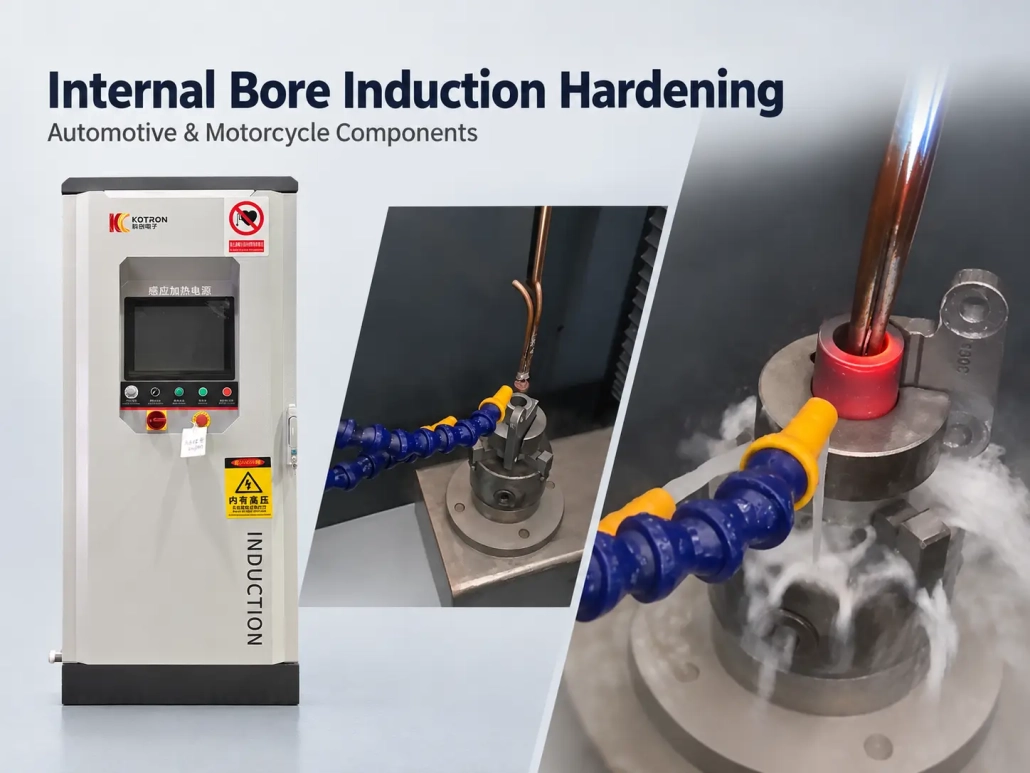
Máy làm cứng cảm ứng lỗ khoan bên trong cho ô tô & Linh kiện chính xác xe máy
Ⅰ. Internal Bore Hardening in Operation
Làm cứng cảm ứng lỗ khoan bên trong
For Automotive & Motorcycle Precision Parts
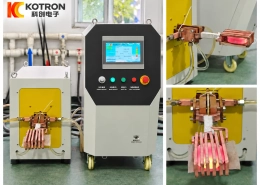
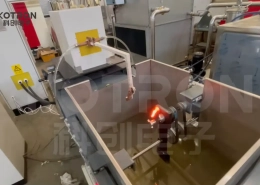
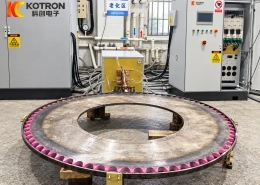
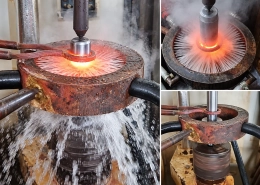
In the application shown in the video, the inductor is positioned inside the bore and heats the specified internal surface. The heated area is then quenched to produce the required hardened zone.
Quá trình này thường được gọi là tôi cứng hóa cảm ứng lòng trong, đường kính trong (ID) tôi cứng bằng cảm ứng, or simply bore hardening.
Không giống như external shaft or surface hardening, the heating tool has to operate inside a limited space. Đường kính khoan, bore depth and the location of the required hardened area therefore have a direct influence on the inductor and machine layout.
Ⅱ. Suitable Parts and Hardening Requirements
Internal bore induction hardening is used when the wear or contact surface is located inside a bore and only that area requires hardening.
The application shown on this page is an automotive or motorcycle precision component. Similar processes may also be evaluated for Lót ổ trục, ống lót and other hardenable steel components with accessible internal surfaces.
Whether a part is suitable depends on more than the presence of a bore. The main considerations include:
•Material and hardenability
•Đường kính và độ sâu lỗ khoan
•Required hardened length and position
•Độ cứng mục tiêu
•Độ sâu trường hợp, nếu được chỉ định
•Access for the inductor and quenching arrangement
For parts with stepped, recessed or otherwise complex internal geometry, a sectional drawing is particularly useful. It shows where the inductor can enter and where the hardened zone is actually required.
Ⅲ. Inductor Design for Internal Bore Hardening
The inductor is one of the main differences between internal bore hardening and conventional external induction hardening.
It must fit inside the workpiece while maintaining an appropriate relationship with the surface being heated. The available clearance may be limited, especially when the bore is narrow, deep or surrounded by other features.
Inductor development therefore considers the actual geometry of the part, bao gồm:
•Đường kính khoan
•Độ sâu lỗ khoan
•Hardened-zone position
•Available insertion space
•Coil-to-surface relationship
•Workpiece centering and positioning
A change in bore geometry can require a different inductor even when the overall component size is similar.
Positioning also affects the heating pattern. If the relationship between the inductor and the bore wall changes significantly from one workpiece to another, the heated area can change with it. Dedicated fixtures or controlled machine movement may therefore be used where the production requirement calls for repeatable positioning.
Tần số hoạt động, nguồn điện sẵn có, heating time and inductor design are considered together with the required case depth. Case depth should not be treated as a result of frequency alone.
Ⅳ. Heating and Quenching Inside the Bore
The required hardness pattern depends on both heating and subsequent cooling.
In the process shown in the video, the internal surface is heated first and then quenched. For another workpiece, the quench position or sequence may need to change according to bore depth, part orientation and the location of the target hardened area.
The process development may need to consider the heated length inside the bore, coolant access, the time between heating and quenching, and the position of the workpiece during the cycle.
Quenching does not have to follow one fixed mechanical arrangement. Tùy thuộc vào ứng dụng, it may be arranged separately from the inductor or incorporated into the tooling.
The objective is not simply to heat the whole internal surface uniformly. The heating and quenching arrangement should follow the hardened area specified for the part.
Ⅴ. Cấu hình máy và kiểm soát quy trình
The machine is selected from the workpiece and heat-treatment requirement rather than from bore diameter alone.
The induction power supply, dụng cụ, workpiece fixture and movement arrangement need to work as one process. Tùy thuộc vào ứng dụng, the equipment may use fixed positioning or controlled movement between the workpiece and inductor.
Heating power and heating time are set according to the part, material and required hardened result. If the selected equipment configuration includes digital process control, parameters such as heating time and power output can be managed through the machine control system.
Automation requirements also vary. A development or low-volume application may not need the same handling arrangement as repeated production of one component.
Vì lý do này, a machine proposal is normally based on the part drawing and production requirement rather than a single standard configuration.
Ⅵ. Thông tin cần thiết để lựa chọn máy
Để đánh giá ban đầu, the following information is more useful than a general request for an “internal bore hardening machine.”
| Thông tin | Tại sao điều này quan trọng |
|---|---|
| Part drawing or sectional drawing | Shows internal geometry and available inductor access |
| Vật liệu | Helps determine whether the required hardening response is feasible |
| Đường kính khoan | Affects inductor size and available clearance |
| Độ sâu lỗ khoan | Affects inductor reach and positioning |
| Khu vực cứng cần thiết | Xác định nơi cần sưởi ấm và làm nguội |
| Độ cứng mục tiêu | Xác định kết quả bề mặt cần thiết |
| Độ sâu trường hợp, nếu được chỉ định | Affects process and equipment selection |
| Yêu cầu sản xuất | Influences fixture, movement and automation configuration |
Two parts with the same bore diameter may still require different tooling. One may need a short hardened band near the bore entrance, while another may require treatment deeper inside the component.
For related components, the same power platform may sometimes be used with different inductors, đồ đạc hoặc cài đặt quy trình. This has to be evaluated from the actual parts rather than assumed from nominal dimensions.
Ⅶ. Câu hỏi thường gặp
Bấm vào một câu hỏi để mở rộng câu trả lời.
Can one machine harden different bore diameters?
Bore diameter is one selection factor, but the inductor, fixture and process settings are developed from the actual part. Two parts with the same bore diameter may still require different tooling.
Is internal bore hardening the same as shaft or surface hardening?
KHÔNG. In internal bore hardening the inductor operates inside a limited space, so bore diameter, bore depth and the location of the hardened area directly influence the inductor and machine layout.
Tôi cần cung cấp thông tin gì để đánh giá?
A part or sectional drawing, vật liệu, đường kính lỗ khoan và độ sâu, the required hardened area, độ cứng mục tiêu, case depth if specified, and the production requirement.
Can related components share the same power supply?
Đôi khi. Related components may use the same power platform with different inductors, đồ đạc hoặc cài đặt quy trình, but this has to be evaluated from the actual parts rather than assumed from nominal dimensions.
Does bore diameter alone determine the machine selection?
KHÔNG. The machine is selected from the complete workpiece and heat-treatment requirement — bore diameter and depth, the hardened zone, độ cứng mục tiêu, case depth and production rate all contribute.
Ⅷ. Gửi cho chúng tôi bản vẽ phần của bạn
Để đánh giá ban đầu, send us a drawing or clear photo of the component together with the material, nếu biết, and the area that needs to be hardened.
Nếu độ cứng mục tiêu, độ sâu trường hợp hoặc yêu cầu sản xuất đã được xác định, chúng cũng có thể được bao gồm. They are not required before the first discussion.
Based on the available part information, chính internal-bore inductor, định vị phôi, phương pháp gia nhiệt, sắp xếp dập tắt và cấu hình máy can be evaluated for the application.
Gửi cho chúng tôi bản vẽ phần của bạn
Gửi bản vẽ hoặc ảnh rõ ràng về bộ phận của bạn cùng với vật liệu và khu vực cần được làm cứng. We’ll evaluate the inductor, định vị phôi, phương pháp gia nhiệt, quenching arrangement and machine configuration for your application.