
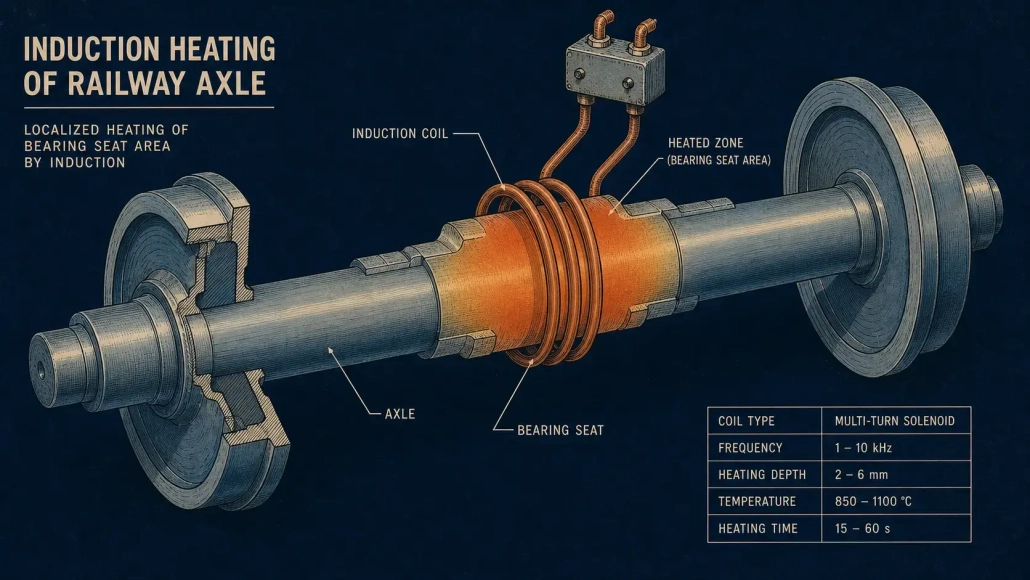
철도 제조 분야의 유도 가열: 적용 분야, 공정 제어, 및 장비 선택
철도 부품은 무겁고 안전이 중요합니다.. 열이 필요할 때, 보통 한 특정 구역 — 베어링 시트, 바퀴 허브, 레일 끝. 전체 부품이 아님. 유도 가열 철도 제조 전자기 결합을 통해 정확히 필요한 곳에 열을 공급: 불꽃 없음, 용광로 대기 필요 없음, 뜨거울 필요 없는 것은 가열하지 않음. 유도 가열 기초 물리학 설명.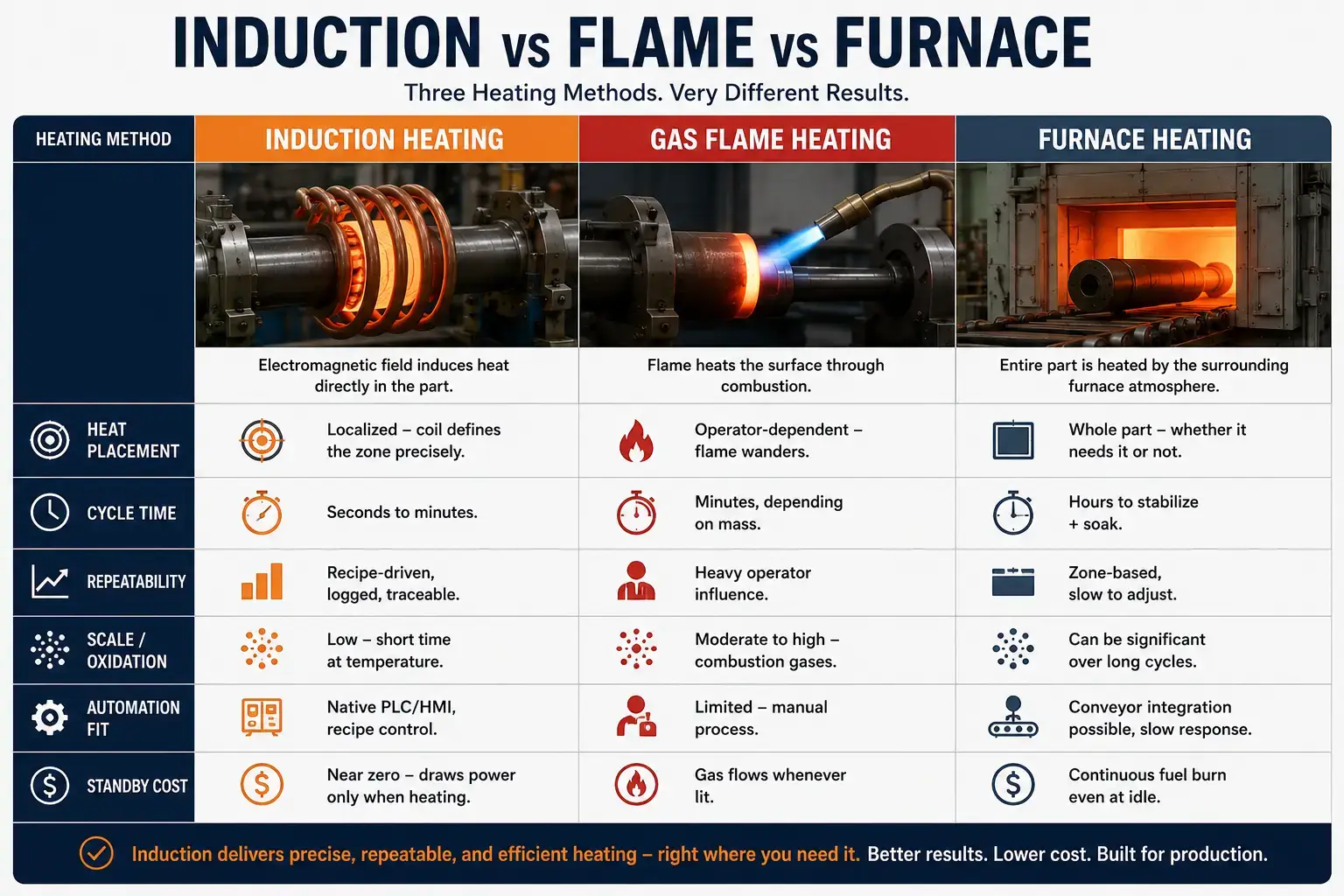
화염은 여전히 자리가 있다 — 현장 수리, 일회성 작업, 정밀함보다 휴대성이 더 중요하다. 하지만 내일도 오늘 얻은 결과가 필요하다면, 그리고 그것을 증명해야 한다, 유도가 그 작업에 적합한 도구.
| 1. 왜 유도가 철도 제조에 적합한가 | 2. 철도 응용 |
| 3. 공학적 고려사항 | 4. 장비 선택 요소 |
| 5. When Induction Isn’t the Best Fit | 자주 묻는 질문(FAQ) |
1. 왜 유도 가열이 철도 제조에 적합한가
유도는 특정 영역을 목표로 한다. 전자기 에너지가 작업물에 직접 결합 — 불꽃 없음, 공기를 통한 열 전달 없음. 패턴은 주파수의 함수, 코일 구조, 전력 수준, 그리고 부품 위치. 이 네 가지 변수를 정확히 설정하면 결과가 반복된다. 교대 근무마다. 차축마다.
2. 유도 가열의 일반적인 철도 적용
레일 용접과 휠 수축 장착에서부터, 인덕션 경화 저널과 트레드의 베어링 장착까지, 그리고 유도 브레이징 of electrical and fluid-system assemblies — induction shows up wherever controlled, localized heat matters in railway production and maintenance.
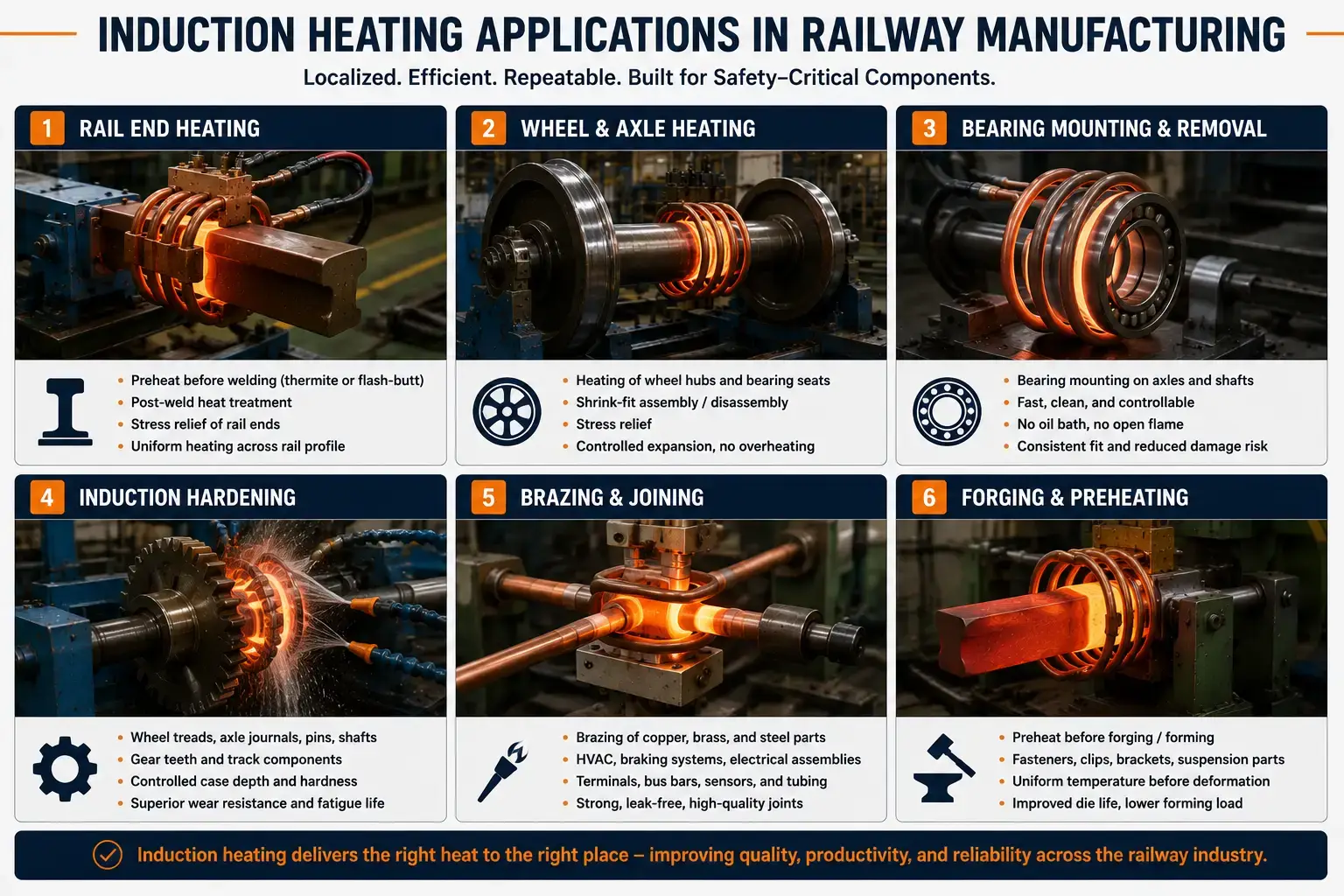
Rail end heating
Rail welding — thermite or flash-butt — needs controlled preheat and post-weld treatment. The challenge is the rail profile itself: thick head, thin web, wide base. Three different thermal masses in one cross-section. The coil has to balance all three.
3. Engineering Considerations for Reliable Production
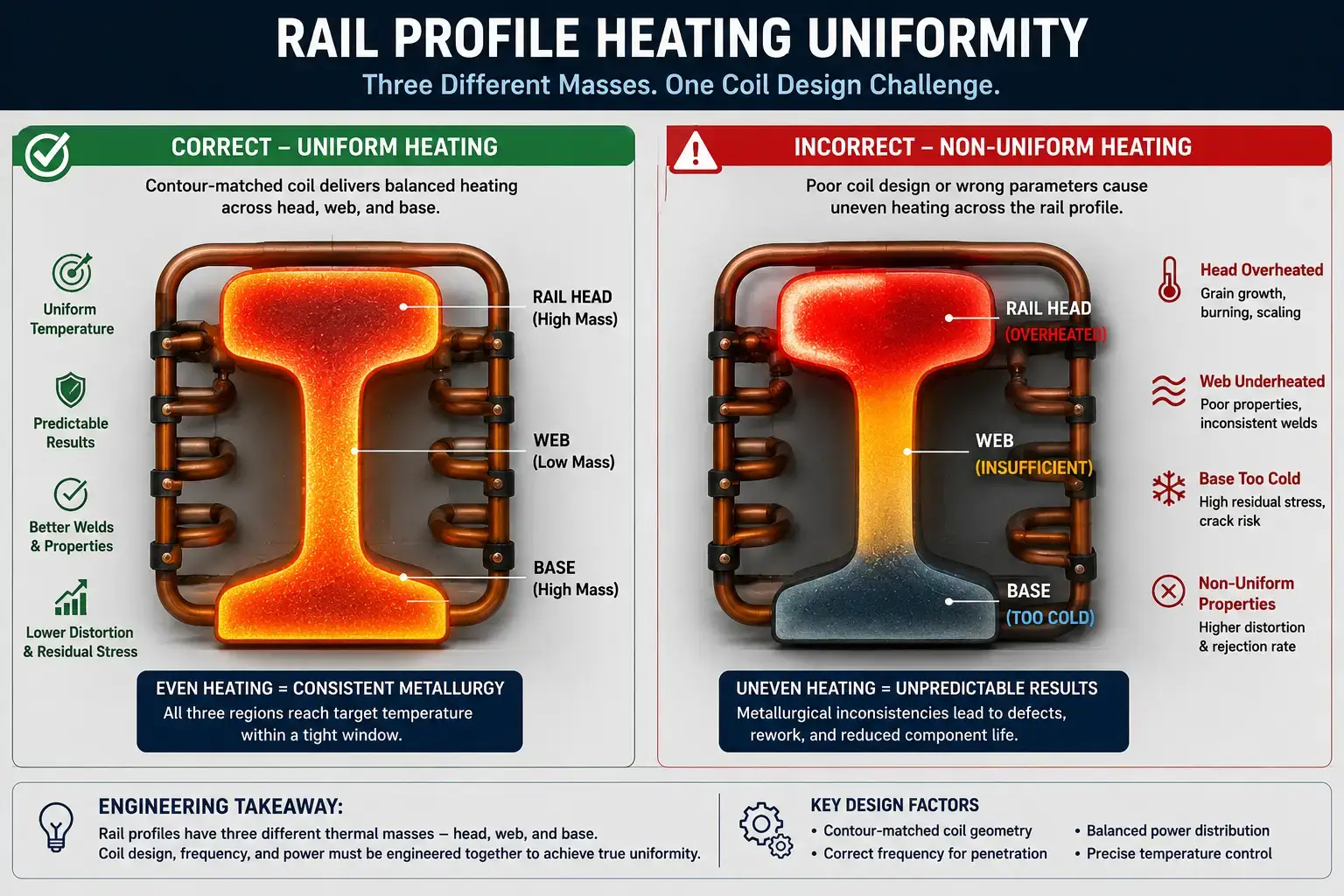
Take the rail profile as an example. Three different thermal masses in one cross-section — thick head, thin web, wide base — and induction doesn’t heat them equally by default. The coil has to compensate. That same geometry-awareness applies to every railway component: axles, wheels, 베어링 시트. 철도 제조에서의 유도 가열은 하나의 과정입니다., 구매 주문이 아닙니다.. 부품을 평가하세요., 재료를 평가하세요., 생산 흐름을 평가하세요., 그리고 품질 요구 사항을 하나로 평가하세요..
재료 상태는 무시하면 문제를 일으킵니다.. 강철 화학 성분, 사전 열처리, 미세 구조, 표면 상태 — 이 모든 것이 부품이 유도 가열에 반응하는 방식에 영향을 줍니다.. 경화 과정에서는, 탄소 함량과 경화성(hardenability)이 달성 가능한 한계를 설정합니다.. 녹, 스케일, 기름, 코팅: 이것들은 가열 특성을 방해하고 연기를 생성합니다.. Test with parts in their actual production condition. Not clean lab samples.
Temperature measurement has to survive the real environment. IR pyrometers need correct emissivity, clean sight lines, and protection from scale, 증기, and smoke. A lab setup with perfect sight lines doesn’t represent a hot, wet, high-throughput maintenance depot. Validate under real conditions. And for hardening: the quench system matters as much as the heating. 분무 패턴, 유량, 압력, polymer concentration, 온도, timing — one of these drifting changes hardness, 케이스 깊이, and distortion in ways that don’t always show up at final inspection.
작동 중 나쁜 담냉 표면에서 인한 균열, 시험대가 아님. 공정 개발 중 금속학적 시험은 선택 사항이 아니다.
코일 근처 고정구가 공정의 일부가 된다. 철도 부품은 무겁다, 고정구는 상당하다. 자성 또는 전도성이라면, 의도했든 아니든 가열되어 전기장을 왜곡한다. 비자성 스테인리스, 세라믹, 수냉식 설비 요소 도움이 된다. 하지만 설비가 부품을 일관되게 먼저 위치시켜야 한다. 나머지는 그 다음.
유지보수 접근성: 사양 시 간과됨, 생산 중 후회. 코일, 호스, 버스 연결, 센서, 담지 부품 — 모두 마모 항목. 하나를 교체하는 데 절반 교대가 걸리고 재정렬은 추측 게임, 가동 시간이 사라진다. 철도 환경은 용서하지 않는다: 스케일, 먼지, 냉각수, 진동. 코일 교체 시간을 생각하세요, 예비 재고 가능성, 누수 감지, 그리고 시스템에 고정되기 전 진단 경보.
4. 주요 장비 선택 요소
철도 부품은 크다, 무겁고, 종종 두꺼운 단면. 장비 선택은 카탈로그가 아니라 거기서부터 시작된다, 표준 구성이 아니라.
전원 공급. 대형 강철 단면은 생산 관련 사이클 시간 내에 온도에 도달하려면 실제 전력이 필요하다. 크기가 작으면 공정이 목표에 도달하지 못하거나, 너무 오래 걸려서 열이 퍼져서는 안 될 곳에 퍼진다. 과대면 필요 없는 돈을 썼고 — 좁은 공정 창에서 제어 골칫거리를 초래할 수 있다.
전원 공급 장치 크기는 부품 재료를 쌓아야 한다, 대량의, 목표 온도, 필요한 열 깊이, 사이클 타임, 열 손실, 생산 속도, 그리고 작업 주기. 그리고 질문: 냉각수가 5°C 더 따뜻하고 작업자가 3교대 근무일 때 이 시스템이 반복 가능한 에너지를 제공할 수 있느냐? 전력 선택 방법론 설명.
주파수. 주파수가 전류 관통 깊이를 결정한다. 철도 응용은 종종 두꺼운 강철 단면—축, wheels, 레일 — 깊은 곳, 균일한 가열이 중요하다. 낮은 주파수는 더 깊게 밀어붙인다. 높은 주파수는 표면에 집중한다. 레일 헤드 경화 공정, 축 시트 수축 맞춤, 베어링 마운트는 각각 다른 주파수 범위를 원한다. 잘못된 것을 선택하면 물리 법칙과 싸우는 것이다.
| 철도 적용 | 일반적인 주파수 범위 | 이유 |
|---|---|---|
| 축 / 휠 심부 가열 | 1–10 kHz | 두꺼운 단면은 균일한 관열 효과를 위해 더 깊은 전류 침투가 필요 |
| 레일 끝 예열 / 스트레스 해소 | 1–10 kHz | 큰 프로파일 단면적; 레일 헤드 깊이를 통한 열 필요 |
| 베어링 장착 | 10–50 kHz | 적당한 침투력; 얇은 베어링링이 이 범위에서 효율적으로 가열 |
| 표면 경화 (트레드, 저널) | 30–200 kHz | 얕은 케이스 깊이; 마모면에 집중된 열 |
| 작은 핀, 고정장치, 브레이징 | 100–400 kHz | 작은 단면적; 빠른 표면 지배 가열을 위한 고주파 |
주파수 선택 트레이드오프에 대한 더 깊은 설명. 실제 부품으로 테스트하면 대략 맞아떨어진다, 베이스가 아닌 코일.
코일 설계. 코일은 비즈니스 끝. 철도 작업용, 코일은 큰 형상을 처리해야 한다, 부품 위치 변동, 자기 플럭스 농도, 냉각, 기계적 내구성, 적재 및 하역 접근성. 액슬에 대한 감싸는 코일 작업, 샤프트, 베어링. 스플릿 코일은 통과시킬 수 없는 부품을 다루며. 윤곽선 코일은 레일 프로파일을 따라가며. 스캔 코일은 길이에 따라 점진적으로 경화를 제공한다.
The right design balances uniformity, 효율, and how long the coil survives before someone has to swap it. On high-value railway parts, a coil that drifts after 500 cycles is a quality problem waiting to happen.
냉각. High-duty railway production generates real heat — in the coil, the leads, 커패시터, the power electronics. Cooling water isn’t an afterthought. 유량, 압력, water quality, 전도도, 입구 온도 — 모두 사양 지정. 폐쇄 루프 시스템은 수질 관리를 유지하고 스케일링을 줄이기 때문에 일반적이다. 냉각이 불안정할 때, 결함이 간헐적이며 진단하기 어렵다. 수냉 시스템 사양에서 별도의 항목을 가질 가치가 있다.
부품 취급. 철도 부품은 무겁다. 취급 방식이 시스템이 실제로 작동하는지 여부를 결정하는 경우가 많다, 시험대 성능과 관계없이. 컨베이어, 로봇, 갠트리, 인덱싱 테이블, 유압 로더, custom fixtures — whatever moves the part has to position it consistently relative to the coil.
A few millimeters of position shift changes the coupling gap. The coupling gap changes the heat pattern. On a hardened journal or a rail profile, that’s enough to fail inspection.
5. When Induction Heating Isn’t the Best Fit
Induction isn’t always the answer. If the entire part needs uniform temperature and a long soak — batch annealing, stress relieving entire axle sets, normalizing large castings — a furnace is the simpler call. If you’re doing one-off field repairs somewhere without reliable power, a torch might be the only practical option.
The decision comes down to what the process actually needs:
— How tight is the temperature window, really?
— Does the whole part need heat, or just one zone?
— What’s the metallurgical spec — and can induction meet it?
— How many parts per shift? Is the volume there?
— Does the process need to be documented and traceable?
— What’s the total cost of running it, not just the purchase price?
For railway manufacturers and maintenance depots, the strongest business case for induction appears when repeatability, 국소 가열, 속도, and process documentation all matter at once. That’s not every application. But it’s a lot of them.
결론: 유도 가열 철도 제조 makes the most sense when large steel components need fast, 국소, repeatable heating backed by controlled process documentation. Power and frequency selection, durable coil design, 신뢰할 수 있는 냉각, proper handling — get those right and the system runs for years. Treat it as a complete thermal process, not a standalone heat source, and it’ll deliver what the railway industry actually needs: boring, predictable, documented results.
자주 묻는 질문(FAQ)
큐: What railway components are most commonly heated with induction?
A: Rails and rail ends, wheels, axles, 베어링 시트, 샤프트, 핀, 고정장치, brake components, and forged parts. 이 과정은 수축 맞춤용일 수 있습니다, 용접 또는 성형 전 예열용일 수 있습니다, 인덕션 경화, 브레이징, 또는 응력 완화를 위한 것일 수 있으며 — 부품과 사양에 따라 다릅니다.
큐: 대형 철도 차축과 바퀴에 유도가 적합한가요?
A: 네 — 적절한 전력으로 가능합니다, 적절한 주파수 (두꺼운 부위 깊이 침투를 위해 일반적으로 낮은 범위 사용), 부품 질량을 견딜 수 있는 견고한 코일 필요, 부품을 일관되게 위치시키는 핸들링 시스템 필요. 최종 사양을 정하기 전에 실제 생산 부품으로 테스트를 강력히 권장합니다. 작동하는 시스템은 50 mm shaft won’t scale to a railway axle without re-engineering.
Discuss Your Railway Induction Heating Application
Share your part drawings, production requirements, and heating goals. Our engineering team can evaluate power, 주파수, 코일 설계, 냉각, and automation options for a practical induction heating solution.


