
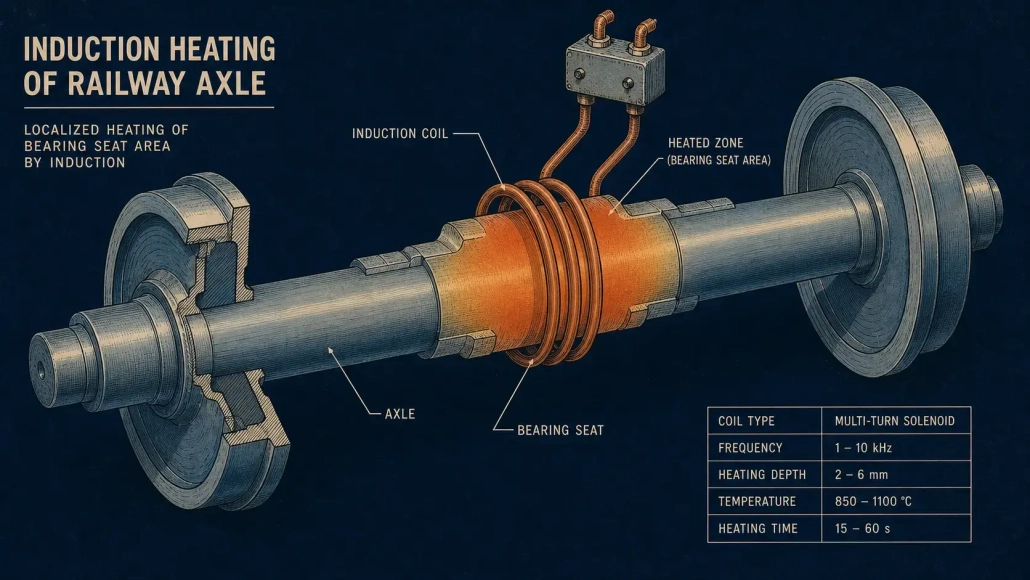
التسخين التعريفي في صناعة السكك الحديدية: التطبيقات, التحكم في العملية, واختيار المعدات
أجزاء السكك الحديدية ثقيلة وحساسة للسلامة. When they need heat, it’s usually in one specific area — a bearing seat, a wheel hub, a rail end. Not the whole component. Induction Heating Railway Manufacturing puts heat exactly where it’s needed through electromagnetic coupling: لا لهب, no furnace wait, no heating what doesn’t need to be hot. Induction heating fundamentals covers the physics.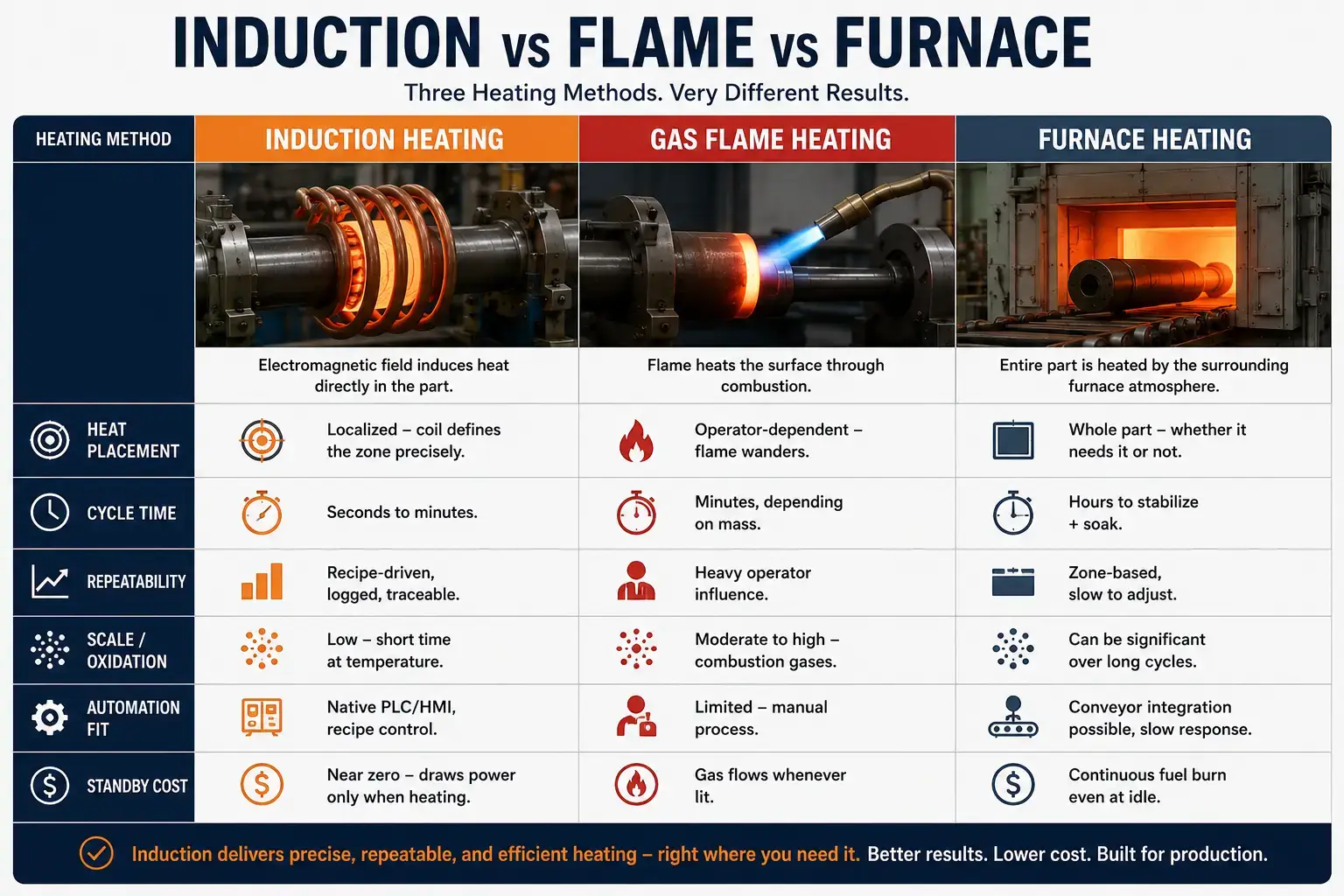
Flame still has its place — field repair, one-off jobs, anywhere portability matters more than precision. But if you need the same result tomorrow that you got today, and you need to prove it, induction is the tool for the job.
| 1. Why Induction Fits Railway Manufacturing | 2. Railway Applications |
| 3. Engineering Considerations | 4. Equipment Selection Factors |
| 5. When Induction Isn’t the Best Fit | الأسئلة المتكررة |
1. Why Induction Heating Fits Railway Manufacturing
Induction targets the zone. Electromagnetic energy couples into the workpiece directly — no flame, no heat transfer through air. The pattern is a function of frequency, هندسة الملف, مستوى الطاقة, and part position. Get those four variables right and the result repeats. Shift after shift. Axle after axle.
2. Common Railway Applications for Induction Heating
From rail welding and wheel shrink-fitting to bearing mounting, التقسية بالتحريض of journals and treads, و اللحام بالحث of electrical and fluid-system assemblies — induction shows up wherever controlled, localized heat matters in railway production and maintenance.
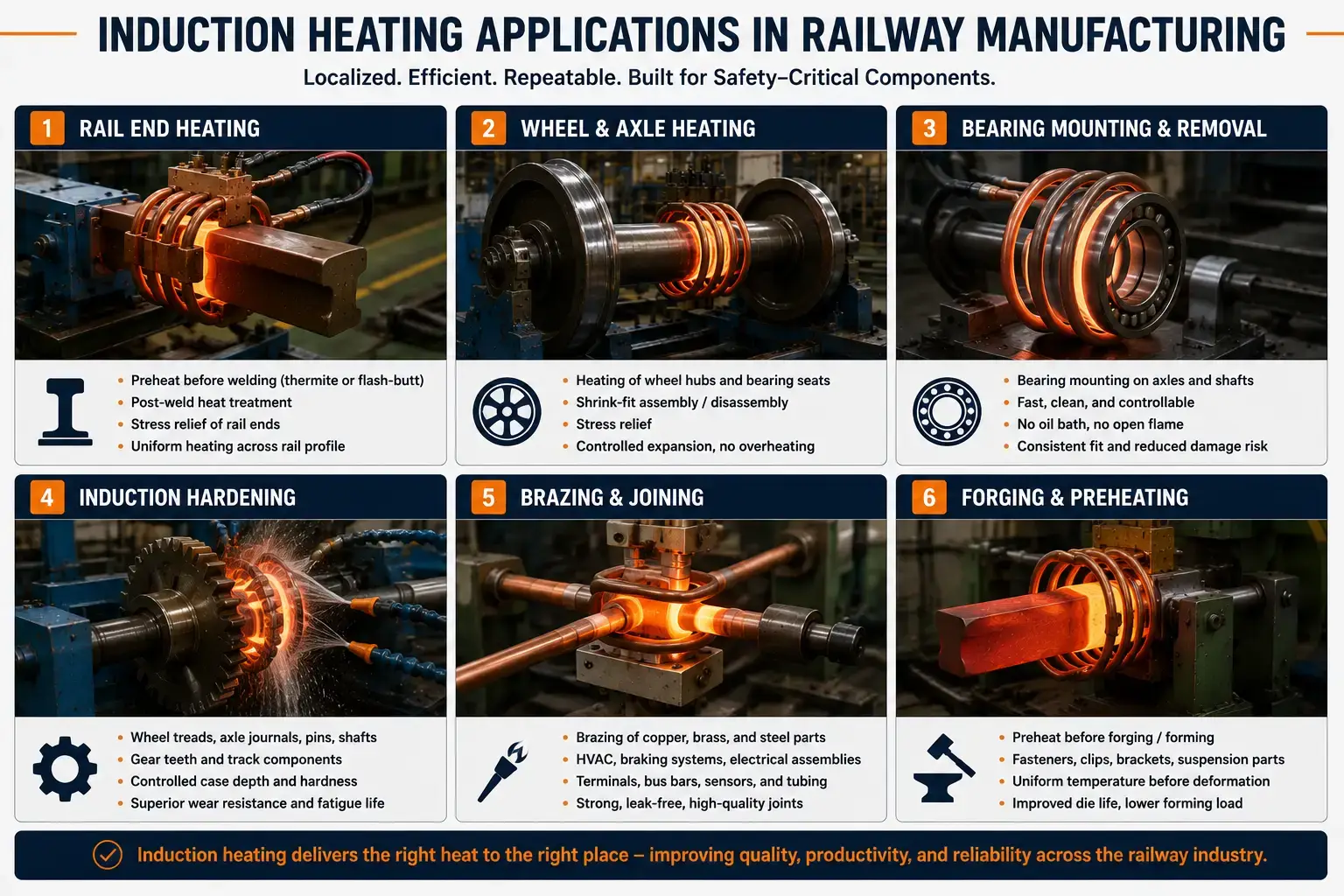
Rail end heating
Rail welding — thermite or flash-butt — needs controlled preheat and post-weld treatment. The challenge is the rail profile itself: thick head, thin web, wide base. Three different thermal masses in one cross-section. The coil has to balance all three.
3. Engineering Considerations for Reliable Production
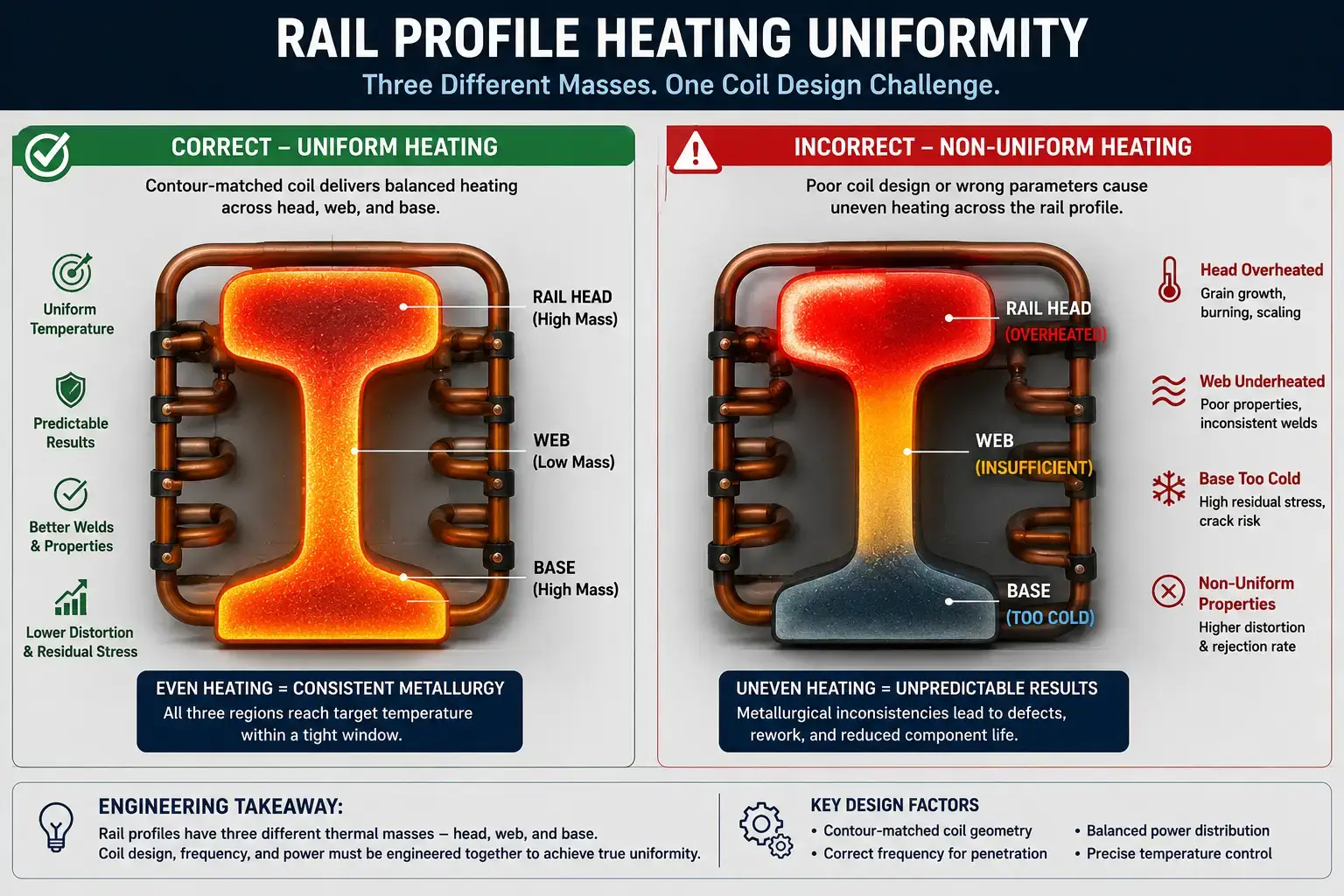
Take the rail profile as an example. Three different thermal masses in one cross-section — thick head, thin web, wide base — and induction doesn’t heat them equally by default. The coil has to compensate. That same geometry-awareness applies to every railway component: axles, عجلات, مقاعد المحامل. Induction heating in railway manufacturing is a process, not a purchase order. Evaluate the part, المادة, the production flow, and the quality requirement as one thing.
Material condition bites you if you ignore it. Steel chemistry, المعالجة الحرارية السابقة, التركيب المجهري, surface condition — all of it changes how the part responds to induction. للتقسية, carbon content and hardenability set the ceiling on what you can achieve. Rust, الصدأ, الزيت, الطلاءات: these mess with heating behavior and create fumes. Test with parts in their actual production condition. Not clean lab samples.
Temperature measurement has to survive the real environment. IR pyrometers need correct emissivity, clean sight lines, and protection from scale, البخار, and smoke. A lab setup with perfect sight lines doesn’t represent a hot, wet, high-throughput maintenance depot. Validate under real conditions. And for hardening: the quench system matters as much as the heating. نمط الرش, التدفق, الضغط, polymer concentration, درجة الحرارة, timing — one of these drifting changes hardness, عمق الحالة, and distortion in ways that don’t always show up at final inspection.
Cracks from bad quenching surface in service, not at the test bench. Metallurgical testing during process development is not optional.
Fixtures near the coil become part of the process. Railway parts are heavy, so fixtures are substantial. If they’re magnetic or conductive, they heat up and distort the field — whether you meant them to or not. Nonmagnetic stainless, السيراميك, water-cooled fixture elements help. But the fixture has to position the part consistently first. Everything else comes second.
الوصول لأغراض الصيانة: overlooked during specification, regretted during production. اللفات, الخراطيم, وصلات الناقل, أجهزة الاستشعار, quench components — all wear items. إذا كان تبديل واحد يستغرق نصف فترة تحول وإعادة المحاذاة لعبة تخمين, الوقت التشغيلي يختفي. بيئات السكك الحديدية لا تغفر: الصدأ, الغبار, المبرد, الاهتزاز. فكر في وقت تبديل الملف اللولبي, توفر القطع الاحتياطية, كشف التسرب, وإنذارات التشخيص قبل تثبيت النظام.
4. عوامل اختيار المعدات الرئيسية
أجزاء السكك الحديدية كبيرة, ثقيلة, وغالبًا سميكة المقطع. يبدأ اختيار المعدات من هنا — وليس من كتالوج, ليس بتكوين قياسي.
مزود الطاقة. الأقسام الفولاذية الكبيرة تحتاج إلى قوة حقيقية للوصول إلى درجة الحرارة في دورة زمنية مناسبة للإنتاج. إذا كانت صغيرة جدًا فإن العملية لن تصل إلى الهدف أبداً, أو ستستغرق وقتاً طويلاً بحيث ينتشر الحرارة حيث لا يجب. إذا كانت كبيرة جدًا فإنك أنفقت مالاً لم تكن بحاجة إليه — وربما خلق مشاكل في التحكم في نافذة عملية ضيقة.
Sizing a power supply means stacking up part material, كتلة, درجة الحرارة المستهدفة, required heat depth, وقت الدورة, heat losses, معدل الإنتاج, and duty cycle. Then asking: can this system deliver repeatable energy when the cooling water is 5°C warmer and the operator is on their third shift? اختيار الطاقة covers the methodology.
التردد. Frequency sets current penetration depth. Railway applications often involve thick steel sections — axles, عجلات, rails — where deep, uniform heating matters. Lower frequencies push deeper. الترددات العالية تتركز على السطح. A rail head hardening process, an axle seat shrink-fit, and a bearing mount each want different frequency ranges. Pick the wrong one and you’re fighting the physics.
| Railway Application | نطاق التردد النموذجي | لماذا |
|---|---|---|
| Axle / wheel deep heating | 1–10 كيلوهرتز | Thick sections need deeper current penetration for uniform through-heating |
| Rail end preheat / تخفيف التوتر | 1–10 كيلوهرتز | Large profile cross-section; need heat through rail head depth |
| تحمل تصاعد | 10-50 كيلو هرتز | اختراق معتدل; تحمل الحلقات الرقيقة الحرارة بكفاءة في هذا النطاق |
| تصلب السطح (الأخاديد, المحاور) | 30-200 كيلو هرتز | عمق حالة سطحي; تركز الحرارة على سطح التآكل |
| دبابيس صغيرة, اللاصقات, التلحيم باللحام | 100–400 كيلوهرتز | مقاطع صغيرة; تردد عالٍ للتسخين السطحي السريع |
اختيار التردد يذهب أعمق في مقايضات الخيارات. اختبر باستخدام قطع حقيقية — الأرقام تعطيك فكرة تقريبية, ليس على القاعدة.
تصميم اللفائف. الملف هو الطرف الفعال. للعمل على السكك الحديدية, يجب أن تتعامل الملفات مع أشكال هندسية كبيرة, تفاوت تموضع القطعة, تركيز التدفق المغناطيسي, التبريد, التحمل الميكانيكي, والوصول للتحميل والتفريغ. الملفات المحيطة تعمل للعجلات, المحاور, and bearings. Split coils handle parts that can’t be threaded through. Contour coils follow rail profiles. Scan coils deliver progressive hardening along a length.
The right design balances uniformity, الكفاءة, and how long the coil survives before someone has to swap it. On high-value railway parts, a coil that drifts after 500 cycles is a quality problem waiting to happen.
التبريد. High-duty railway production generates real heat — in the coil, the leads, المكثفات, the power electronics. Cooling water isn’t an afterthought. معدل التدفق, الضغط, water quality, التوصيلية, inlet temperature — spec them all. أنظمة الحلقة المغلقة شائعة لأنها تحافظ على كيمياء الماء تحت السيطرة وتقلل الترسبات. عندما ينحرف التبريد, الأعطال متقطعة ومن الصعب تشخيصها. أنظمة تبريد الماء تستحق بندًا خاصًا في المواصفات.
التعامل مع القطع. مكونات السكك الحديدية ثقيلة. غالبًا ما يحدد التعامل ما إذا كان النظام يعمل عمليًا, بغض النظر عن أداء منصة الاختبار. الناقلات, الروبوتات, الرافعات, جداول الترقيم, الحمّالات الهيدروليكية, التركيبات المخصصة - أي شيء يحرك القطعة يجب أن يضعها بشكل ثابت بالنسبة للملف.
A few millimeters of position shift changes the coupling gap. The coupling gap changes the heat pattern. On a hardened journal or a rail profile, that’s enough to fail inspection.
5. متى لا يكون التسخين بالحث هو الخيار الأنسب
التسخين بالحث ليس دائمًا الحل. إذا كانت القطعة بأكملها تحتاج إلى درجة حرارة موحدة ونقع طويل — التليين الدفعي, تخفيف الإجهاد لمجموعة المحاور بأكملها, تسوية الصب الكبير — فإن الفرن هو الخيار الأبسط. إذا كنت تقوم بإصلاحات ميدانية منفردة في مكان بدون طاقة موثوقة, قد يكون الشعلة الخيار العملي الوحيد.
القرار يعتمد على ما يحتاجه العملية فعليًا:
— ما مدى ضيق نافذة الحرارة, حقًا?
— هل الجزء كله يحتاج للحرارة, أم منطقة واحدة فقط?
— ما هو المعيار المعدني — وهل يمكن للتسخين بالحث تحقيقه?
— كم عدد القطع لكل وردية? هل هناك حجم مناسب؟?
— هل تحتاج العملية إلى التوثيق والتتبع?
— What’s the total cost of running it, not just the purchase price?
For railway manufacturers and maintenance depots, the strongest business case for induction appears when repeatability, التدفئة الموضعية, السرعة, and process documentation all matter at once. That’s not every application. But it’s a lot of them.
خلاصة القول: Induction Heating Railway Manufacturing makes the most sense when large steel components need fast, موضعي, repeatable heating backed by controlled process documentation. Power and frequency selection, durable coil design, تبريد موثوق, proper handling — get those right and the system runs for years. Treat it as a complete thermal process, not a standalone heat source, and it’ll deliver what the railway industry actually needs: boring, predictable, documented results.
الأسئلة المتكررة
س: What railway components are most commonly heated with induction?
أ: Rails and rail ends, عجلات, axles, مقاعد المحامل, المحاور, الدبابيس, اللاصقات, brake components, والقطع المزورة. قد تكون العملية ملائمة للتركيب بالضغط, التسخين المسبق قبل اللحام أو التشكيل, التقسية بالتحريض, التلحيم باللحام, أو إزالة التوتر — يعتمد على القطعة والمواصفات.
س: هل التسخين بالحث مناسب لمحاور وعجلات السكك الحديدية الكبيرة؟?
أ: نعم — مع القدرة المناسبة, التردد المناسب (عادة نطاقات أدنى للحصول على اختراق أعمق في الأقسام السميكة), ملف قوي يمكنه تحمل كتلة القطعة, ونظام مناولة يضع القطعة بشكل ثابت. يوصى بشدة باختبار القطع الإنتاجية الفعلية قبل المواصفة النهائية. نظام يعمل على عمود بمقدار 50 مم لن يتناسب مع محور سكة حديد دون إعادة تصميم.
ناقش تطبيق التسخين بالحث للسكك الحديدية الخاص بك
شارك رسومات قطعك, متطلبات الإنتاج, وأهداف التسخين. يمكن لفريق الهندسة تقييم القدرة, التردد, تصميم الملف, التبريد, and automation options for a practical induction heating solution.


