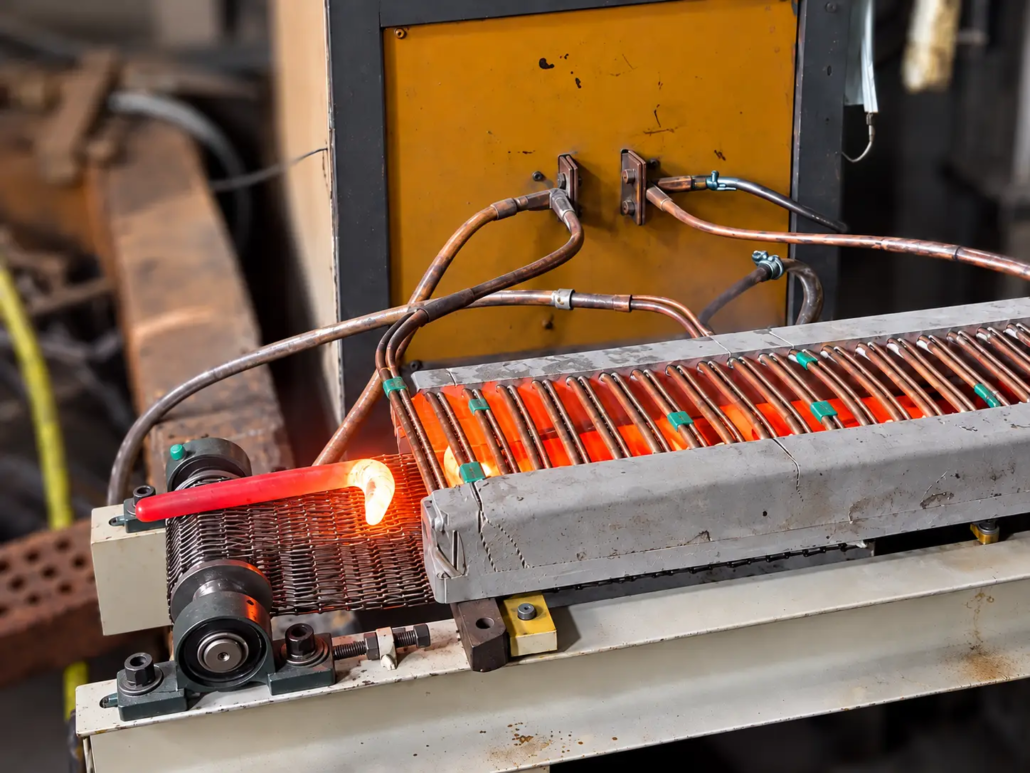
Indukcyjny system hartowania haków
Ⅰ. Watch Automatic Induction Hardening of Hooks
Video: Automatic feeding and conveyor-based induction heating of hook components.
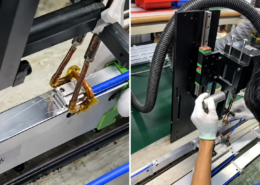
The video shows hooks being automatically loaded onto a stainless steel conveyor and transported through an induction heating coil.
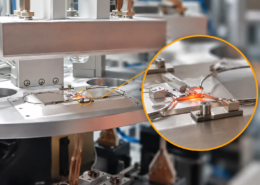
As each workpiece passes through the heating zone, the exposed section becomes visibly red-hot. The conveyor carries the components along a defined path through the inductor, allowing heating time to be coordinated with workpiece movement.
Szczegóły aplikacji
| Przedmiot | Opis |
|---|---|
| obrabiany element | Hook-shaped metal components |
| Zastosowanie | Hartowanie indukcyjne |
| Feeding Method | Automatic feeding |
| Transport System | Stainless steel conveyor belt |
| Metoda ogrzewania | Conveyor-fed induction heating |
| Powierzchnia grzewcza | Selected section of the hook |
| Sprzęt | Customized induction heating and hardening system |
The video demonstrates automatic feeding, conveyor transport and induction heating. The subsequent quenching operation is not visible in the footage.
For a complete induction hardening process, heating and quenching conditions must be established according to the material and required hardened area.
Ⅱ. Suitable Workpieces and Applications
Hartowanie indukcyjne is used for suitable steel components that require increased surface hardness or wear resistance in selected areas.
For hook-shaped parts, the required treatment depends on the component’s function, contact surfaces and loading conditions. Some hooks may require localized hardening of a working surface, while others have strength and toughness requirements that call for a different heat-treatment approach.
Potencjalne zastosowania obejmują:
— Industrial hook components with specified hardened surfaces
— Hook-shaped mechanical parts subject to localized wear
— Hooked-end components used in mechanical assemblies
— Custom formed steel components requiring selective hardening
— Similar parts suitable for automatic conveyor feeding
Potential applications occur in general machinery, industrial equipment and metal component manufacturing.
The specific end use of the hooks shown in the video has not been identified. For load-bearing or safety-critical hooks, the heat-treatment process must be evaluated against the component’s mechanical properties and applicable design requirements.
Ⅲ. Conveyor Feeding, Induction Heating and Quenching
The equipment arrangement brings workpiece feeding and induction heating into a coordinated production sequence.
Automatic Feeding and Conveyor Transport
The feeding mechanism supplies hooks to the conveyor, which carries them through the induction heating area.
Przy powtarzalnej produkcji, the transport system must accommodate the workpiece shape and maintain a suitable position as each component passes through the inductor.
Conveyor speed, workpiece spacing and heating power must be matched to the required heating cycle.
Hook geometry also affects the feeding arrangement. Components with different bends, lengths or projecting sections may require dedicated guides, supports or positioning tooling.
Dostosowana cewka indukcyjna
Dla cewka indukcyjna is selected according to the workpiece cross-section, required heating area and available clearance.
As the workpiece passes through the alternating magnetic field, induced currents generate heat within the electrically conductive material.
Dla lokalizowanego hartowania, the inductor and process parameters are selected to concentrate heating in the specified region rather than heat the entire component uniformly.
A customized coil arrangement may be required when the hook geometry prevents suitable positioning within a conventional inductor.
Heating and Quenching Coordination
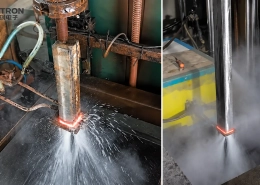
Do odpowiednich stali hartowanych, induction hardening requires heating the selected region to the appropriate austenitizing condition followed by suitable hartowanie.
The required quenching method depends on the material, treatment area, component geometry and allowable distortion.
W zależności od zastosowania, the equipment may incorporate a separate quenching station or an integrated heating and quenching arrangement.
The quenching process must be coordinated with the heating operation. A visibly red-hot workpiece does not, samodzielnie, establish the resulting surface hardness or effective case depth.
Ⅳ. Equipment Configuration and Process Control
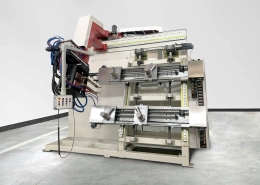
KOTRON supplies induction hardening equipment covering power conversion, niestandardowe cewki indukcyjne, workpiece handling, quenching and machine control.
For conveyor-fed hook hardening, the equipment is selected according to the workpiece dimensions, required process and production conditions.
| Składnik systemu | Rozważania dotyczące konfiguracji |
|---|---|
| Zasilacz indukcyjny | Power and frequency selected for the heating requirement |
| Cewka indukcyjna | Matched to the hook geometry and hardening area |
| Automatic Feeding System | Workpiece loading and orientation |
| Conveyor System | Transport speed, spacing and workpiece support |
| Workpiece Tooling | Przewodniki, supports or fixtures where required |
| Sprzęt do hartowania | Quenchant delivery and cooling conditions |
| System sterowania | Coordination of feeding, heating and related operations |
| Chłodzenie sprzętu | Cooling matched to the selected induction system |
| Additional Automation | Downstream handling and production integration where required |
Digital Power and Process Control
KOTRON’s available induction heating equipment includes DSP-controlled power supplies for digital regulation of the heating process.
For a conveyor-fed application, the power supply and machine control system must be coordinated with workpiece movement and the required heating time.
The selected configuration may provide programmable heating parameters and control of associated feeding, positioning or quenching operations.
Opcjonalne monitorowanie procesu
Where production monitoring or traceability is required, an appropriate monitoring package may provide:
— Real-time voltage, aktualne, power and frequency monitoring
— Heating parameter and process-curve records
— Parameter-limit alarms
— Stored process settings for different workpieces
— Historical operating records
— Quenchant flow and temperature monitoring, where suitable sensors are installed
These functions support process supervision and help identify deviations from established operating conditions.
Monitoring electrical parameters does not directly confirm final hardness or case depth. Finished-part quality must be verified using appropriate inspection methods.
V.. Referencyjne modele zasilaczy indukcyjnych
The required induction power supply depends on the hook material, wymiary, obszar podgrzewania, inductor design and production cycle.
The following models are preliminary options for evaluating different heating requirements.
| Model | Moc | Zakres częstotliwości | Preliminary Application Reference |
|---|---|---|---|
| XG-30 | 30 kW | 20–40 kHz | Smaller hook components requiring localized heating |
| XG-60 | 60 kW | 20–40 kHz | Medium-sized hook hardening applications |
| XZG-80SCZ | 80 kW | 1–50 kHz | Larger heating loads or applications with greater production requirements |
The specifications and application descriptions above are reference information, not confirmed equipment selections for the video demonstration. Current model specifications and suitability must be verified for the actual project.
Wybór zasilacza
Power and frequency are selected together with the induction coil and heating process.
Główne rozważania obejmują:
— Material and cross-sectional dimensions
— Required heating location and depth
— Workpiece geometry and coil clearance
— Conveyor speed and heating duration
— Required hardened area and effective case depth
— Szybkość produkcji
Higher power does not automatically produce a deeper hardened layer or a more suitable heating pattern. The electrical equipment, inductor and quenching process must be evaluated as a complete system.
Ⅵ. Selecting a System for Different Hook Components
Hook-shaped workpieces can vary significantly in geometry and processing requirements.
A suitable system must provide sufficient heating capacity while maintaining the required relationship between the workpiece, conveyor and inductor.
| Czynnik selekcji | Rozważania inżynieryjne |
|---|---|
| Materiał obrabiany | Hardenability and heat-treatment requirements |
| Hook Geometry | Karmienie, positioning and inductor clearance |
| Cross-Section | Heating demand and temperature distribution |
| Wymagany obszar utwardzony | Location and extent of localized treatment |
| Szybkość produkcji | Conveyor speed, workpiece spacing and processing sequence |
| Docelowa twardość powierzchni | Wymagane właściwości obrabianej powierzchni |
| Efektywna głębokość obudowy | Heating and quenching requirements |
| Factory Layout | Equipment arrangement and production integration |
Workpiece Geometry and Changeover
Different hook sizes may be processed within the designed range of the equipment.
Changes in workpiece geometry can require adjustments to conveyor guides, feeding arrangements, inductors or process settings.
Where multiple product types are required, changeover requirements should be considered during equipment selection.
Hardening Process Verification
For applications with specified hardness or case-depth requirements, heating and quenching parameters should be established through process trials.
Verification may include surface hardness testing, hardness traverses or examination of the hardened layer, according to the component specification.
The achievable result depends on the material, heating conditions, projektu induktora i procesu hartowania.
Ⅶ. Często zadawane pytania
Kliknij pytanie, aby rozwinąć odpowiedź.
Can the system process hooks of different sizes?
Different sizes may be processed within the mechanical and electrical capacity of the selected equipment. Changes in workpiece dimensions or shape may require different inductors, conveyor guides or process settings.
Does the equipment heat the entire hook?
Niekoniecznie. The induction coil can be designed to concentrate heating on a specified section. The actual temperature distribution depends on the coil design, workpiece geometry and heating conditions.
Can the equipment be supplied with automatic feeding and quenching?
Tak. KOTRON supplies customized systems incorporating automatic feeding, conveyor transport, induction heating and suitable quenching equipment. The complete process sequence and automation level are determined by the project.
Can production parameters be recorded?
With an appropriate monitoring configuration, selected operating parameters, heating curves and production records can be stored for process review.
Ⅷ. Request a Customized Induction Hardening System for Hooks
For induction hardening of hook-shaped components, equipment selection starts with the workpiece and required treatment area.
Proszę podać:
— Rysunek lub zdjęcia przedmiotu obrabianego
— Materiał lub gatunek stali
— Main dimensions and cross-sectional size
— Wymagana powierzchnia hartowania
— Wielkość produkcji lub wymagany czas cyklu
Jeśli już zdefiniowano, target surface hardness and effective case depth are also useful for the initial technical evaluation.
Na podstawie tych szczegółów, KOTRON może ocenić zasilacz indukcyjny, dostosowana cewka indukcyjna, conveyor arrangement, quenching equipment and required control or automation configuration.