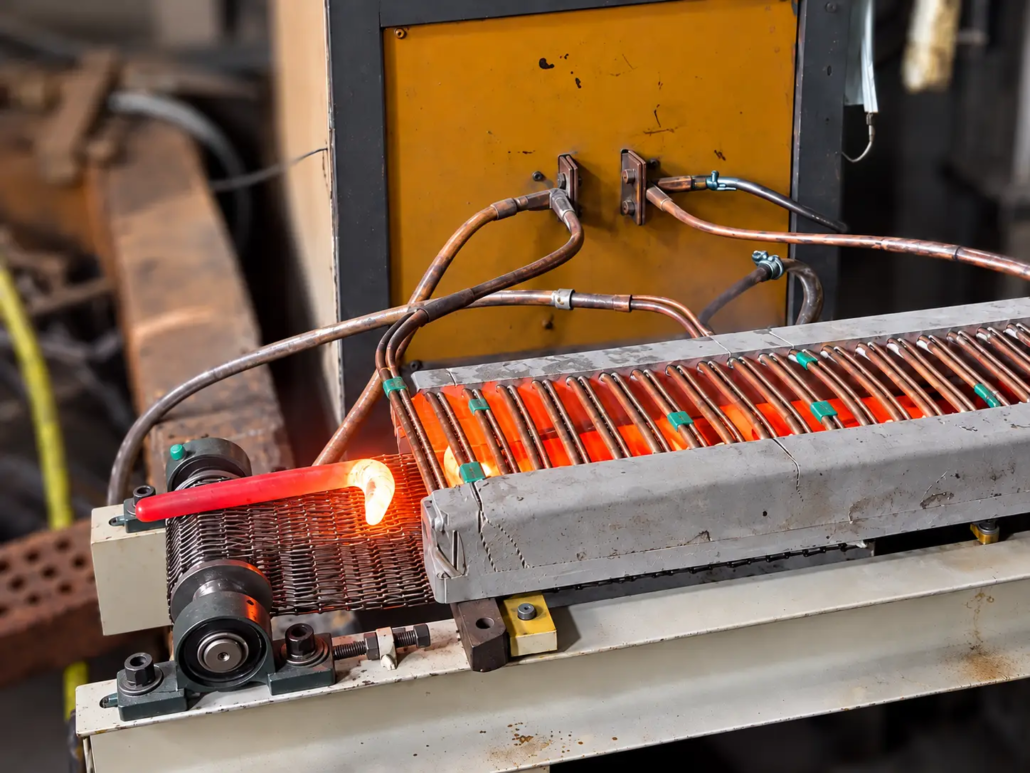
Hệ thống làm cứng cảm ứng cho móc
Ⅰ. Watch Automatic Induction Hardening of Hooks
Video: Automatic feeding and conveyor-based induction heating of hook components.
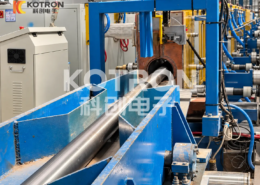
The video shows hooks being automatically loaded onto a stainless steel conveyor and transported through an induction heating coil.
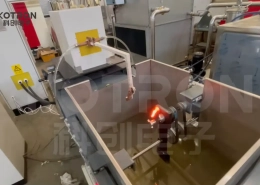
As each workpiece passes through the heating zone, the exposed section becomes visibly red-hot. The conveyor carries the components along a defined path through the inductor, allowing heating time to be coordinated with workpiece movement.
Chi tiết ứng dụng
| Mục | Sự miêu tả |
|---|---|
| Gia công | Hook-shaped metal components |
| Ứng dụng | Tôi cứng bằng cảm ứng |
| Feeding Method | Automatic feeding |
| Transport System | Stainless steel conveyor belt |
| Phương pháp sưởi ấm | Conveyor-fed induction heating |
| Heating Area | Selected section of the hook |
| Thiết Bị | Customized induction heating and hardening system |
The video demonstrates automatic feeding, conveyor transport and induction heating. The subsequent quenching operation is not visible in the footage.
For a complete induction hardening process, heating and quenching conditions must be established according to the material and required hardened area.
Ⅱ. Suitable Workpieces and Applications
Tôi cứng bằng cảm ứng is used for suitable steel components that require increased surface hardness or wear resistance in selected areas.
For hook-shaped parts, the required treatment depends on the component’s function, contact surfaces and loading conditions. Some hooks may require localized hardening of a working surface, while others have strength and toughness requirements that call for a different heat-treatment approach.
Các ứng dụng tiềm năng bao gồm:
— Industrial hook components with specified hardened surfaces
— Hook-shaped mechanical parts subject to localized wear
— Hooked-end components used in mechanical assemblies
— Custom formed steel components requiring selective hardening
— Similar parts suitable for automatic conveyor feeding
Potential applications occur in general machinery, industrial equipment and metal component manufacturing.
The specific end use of the hooks shown in the video has not been identified. For load-bearing or safety-critical hooks, the heat-treatment process must be evaluated against the component’s mechanical properties and applicable design requirements.
Ⅲ. Conveyor Feeding, Induction Heating and Quenching
The equipment arrangement brings workpiece feeding and induction heating into a coordinated production sequence.
Automatic Feeding and Conveyor Transport
The feeding mechanism supplies hooks to the conveyor, which carries them through the induction heating area.
Đối với sản xuất lặp lại, the transport system must accommodate the workpiece shape and maintain a suitable position as each component passes through the inductor.
Conveyor speed, workpiece spacing and heating power must be matched to the required heating cycle.
Hook geometry also affects the feeding arrangement. Components with different bends, lengths or projecting sections may require dedicated guides, supports or positioning tooling.
Cuộn dây cảm ứng tùy chỉnh
The cuộn cảm is selected according to the workpiece cross-section, required heating area and available clearance.
As the workpiece passes through the alternating magnetic field, induced currents generate heat within the electrically conductive material.
Để làm cứng cục bộ, the inductor and process parameters are selected to concentrate heating in the specified region rather than heat the entire component uniformly.
A customized coil arrangement may be required when the hook geometry prevents suitable positioning within a conventional inductor.
Heating and Quenching Coordination
For suitable hardenable steels, induction hardening requires heating the selected region to the appropriate austenitizing condition followed by suitable ủ nhiệt.
The required quenching method depends on the material, treatment area, component geometry and allowable distortion.
Tùy thuộc vào ứng dụng, the equipment may incorporate a separate quenching station or an integrated heating and quenching arrangement.
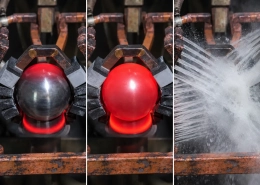
The quenching process must be coordinated with the heating operation. A visibly red-hot workpiece does not, tự nó, establish the resulting surface hardness or effective case depth.
Ⅳ. Equipment Configuration and Process Control
KOTRON supplies induction hardening equipment covering power conversion, customized inductors, workpiece handling, quenching and machine control.
For conveyor-fed hook hardening, the equipment is selected according to the workpiece dimensions, required process and production conditions.
| System Component | Cân nhắc về cấu hình |
|---|---|
| Nguồn Điện Cảm Ứng | Power and frequency selected for the heating requirement |
| Cuộn cảm ứng | Matched to the hook geometry and hardening area |
| Automatic Feeding System | Workpiece loading and orientation |
| Conveyor System | Transport speed, spacing and workpiece support |
| Workpiece Tooling | Hướng dẫn, supports or fixtures where required |
| Thiết bị làm nguội | Quenchant delivery and cooling conditions |
| Hệ thống điều khiển | Coordination of feeding, heating and related operations |
| Equipment Cooling | Cooling matched to the selected induction system |
| Additional Automation | Downstream handling and production integration where required |
Digital Power and Process Control
KOTRON’s available induction heating equipment includes DSP-controlled power supplies for digital regulation of the heating process.
For a conveyor-fed application, the power supply and machine control system must be coordinated with workpiece movement and the required heating time.
The selected configuration may provide programmable heating parameters and control of associated feeding, positioning or quenching operations.
Giám sát quy trình tùy chọn
Where production monitoring or traceability is required, an appropriate monitoring package may provide:
— Real-time voltage, dòng điện, power and frequency monitoring
— Heating parameter and process-curve records
— Parameter-limit alarms
— Stored process settings for different workpieces
— Historical operating records
— Quenchant flow and temperature monitoring, where suitable sensors are installed
These functions support process supervision and help identify deviations from established operating conditions.
Monitoring electrical parameters does not directly confirm final hardness or case depth. Finished-part quality must be verified using appropriate inspection methods.
Ⅴ. Reference Induction Power Supply Models
The required induction power supply depends on the hook material, kích thước, Khu vực gia nhiệt, inductor design and production cycle.
The following models are preliminary options for evaluating different heating requirements.
| Người mẫu | Công suất | Dải Tần Số | Preliminary Application Reference |
|---|---|---|---|
| XG-30 | 30 kW | 20–40 kHz | Smaller hook components requiring localized heating |
| XG-60 | 60 kW | 20–40 kHz | Medium-sized hook hardening applications |
| XXG-80SCZ | 80 kW | 1–50 kHz | Larger heating loads or applications with greater production requirements |
The specifications and application descriptions above are reference information, not confirmed equipment selections for the video demonstration. Current model specifications and suitability must be verified for the actual project.
Lựa chọn nguồn điện
Power and frequency are selected together with the induction coil and heating process.
The main considerations include:
— Material and cross-sectional dimensions
— Required heating location and depth
— Workpiece geometry and coil clearance
— Conveyor speed and heating duration
— Required hardened area and effective case depth
— Tốc độ sản xuất
Higher power does not automatically produce a deeper hardened layer or a more suitable heating pattern. The electrical equipment, inductor and quenching process must be evaluated as a complete system.
Ⅵ. Selecting a System for Different Hook Components
Hook-shaped workpieces can vary significantly in geometry and processing requirements.
A suitable system must provide sufficient heating capacity while maintaining the required relationship between the workpiece, conveyor and inductor.
| Yếu tố lựa chọn | Xem xét kỹ thuật |
|---|---|
| Vật liệu chi tiết gia công | Hardenability and heat-treatment requirements |
| Hook Geometry | cho ăn, positioning and inductor clearance |
| Cross-Section | Heating demand and temperature distribution |
| Required Hardened Area | Location and extent of localized treatment |
| Tỷ lệ sản xuất | Conveyor speed, workpiece spacing and processing sequence |
| Target Surface Hardness | Required properties of the treated surface |
| Độ sâu trường hợp hiệu quả | Heating and quenching requirements |
| Factory Layout | Equipment arrangement and production integration |
Workpiece Geometry and Changeover
Different hook sizes may be processed within the designed range of the equipment.
Changes in workpiece geometry can require adjustments to conveyor guides, feeding arrangements, inductors or process settings.
Where multiple product types are required, changeover requirements should be considered during equipment selection.
Hardening Process Verification
For applications with specified hardness or case-depth requirements, heating and quenching parameters should be established through process trials.
Verification may include surface hardness testing, hardness traverses or examination of the hardened layer, according to the component specification.
The achievable result depends on the material, điều kiện sưởi ấm, thiết kế cuộn cảm và quá trình tôi lạnh.
Ⅶ. Câu hỏi thường gặp
Bấm vào một câu hỏi để mở rộng câu trả lời.
Can the system process hooks of different sizes?
Different sizes may be processed within the mechanical and electrical capacity of the selected equipment. Changes in workpiece dimensions or shape may require different inductors, conveyor guides or process settings.
Does the equipment heat the entire hook?
Không nhất thiết. The induction coil can be designed to concentrate heating on a specified section. The actual temperature distribution depends on the coil design, workpiece geometry and heating conditions.
Can the equipment be supplied with automatic feeding and quenching?
Có. KOTRON supplies customized systems incorporating automatic feeding, conveyor transport, induction heating and suitable quenching equipment. The complete process sequence and automation level are determined by the project.
Can production parameters be recorded?
With an appropriate monitoring configuration, selected operating parameters, heating curves and production records can be stored for process review.
Ⅷ. Request a Customized Induction Hardening System for Hooks
For induction hardening of hook-shaped components, equipment selection starts with the workpiece and required treatment area.
Vui lòng cung cấp:
— Bản vẽ phôi hoặc hình ảnh
— Vật liệu hoặc lớp thép
— Main dimensions and cross-sectional size
— Khu vực đông cứng cần thiết
— Production quantity or required cycle time
If already defined, target surface hardness and effective case depth are also useful for the initial technical evaluation.
Dựa trên những chi tiết này, KOTRON can assess the induction power supply, cuộn cảm tùy chỉnh, conveyor arrangement, quenching equipment and required control or automation configuration.