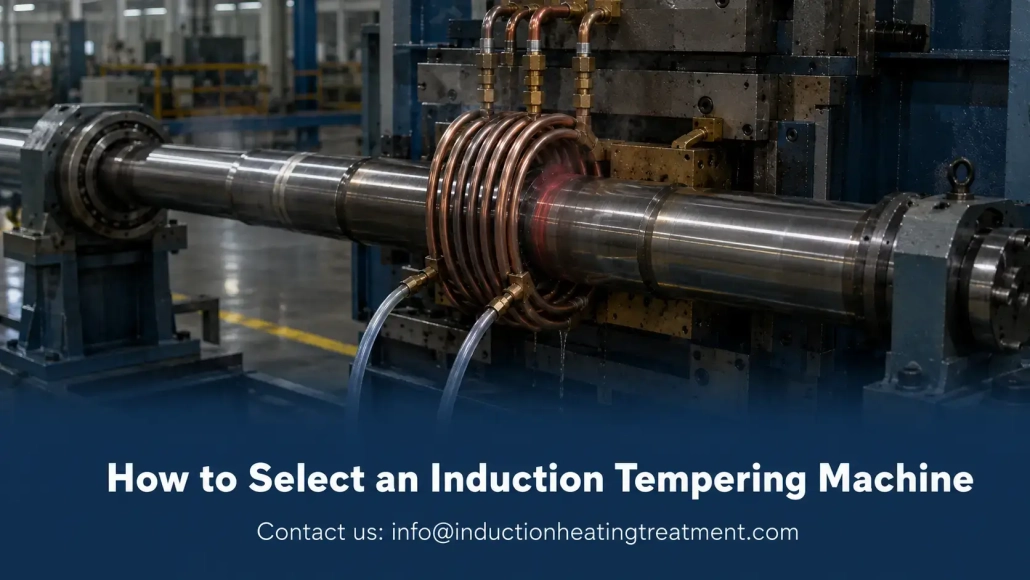
5 Critical Factors for Selecting an Induction Tempering Machine
Selecting an induction tempering machine is not about picking the highest power rating or the lowest price. It is about matching the equipment to your workpiece — its material, geometry, target hardness, and throughput. A well-specified machine turns tempering from a batch bottleneck into a fast, repeatable in-line step. A poorly matched one produces uneven hardness, wastes energy, and never quite catches up with the rest of the line.
Tempering is what turns a hard-but-brittle quenched part into a tough, service-ready component. Induction does it faster and with more control than a furnace — but only when the machine is specified correctly. The five factors below are the decision points that determine which side of that line you land on.
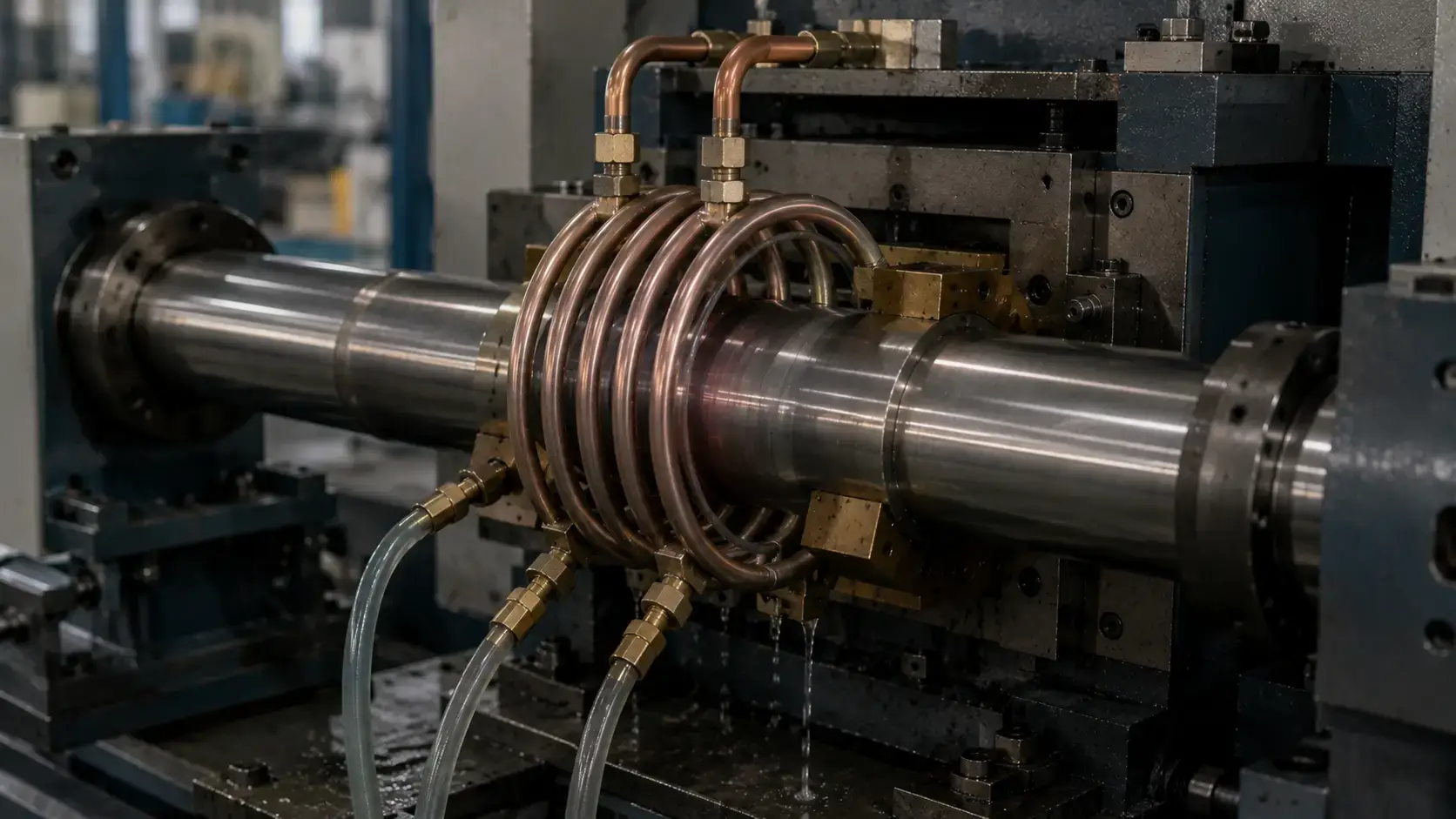
Table of Contents
1. Understand Your Workpiece Requirements
The first and most important step is defining exactly what you need to temper. An induction tempering machine that works perfectly for automotive camshafts may be completely wrong for large-diameter hydraulic rods. Workpiece geometry, material, and post-temper property targets determine everything downstream — coil design, power level, frequency, and whether you need single-shot or scanning tempering.
Start by answering these questions for each part family you plan to run:
— Material grade: Is it medium-carbon steel, alloy steel, or tool steel? Different alloys temper at different temperature ranges to reach the same hardness.
— Dimensions and mass: A solid 80 mm diameter shaft absorbs heat differently than a thin-walled tube, even at the same frequency.
— Tempering zone: Do you need full-body tempering after through-hardening, or localized tempering of a specific wear surface after induction hardening?
— Target hardness and mechanical properties: Tempering at 200°C produces a different toughness-hardness balance than tempering at 550°C. Know your specification before you spec the machine.
— Annual volume and batch size: A machine sized for 5,000 parts per year looks very different from one built for 500,000.
The takeaway is simple: an induction tempering machine should be specified around your most demanding part, not your average one. If the machine can handle the largest diameter, the tightest tolerance, and the highest throughput part in your mix, it can handle everything else.
2. Select the Right Power and Frequency
Power and frequency are the two electrical parameters that directly control how fast and how deep the part heats during tempering. Getting them right means uniform through-heating in the shortest cycle time. Getting them wrong means surface overheating, insufficient core temperature, or energy bills that eat into your margin.
As a practical starting point:
— Medium-frequency systems (1–10 kHz) are the workhorse for tempering. They provide deeper heat penetration and are suitable for shafts, gears, bearing rings, and other medium-to-large cross-section components.
— Higher-frequency systems (10–30 kHz) work well for small-diameter parts and localized tempering zones, where heating depth must be tightly confined to the surface layer.
— Power level should be matched to your required cycle time and part mass — not simply set to the maximum available. Oversizing wastes capital and energy; undersizing creates a bottleneck. Refer to power requirements for induction heating when calculating your baseline.
An experienced supplier will model your part geometry against frequency and power options rather than quoting the highest-spec machine in their catalog. Ask to see the heating profile simulation for your specific workpiece before committing.
3. Evaluate Temperature Control Accuracy
Successful tempering is fundamentally about temperature precision. Unlike hardening, where you heat well above the transformation point, tempering operates in a narrower window — typically 150°C to 650°C depending on the alloy and target hardness. Overshooting by 20 degrees can drop the hardness below specification. Undershooting leaves residual stress in the part.
Modern induction tempering systems use closed-loop control to hold temperature within tight bands. Key features to look for:
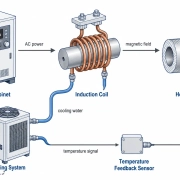
— Infrared pyrometer or thermal camera feedback — non-contact temperature reading at the heated zone, feeding real-time data back to the power supply.
— Closed-loop power adjustment — the system automatically increases or decreases output to maintain the setpoint, compensating for variations in part mass, incoming temperature, or line speed.
— Recipe storage for multiple part numbers — once a tempering profile is dialed in for a given part, it should be recallable with one button. This is essential for shops running more than a handful of SKUs.
— Data logging and traceability — recording temperature curves per batch supports quality audits and helps catch process drift before it produces scrap.
Without accurate temperature control, the speed advantage of induction heating becomes irrelevant — because you will spend just as much time on rework and inspection as you saved on heating.
4. Consider Automation & Production Capacity
Your tempering equipment should support both your current production volume and your projected growth over the next three to five years. Undersizing forces you back into the market for a second machine sooner than expected. Oversizing without automation means you pay for capacity you cannot fully utilize.
The key considerations break down into throughput and integration:
— Cycle time vs. takt time: Can the machine complete one tempering cycle within your line’s required pace? Include part load/unload time in this calculation, not just heating time.
— Manual, semi-automatic, or fully automatic: A manual load system might work for 50 parts a day. At 500 parts per shift, automatic feeding with conveyor or robotic integration becomes a hard requirement for consistency.
— Quick changeover: If you temper multiple part families, look for tool-less coil change, recipe-based parameter switching, and adjustable part fixturing. Every minute of changeover is a minute the machine is not producing.
— In-line vs. batch configuration: In-line tempering (part moves directly from hardening station to tempering coil) minimizes handling and floor space. Batch tempering with a parts magazine suits lower volumes or mixed production schedules.
These decisions mirror many of the same trade-offs encountered when selecting an induction hardening system. The two machines often sit side by side on the same line, and their automation strategies should be designed together — not independently.
5. Choose a Reliable Equipment Supplier
The machine itself is only half the investment. The supplier’s engineering capability, application experience, and after-sales support determine whether that machine runs profitably for ten years or becomes a maintenance headache after two.
When evaluating suppliers of induction tempering machines, look beyond the spec sheet:
— Industry-specific experience: A supplier who has built tempering systems for automotive driveline parts understands the cycle-time and repeatability demands of that industry. General industrial heating experience is not the same thing.
— Custom coil and fixture design: The coil is where the heat transfer actually happens. A supplier who treats coil design as an application-engineering problem — not an off-the-shelf catalog item — will deliver better heating uniformity and longer coil life.
— On-site commissioning and training: An induction heating system is not plug-and-play. The supplier should send an engineer to your floor, validate the process parameters on your actual parts, and train your operators.
— Spare parts availability and lead times: Power modules, capacitors, and coil assemblies should be stockable and shippable within days, not weeks. Ask for a recommended spares list as part of the quotation.
— Warranty terms and long-term service contracts: Understand what is covered, for how long, and what response time the supplier commits to after the warranty period ends.
A supplier worth working with asks about your workpieces before quoting a power rating. We evaluate every inquiry against the same five factors outlined above — part geometry, material, temperature control requirements, automation needs, and long-term service expectations — and deliver a configuration recommendation based on your process, not a catalog preset.
Induction vs. Conventional Furnace Tempering
For shops that currently use batch furnaces for tempering, the question is not whether induction can do the job — it is whether the switch makes economic sense for your specific production profile. The table below lays out the practical differences.
| Induction Tempering | Conventional Furnace Tempering |
|---|---|
| Rapid heating — seconds to minutes | Long heating cycles — typically 1–4 hours |
| Localized heating — only the specified zone is tempered | Entire part heated — energy spent on mass that does not require treatment |
| Lower energy consumption per part | Higher operating costs — furnace idling, heat loss to surroundings |
| Reduced distortion — short heat exposure, minimal thermal stress | Greater risk of deformation — prolonged soaking at temperature |
| Easy automation — integrates directly into in-line production | Limited automation flexibility — batch loading, longer cycle dependency |
| Excellent process repeatability — closed-loop control per part | More difficult temperature uniformity — hot and cold zones inside the furnace |
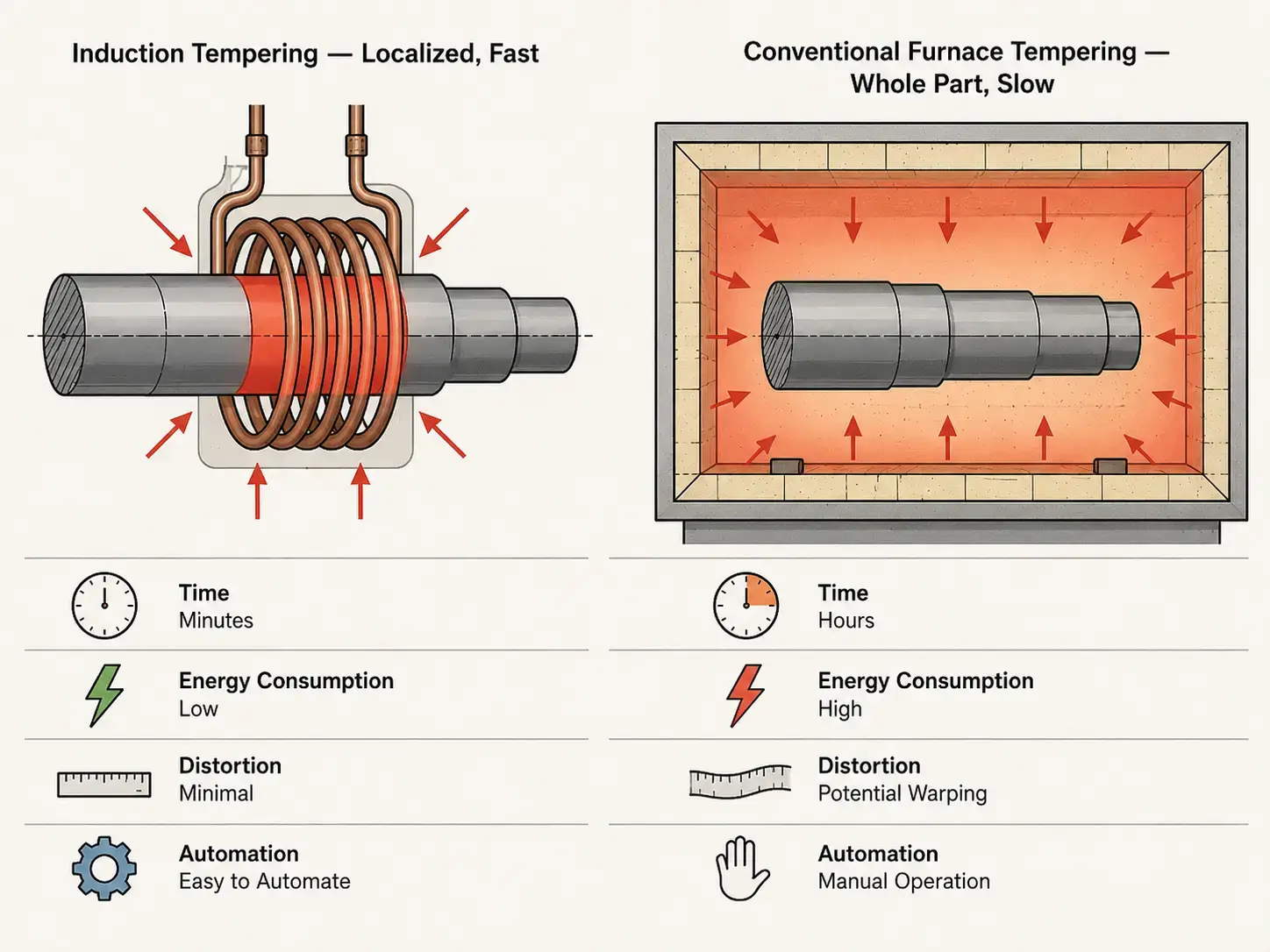
Induction tempering is not a universal replacement for furnaces. For high-mix, low-volume shops that process dozens of different part geometries in small batches, a conventional furnace may still be the more flexible option — simply load the batch, set the timer, and walk away. But for production lines running consistent part families at medium-to-high volume, induction tempering wins on cycle time, energy cost per part, and process control. The crossover point is usually somewhere between “we run the same 3 shafts every day” and “we temper 200 different part numbers a month.”
Key Takeaway
Choosing an induction tempering machine comes down to five decisions, and each one cascades into the next. Define your workpiece requirements first — material, geometry, target hardness, and volume. That drives the power and frequency selection. Power and frequency, in turn, set the baseline for temperature control accuracy and the level of automation you need. And the supplier you choose determines whether the first four decisions get validated on real parts with real process data, or left to assumptions that surface as problems after installation. The right machine, specified correctly, turns tempering from a batch bottleneck into a seamless in-line step. The wrong one does the opposite.
FAQ
Q: What is the difference between induction tempering and induction hardening?
A: Induction hardening heats the part above its transformation temperature (typically 800–950°C) and quenches it rapidly to create a hard martensitic surface layer. Induction tempering is the follow-up step: it reheats the hardened part to a lower temperature (150–650°C) to relieve internal stress, reduce brittleness, and achieve the target balance of hardness and toughness. Both use induction, but at very different temperatures and for different metallurgical goals.
Q: What temperature range does induction tempering typically operate at?
A: The temperature range depends on the alloy and the target mechanical properties. Low-temperature tempering (150–250°C) is common for case-hardened wear parts like bearings and gears, where high surface hardness must be retained. Medium-temperature tempering (350–500°C) suits spring steels and components requiring a balance of strength and ductility. High-temperature tempering (500–650°C) is used for structural steels and parts that need maximum toughness, such as automotive chassis and driveline components.
Q: Can induction tempering replace a conventional tempering furnace entirely?
A: It depends on your production profile. For high-volume lines running consistent part geometries, yes — induction tempering can replace the furnace completely, delivering faster cycle times, lower energy cost, and better process control. For job shops with extreme part variety and small batch sizes, a furnace often remains the more practical choice because it requires less dedicated tooling per part number. Many manufacturers run a hybrid approach: induction for the high-volume families, furnace for the rest.
Need Help Specifying an Induction Tempering System?
Tell us about your workpiece dimensions, material, target hardness, and production volume. We will recommend a machine configuration matched to your application.