Induction Heating of Titanium Alloy Bars for Hot Rolling
Ⅰ. Titanium Alloy Bar Induction Heating in Operation
Video: Multi-station medium-frequency induction heating of titanium alloy bars for hot rolling.
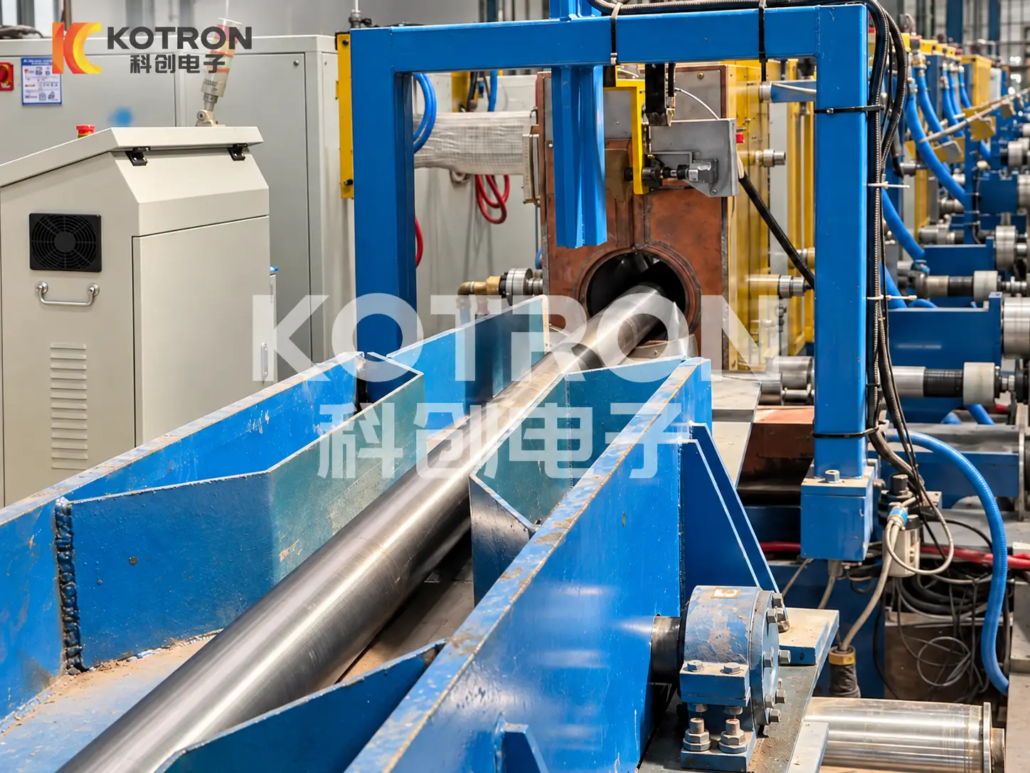
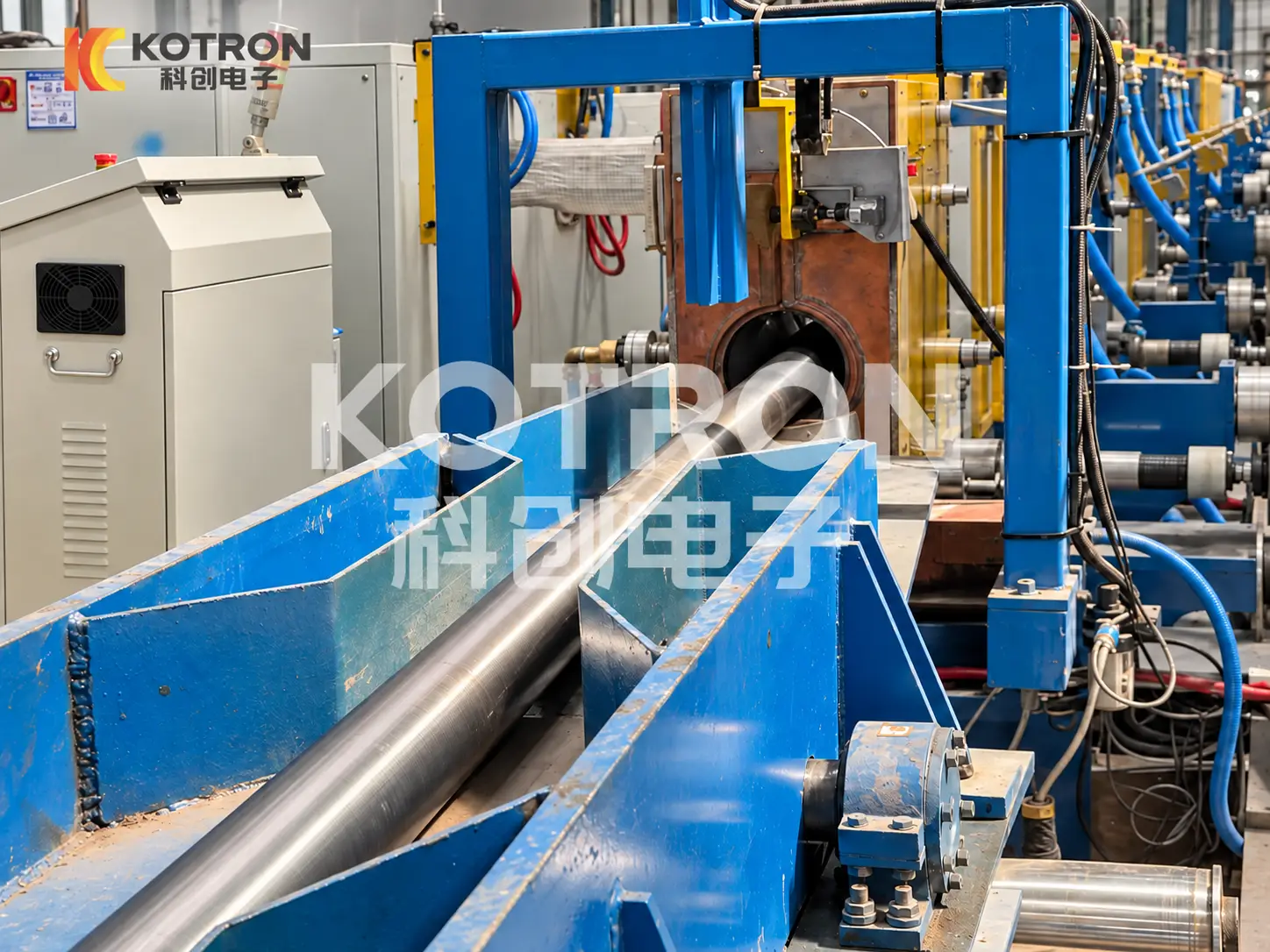
The video shows a long metal bar entering the equipment along a blue steel guide structure.
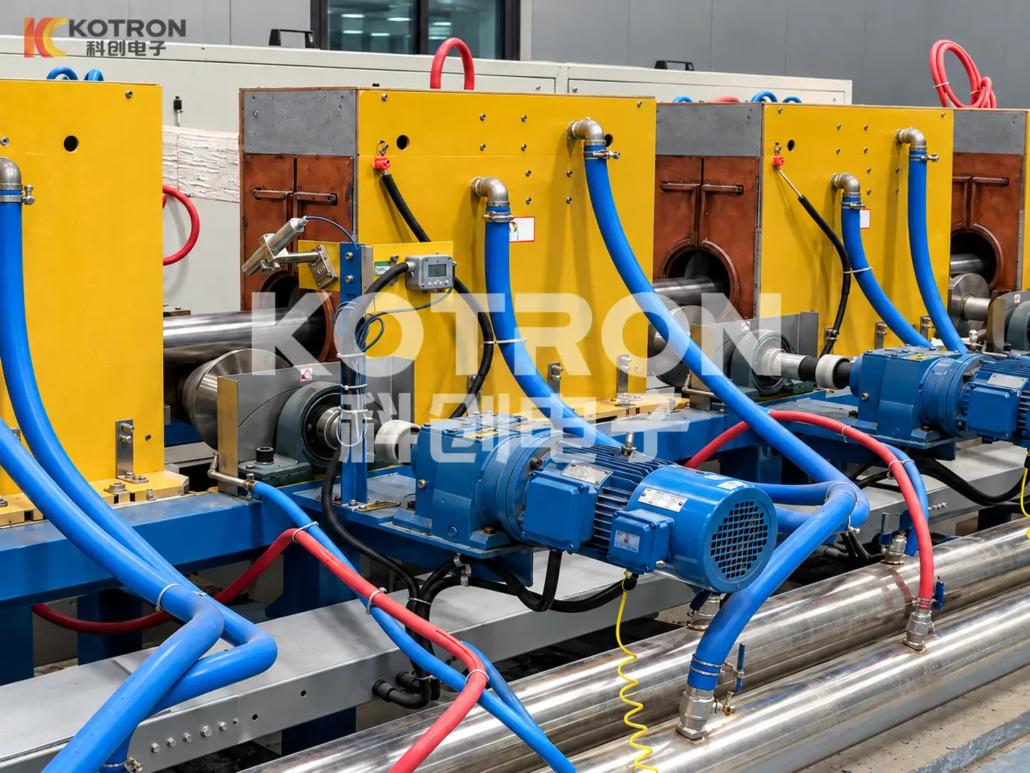
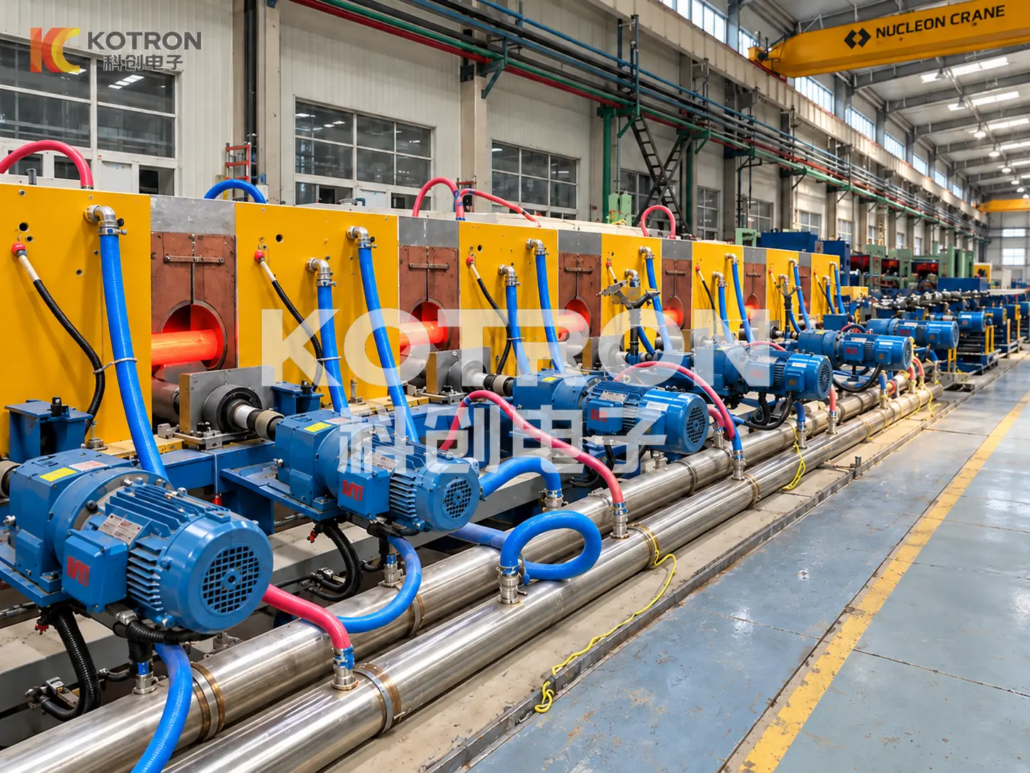
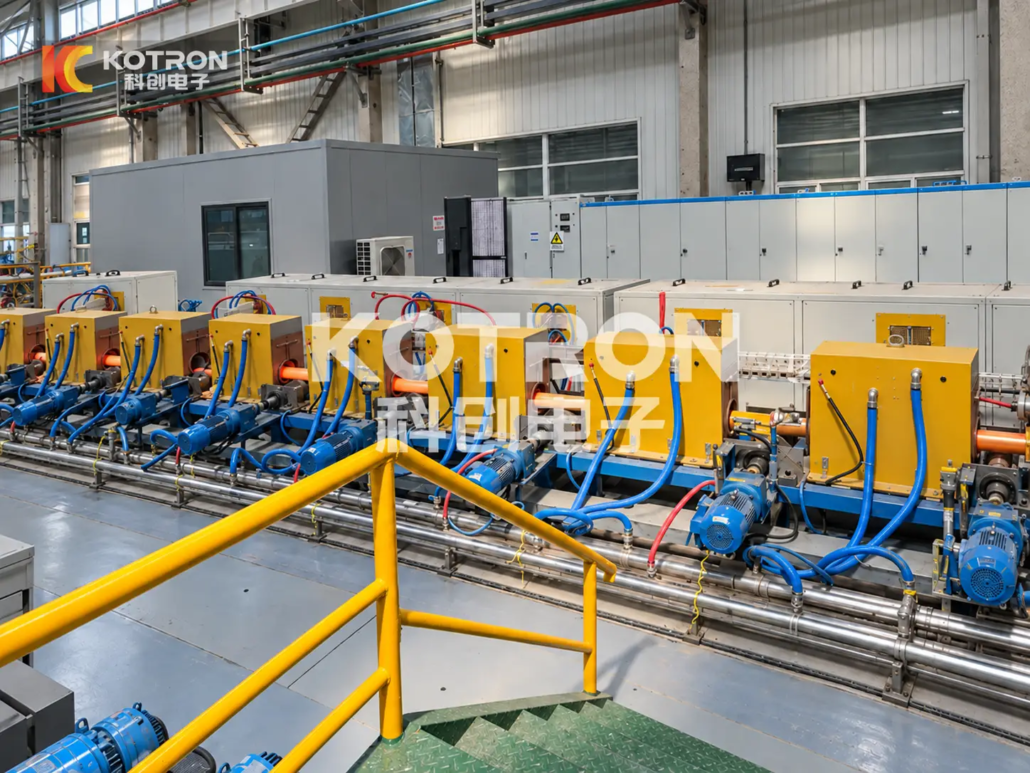
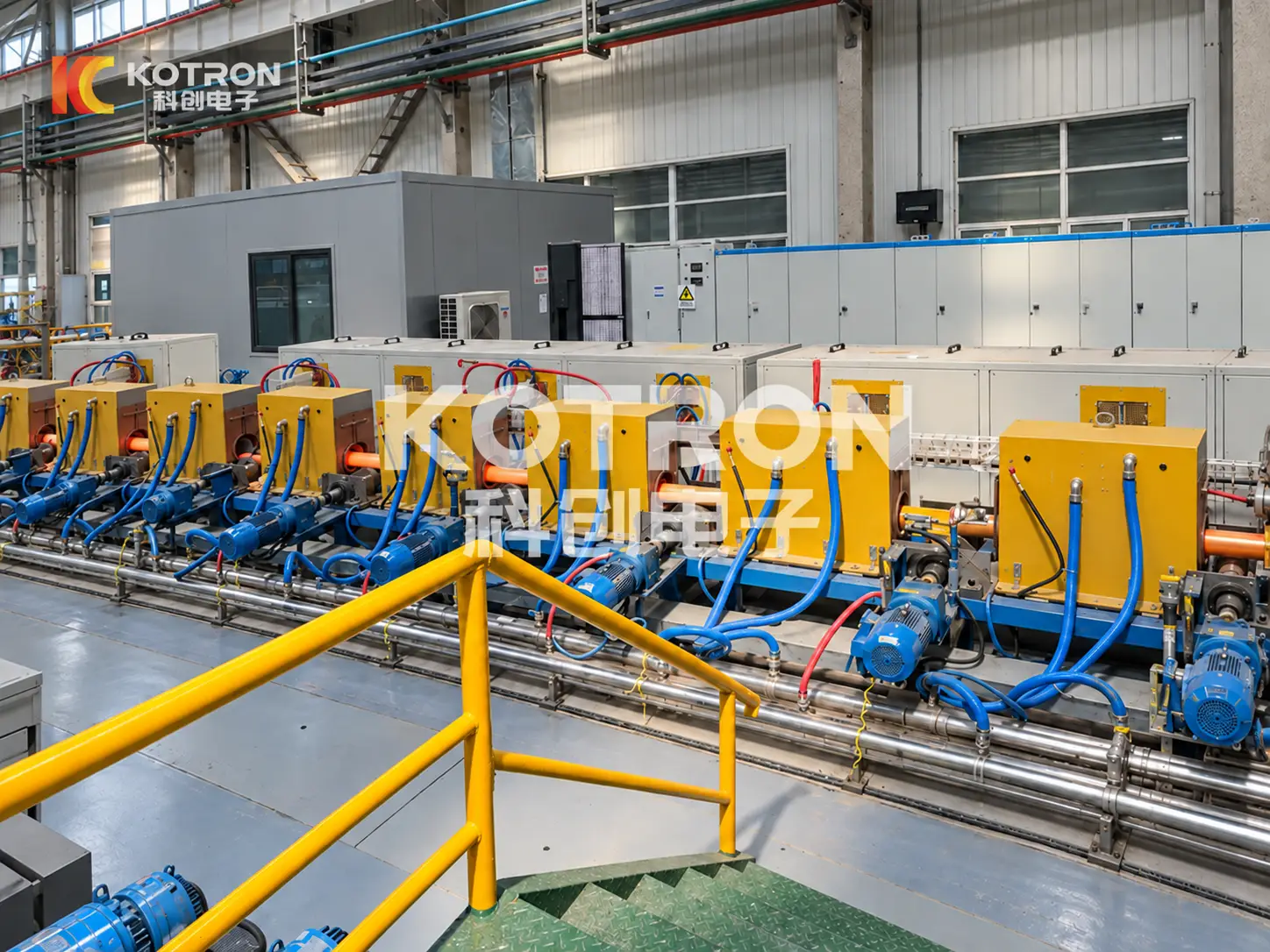
A series of yellow heating units is installed along the processing line, with blue electric motors and roller assemblies positioned beside the bar path. Hoses, electrical connections and supporting structures are visible around the stations.
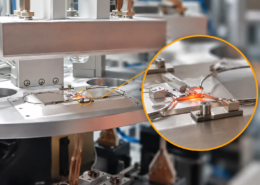
Orange-red heated regions can be seen at several equipment openings, showing the heating process in operation.
Project Configuration
| Item | Description |
|---|---|
| Workpiece | Titanium alloy bar |
| Application | Heating before hot rolling |
| Heating Method | Medium-frequency induction heating |
| Heating Arrangement | Multiple heating stations in sequence |
| Material Handling | Guided bar feeding with roller and drive assemblies |
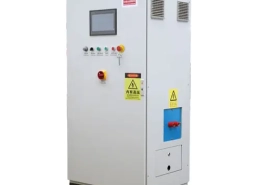
| Supporting Equipment | Electrical cabinets, connecting hoses and pipework |
| Production Layout | Continuous in-line bar processing |
Application Note: The project is identified as titanium alloy bar heating for hot rolling. The video documents the heating and bar-handling equipment, but does not show the downstream rolling operation. The installed power supply models, operating parameters and final processing results have not been provided.
Ⅱ. Multi-Station Heating and Continuous Bar Processing
The equipment is arranged around a continuous bar path, with mechanical handling systems supporting the workpiece as it passes through the heating stations.
Bar Feeding and Guidance
The bar approaches the heating equipment through a guided feed section. Roller assemblies and motor-driven mechanisms are installed along the processing path.
For continuous induction heating, the bar must remain properly aligned as it passes through the inductors. The guide and drive arrangement must suit the workpiece diameter, length and required movement while maintaining suitable clearance within the heating equipment.
Multiple Heating Stations
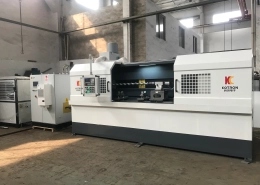
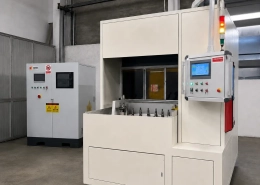
The demonstrated line uses several enclosed heating stations arranged in succession.
This layout allows heating to take place over an extended processing path. The number of stations, effective heating length and electrical arrangement are established from the heating duty and available production space.
For larger bar sections, heating time must also account for heat conduction toward the center of the workpiece. A suitable surface temperature alone does not establish that the entire section has reached the required thermal condition.
Heating Before Hot Rolling
The heating line prepares titanium alloy bars for subsequent deformation in a rolling operation.
The relationship between heating power, bar travel speed and heating length determines the thermal input during continuous processing. The required temperature at the rolling mill must also account for heat loss after the bar leaves the final heating station.
The heating and transport equipment therefore need to be matched to the rolling process rather than selected independently.
Ⅲ. Heating Considerations for Titanium Alloy Bars
Titanium alloys require heating conditions suited to their composition and hot-working requirements. Operating settings developed for carbon steel bars cannot simply be transferred to titanium alloy processing.
Frequency and Through-Heating
Common titanium alloys are essentially non-ferromagnetic, and their electrical and thermal properties differ from those of carbon steels.
In induction heating, alternating magnetic fields induce electrical currents within the bar. Current distribution is influenced by the material’s electrical resistivity, magnetic properties, operating frequency and workpiece diameter.
Titanium alloys also generally have relatively low thermal conductivity compared with many steels. For larger bar sections, the heating cycle needs sufficient time to develop the required temperature distribution between the surface and the center.
Hot-Rolling Temperature
The appropriate heating temperature depends on the titanium alloy grade, its phase-transformation characteristics and the intended rolling process.
A single temperature range should not be applied to every titanium alloy. The heating conditions must be established from the material specification and downstream deformation requirements.
Surface Condition
Titanium alloys can react with oxygen and nitrogen during high-temperature exposure. Excessive surface contamination, including oxygen enrichment, may adversely affect the processed material.
Heating temperature, exposure time and operating environment should therefore be considered when developing the process. Surface-protection measures are selected where required by the alloy and production conditions.
Ⅳ. Kechuang Induction Heating Equipment and Power Supply Options
Kechuang supplies induction heating power supplies and associated equipment for industrial bar heating.
For continuous titanium alloy processing, the system design brings together the electrical supply, inductors, bar-handling mechanisms and required production controls.
Equipment Configuration
| Component | Function |
|---|---|
| Induction Power Supply | Provides electrical output matched to the heating requirements |
| Heating Stations and Inductors | Establish the heating arrangement along the bar path |
| Feeding and Guiding Equipment | Supports and positions the moving bar |
| Mechanical Drive Assemblies | Provide the required workpiece movement |
| Cooling Equipment | Supports the cooling needs of inductors and associated electrical equipment |
| Process Control | Coordinates heating settings and line operation |
XZG Series Induction Power Supplies
Kechuang’s internal equipment references include the following XZG series models for industrial induction heating applications.
| Model | Listed Maximum Power | Reference Frequency Range |
|---|---|---|
| XZG-80SCZ | 80 kW | 1–50 kHz |
| XZG-100SCZ | 100 kW | 1–50 kHz |
| XZG-120SCZ | 120 kW | 1–50 kHz |
| XZG-160SCZ | 160 kW | 1–50 kHz |
These specifications are from Kechuang’s internal power supply documentation and are provided as equipment references. They are not the confirmed specifications of the titanium alloy heating line shown in the video. Current model specifications and suitable operating ranges should be verified during selection.
Power supply selection for titanium bars depends on the alloy properties, bar diameter, required temperature, heating length and processing speed. The complete installation may require an electrical arrangement different from the individual models listed above.
Digital Control and Line Integration
Kechuang’s equipment references describe digital power supply options with constant-power, constant-current and temperature-based control modes.
The appropriate control arrangement is selected for the heating process. Temperature-based operation requires suitable measurement and feedback equipment, while continuous production also calls for coordination between heating output and bar movement.
For integration with rolling equipment, the line layout must account for bar entry and exit positions, material transfer, available installation space and the temperature required at the next processing stage.
Ⅴ. Discuss a Titanium Alloy Bar Heating Project
Kechuang provides induction heating equipment and customized solutions for continuous metal bar processing, including heating applications associated with hot rolling.
For an initial technical evaluation, please provide:
•Titanium alloy grade
•Bar diameter and length
•Required heating temperature, if specified
•Production quantity or target line speed
•Existing rolling equipment or production-line requirements, if applicable
Workpiece drawings, photographs or a production-line layout are also useful.
With these details, we can review the induction power supply, heating station arrangement, custom inductors and bar-handling requirements for your application.
Send Your Titanium Bar Specifications