
What Is Induction Hardening? A Complete Beginner’s Guide to 5 Reasons It Outperforms Traditional Methods
Imagine you have a kitchen knife. The edge needs to be razor-hard so it stays sharp through years of cutting. But if the entire blade were that hard, it would snap the first time you twisted it. Metalworkers have faced this exact problem for centuries: how do you make the surface of a metal part extremely hard while keeping the inside tough and flexible? What is induction hardening — and why has it become the go-to answer for manufacturers making gears, shafts, bearings, cam lobes, and hundreds of other parts you rely on every day? This beginner’s guide explains what it is, how it works in simple terms, and the five reasons factories everywhere are retiring their old flame torches and furnace lines in favor of this technology.
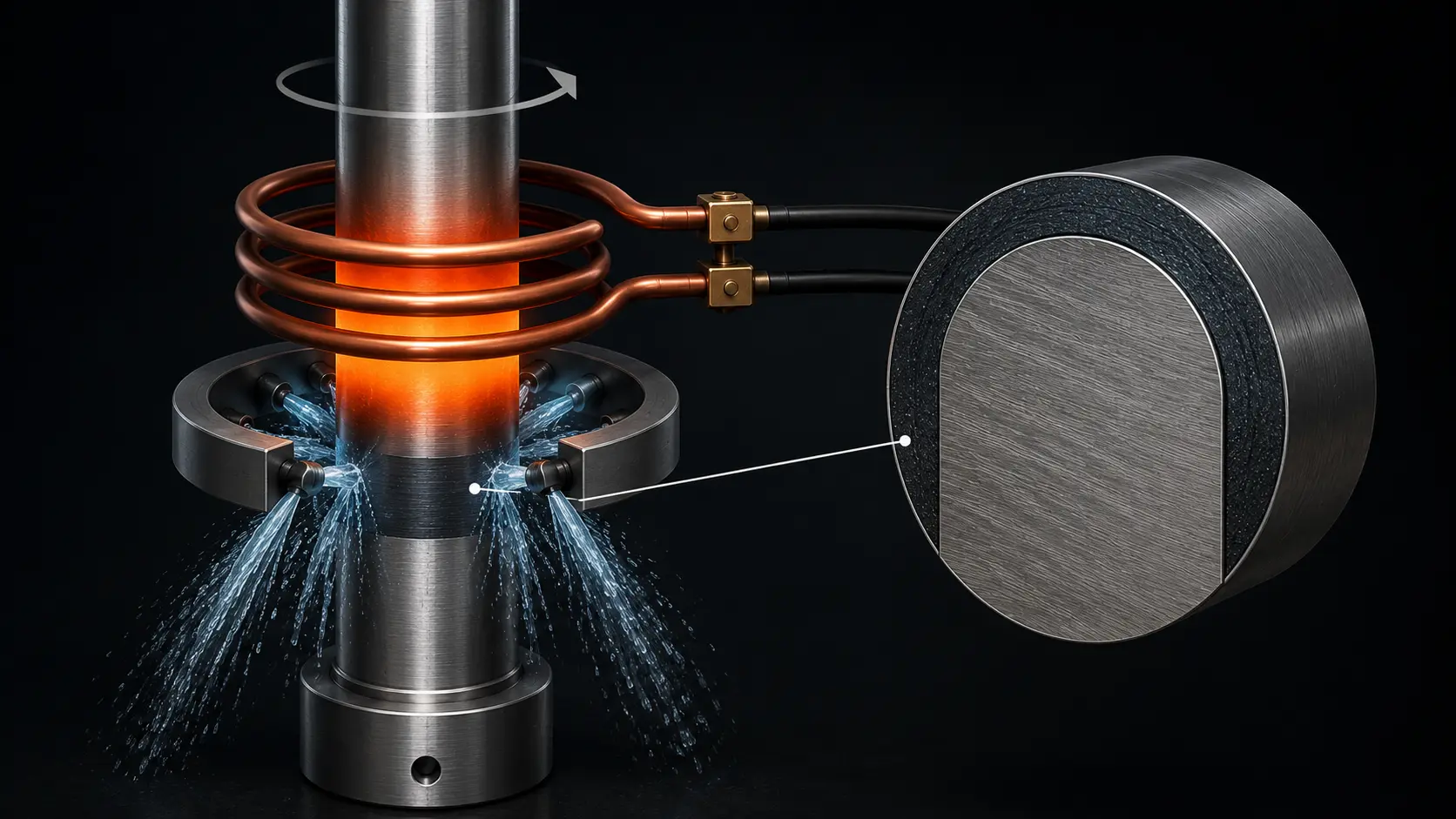
Table of Contents
1. What Does “Hardening” Actually Mean?
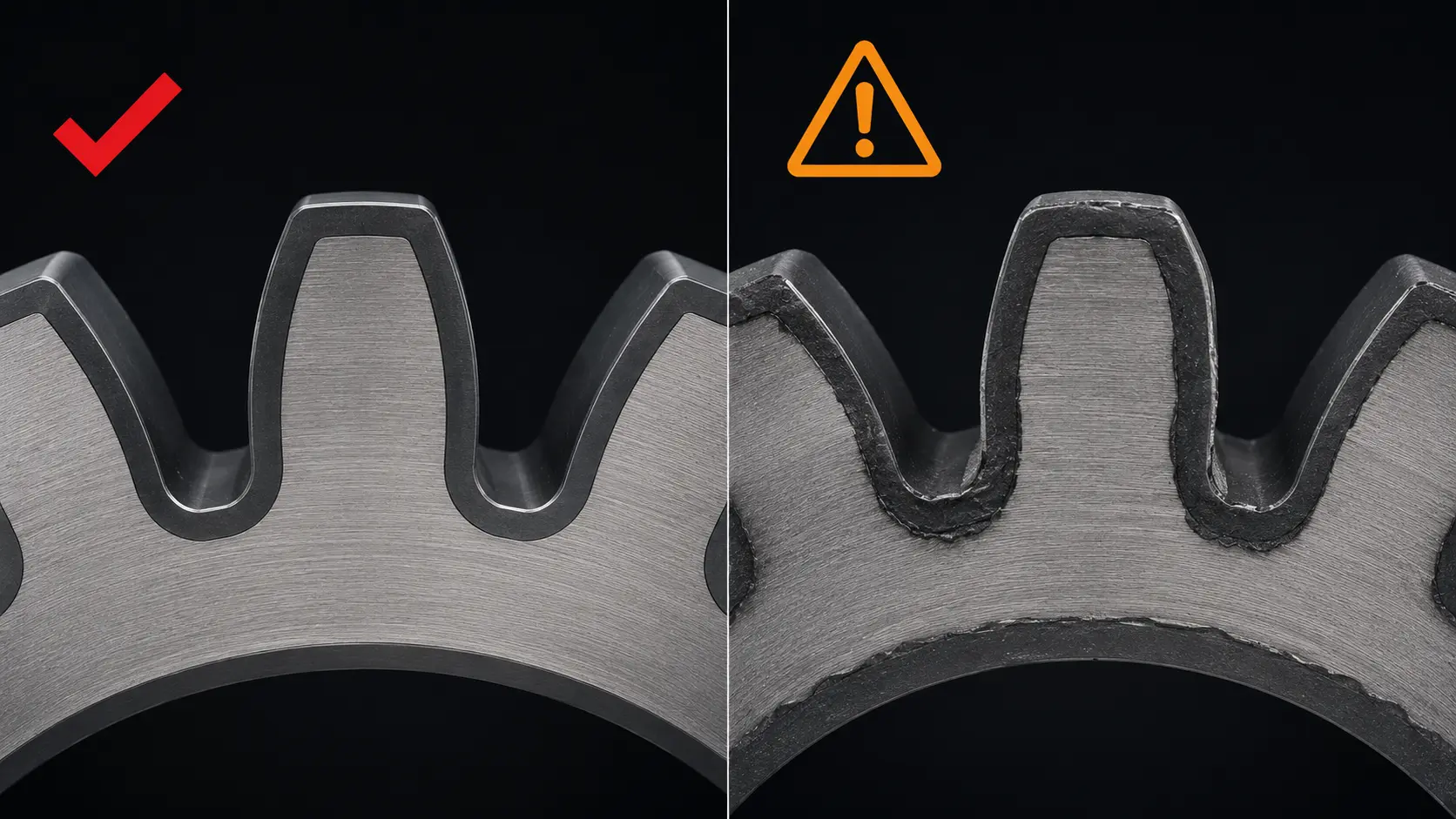
Hardening is a heat treatment that makes the surface of a steel part extremely hard and wear-resistant — so it doesn’t scratch, dent, or wear down under heavy use. Think of a gear tooth meshing with another gear millions of times over the life of a car transmission: if the tooth surface is soft, it wears down, the gear lash opens up, and the transmission starts whining. If it’s properly hardened, it stays quiet and precise for 300,000 kilometers.
The trick — and this is where induction hardening separates itself from older methods — is that only the surface gets hard. The core stays softer and tougher, so it can absorb shock and vibration without cracking. A part that is hard all the way through is brittle — like glass. A part that is hard on the outside and tough on the inside is ideal for almost every mechanical application. This is the fundamental goal of induction heating treatment: surface hardness with core toughness, achieved in a single controlled process.
2. How Induction Hardening Works — in 3 Simple Steps
The core principle is the same as how induction heating works: a copper coil carrying high-frequency alternating current creates a magnetic field, and that field induces electric currents — eddy currents — in the surface of the steel part. Those currents heat the surface to hardening temperature (typically 800–950°C for most steels) in seconds, not minutes. Once the surface reaches temperature, the process moves through two more simple stages.
Step 1: Heat the Surface
The induction coil surrounds the part (or the zone that needs hardening) without touching it. High-frequency current runs through the coil, and within 2 to 10 seconds, the part surface glows orange-red. Only the outer skin — typically 0.5 to 5 millimeters deep, depending on the part — reaches hardening temperature. The core stays cold because the heat doesn’t have time to conduct inward. This is what makes the process so precise: you heat exactly the layer you need, and nothing else.
Step 2: Quench Instantly
The moment the surface reaches the target temperature, it is flooded with water, oil, or a polymer-based quenchant — often sprayed directly from the same coil assembly that did the heating. This rapid cooling “locks in” the hardened structure: the steel’s crystal lattice transforms from soft austenite into extremely hard martensite. The quench happens in under a second, which is fast enough to capture the high-temperature structure before it has a chance to revert.
Step 3: The Result — Hard Shell, Tough Core
After quenching, the part surface has a hardness of 55–65 HRC (Rockwell C scale) — hard enough to resist wear from metal-to-metal contact, but only for the outer case. The core remains at its original hardness, typically 25–35 HRC, tough and flexible. You now have a part that is hard where it needs to be and tough where it needs to be — achieved in a single process lasting under 30 seconds total.
3. 5 Reasons Manufacturers Choose Induction Hardening
Induction hardening is not the only way to harden steel. Traditional methods include flame hardening (using a gas torch), furnace hardening (heating the entire part in an oven), and carburizing (diffusing carbon into the surface over many hours). Here is why induction wins in modern production environments.
Reason 1: It’s Fast — Really Fast
An induction hardening cycle takes 5 to 30 seconds per part. A furnace cycle for the same part takes 30 minutes to several hours. Flame hardening is faster than a furnace but still slower than induction because the gas flame transfers heat less efficiently than an induced magnetic field. In a production line making thousands of parts per day, this speed difference is the difference between one machine and an entire department.
Reason 2: It Hardens Only Where You Want
With a furnace, the entire part gets hot — not just the surface, but the core, and not just the wear zone, but every feature. This wastes energy and can soften previously machined features that need to stay precise. Induction hardening, by contrast, targets exactly the wear surface — a gear tooth flank, a bearing raceway, a cam lobe peak. The rest of the part stays cold. This zoning precision is what makes induction the default choice for complex automotive parts like cam lobes and shift forks, where only the contact surface needs hardening and the rest of the part must stay machinable.
Reason 3: Minimal Distortion
When you heat an entire part, it expands. When you cool it, it contracts — often unevenly. The result is warping, bending, or twisting that requires expensive post-process straightening or grinding. Induction hardening heats only the surface, and cools it so quickly that the core never gets hot enough to participate in the expansion. This means parts come out closer to their original dimensions, with less need for corrective machining. For precision applications like shaft induction hardening, where runout tolerances are measured in microns, this minimal-distortion advantage is often the deciding factor.
Reason 4: Clean, Compact, and No Open Flames
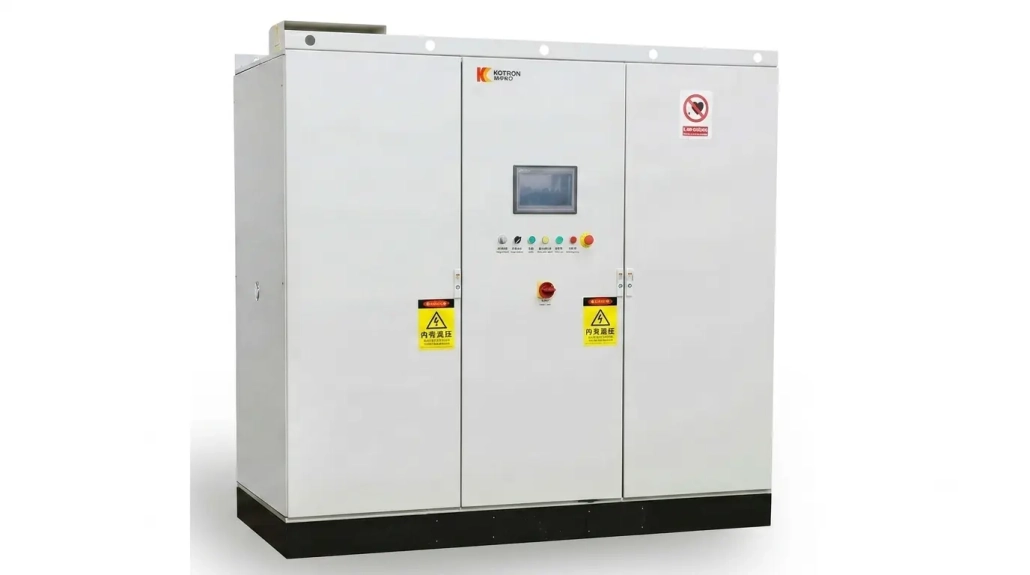
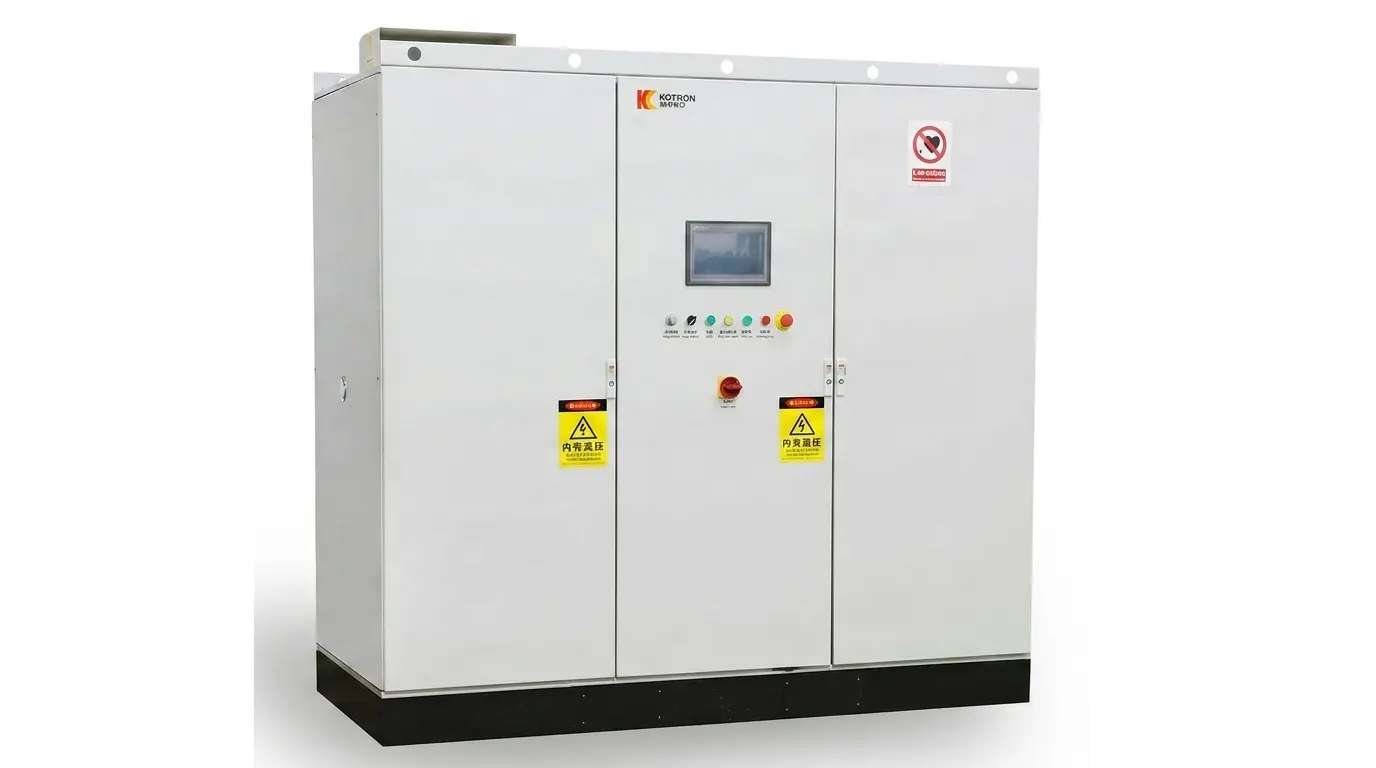
No gas torches. No combustion exhaust. No furnace walls radiating heat into the shop. An induction hardening machine is a compact electrical system — typically a power supply cabinet plus a work station with the coil and quench system — that fits into a standard production cell. It can sit right next to a CNC lathe or a grinding machine, so parts move from machining to hardening to finishing without leaving the line. The working environment is cleaner, cooler, and safer.
Reason 5: Predictable, Repeatable Results
Induction hardening is an electrically controlled process. Once you dial in the frequency, power, heating time, and quench parameters for a given part, you can repeat that exact recipe thousands of times. The 100th part comes out the same as the 10th. Furnace hardening depends on thermal convection, which varies with loading density, ambient temperature, and furnace condition. Flame hardening depends on operator skill for torch positioning and dwell time. Induction removes those variables — it is a push-button process with digital repeatability. This is why gear induction hardening has largely replaced flame hardening in automotive production: the consequences of a single soft gear reaching a customer are too expensive to leave to operator judgment.
4. Where You’ll Find Induction-Hardened Parts
Induction-hardened parts are everywhere — you just don’t see them because they live inside bigger machines. Here is where the process shows up in everyday life:
Your car: Transmission gears, axle shafts, CV joint bearings, camshaft lobes, crankshaft journals — all hardened by induction to survive hundreds of thousands of shift cycles and road impacts. The smooth gear change you feel is made possible by gear teeth that haven’t worn down.
Construction and mining equipment: Excavator pins, bulldozer track rollers, crane slewing bearings — massive parts that carry thousands of tons of load through abrasive dirt and rock. Induction hardening gives them the surface durability to survive this environment without cracking under the weight.
Wind turbines: The main bearings and pitch bearings inside a wind turbine are induction-hardened to handle the relentless cyclic loads of a 100-meter blade rotating 24/7 for 20 years. These bearings are enormous — some over 3 meters in diameter — and hub bearing induction hardening requires specialized coil designs to heat such large diameters uniformly.
Industrial tools: Wrenches, cutting blades, drill bits, hydraulic cylinder rods — anything that wears against another surface or cuts through material benefits from a hardened exterior. Induction hardening is the fastest way to produce these parts at scale.
Railways: Train wheel rims and rail heads are induction-hardened to resist the enormous contact stresses where steel wheel meets steel rail. Without hardening, these would wear out in months. With it, they last decades.
🔑 Key Takeaway
Induction hardening is a heat treatment that makes the surface of a steel part rock-hard while leaving the core tough — and it does it in seconds, not hours. The process has three steps: heat the surface with a magnetic field (no contact, no flame), quench it instantly to lock in the hardness, and the result is a part with a hard wear-resistant shell and a tough shock-absorbing core.
Manufacturers choose it over traditional methods because it’s faster, more precise, causes less distortion, runs cleaner, and delivers the same result every time. It is the standard hardening method for automotive drivetrain parts and is expanding into wind energy, rail, and heavy equipment — replacing flame torches and furnace lines wherever production speed and part quality matter.
FAQ
What is induction hardening in simple terms?
Induction hardening is a way to make the surface of a steel part extremely hard — fast. A copper coil carrying electricity heats only the outer skin of the part in seconds, and then water or oil cools it instantly. The result: a hard outer shell that resists wear, with a tough inner core that absorbs shock. No fire, no furnace, just electricity and magnetic fields.
How is induction hardening different from other hardening methods?
Three big differences. Speed: induction takes seconds; furnaces take hours. Precision: induction heats only the wear zone; furnaces and flame torches heat the whole part. Distortion: because only the surface gets hot, induction-hardened parts come out closer to their original shape — less warping, less bending, less grinding to correct it afterward. Induction is also cleaner (no combustion exhaust) and digitally controlled (the same settings produce the same result every cycle).
What metals can be induction hardened?
Induction hardening works on medium and high-carbon steels (typically 0.35% carbon and above), alloy steels, and cast irons. The key requirement: the material must be able to form martensite — the ultra-hard crystal structure created by rapid quenching. Low-carbon steels and austenitic stainless steels generally cannot be induction-hardened effectively because they don’t transform to martensite. Non-magnetic metals like aluminum, copper, and brass cannot be induction-hardened at all (though they can be heated by induction for other purposes).
How deep can induction hardening go?
Typical case depths range from 0.5 mm to 5 mm, controlled primarily by the operating frequency. Lower frequency (1–10 kHz) produces deeper hardening; higher frequency (100–400 kHz) produces shallower hardening. For most automotive parts like gears and shafts, 1.5–4 mm is the standard range. This is covered in more depth in our guide to how frequency affects induction heating. For very deep cases over 5 mm, induction is usually paired with preheating or longer cycle times — though furnace methods like carburizing are more common for extreme case depth requirements.
Looking to Switch from Traditional Hardening to Induction?
Whether you are hardening a new part design or upgrading from flame or furnace equipment, our team can help you evaluate whether induction hardening fits your application — and what it would take to integrate it into your production line.


