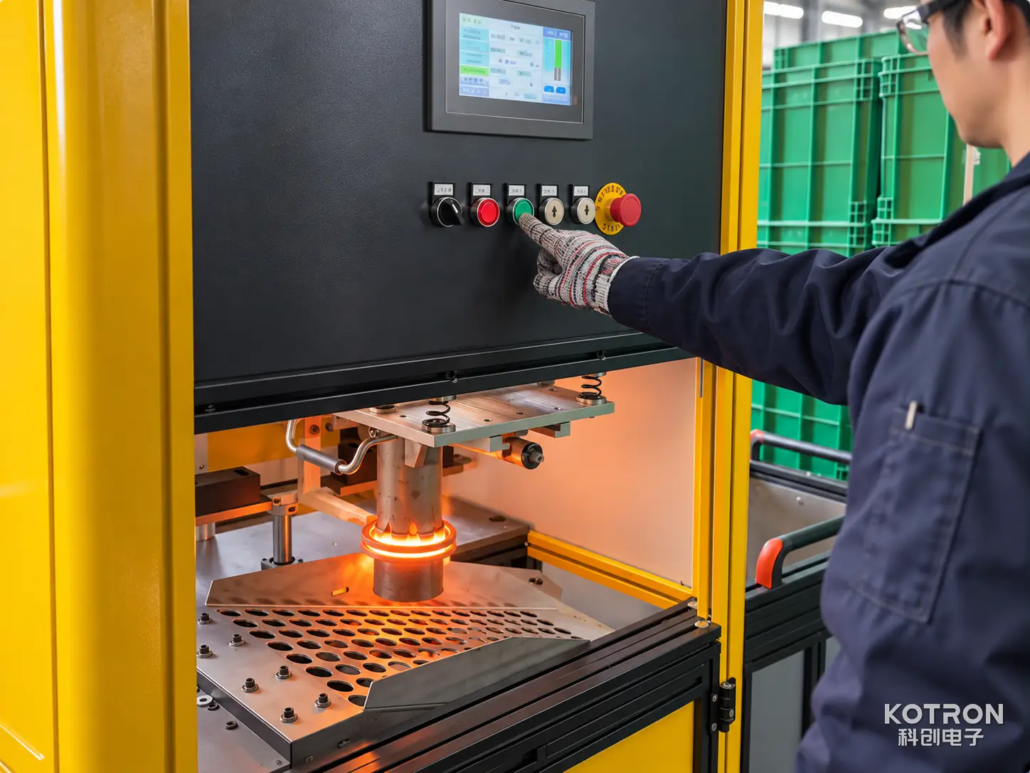
ระบบทำความร้อนแบบเหนี่ยวนำสำหรับการถอดเม็ดมีดคาร์ไบด์ดอกสว่านหิน
Ⅰ. See Rock Drill Bit Carbide Removal in Operation
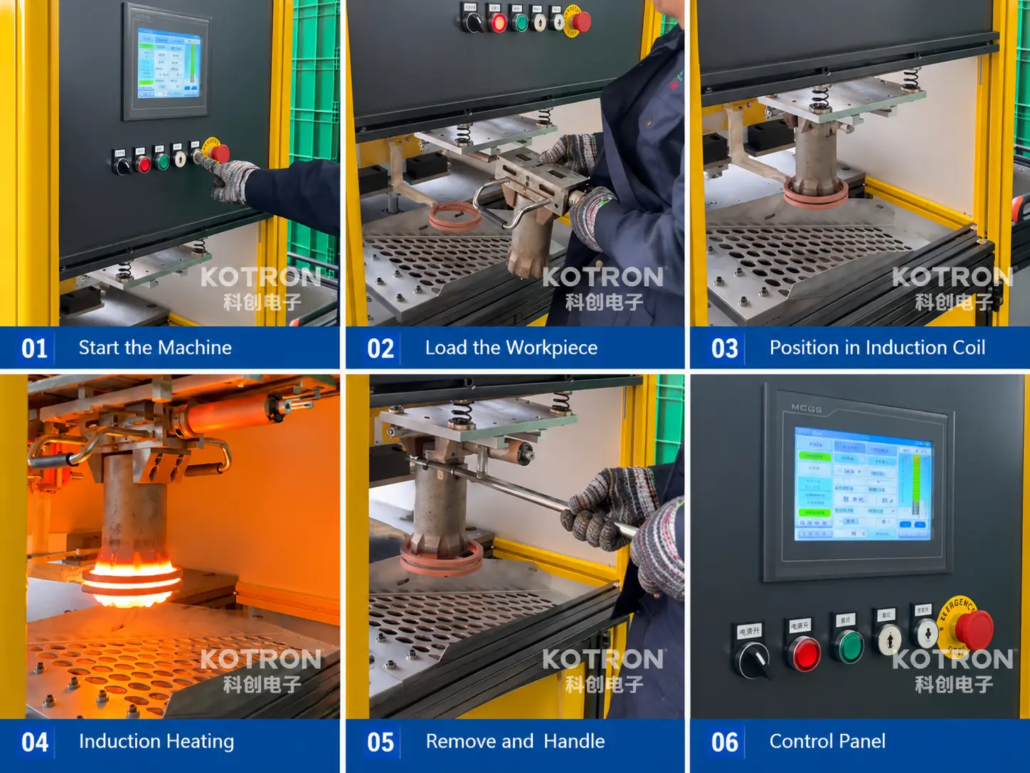
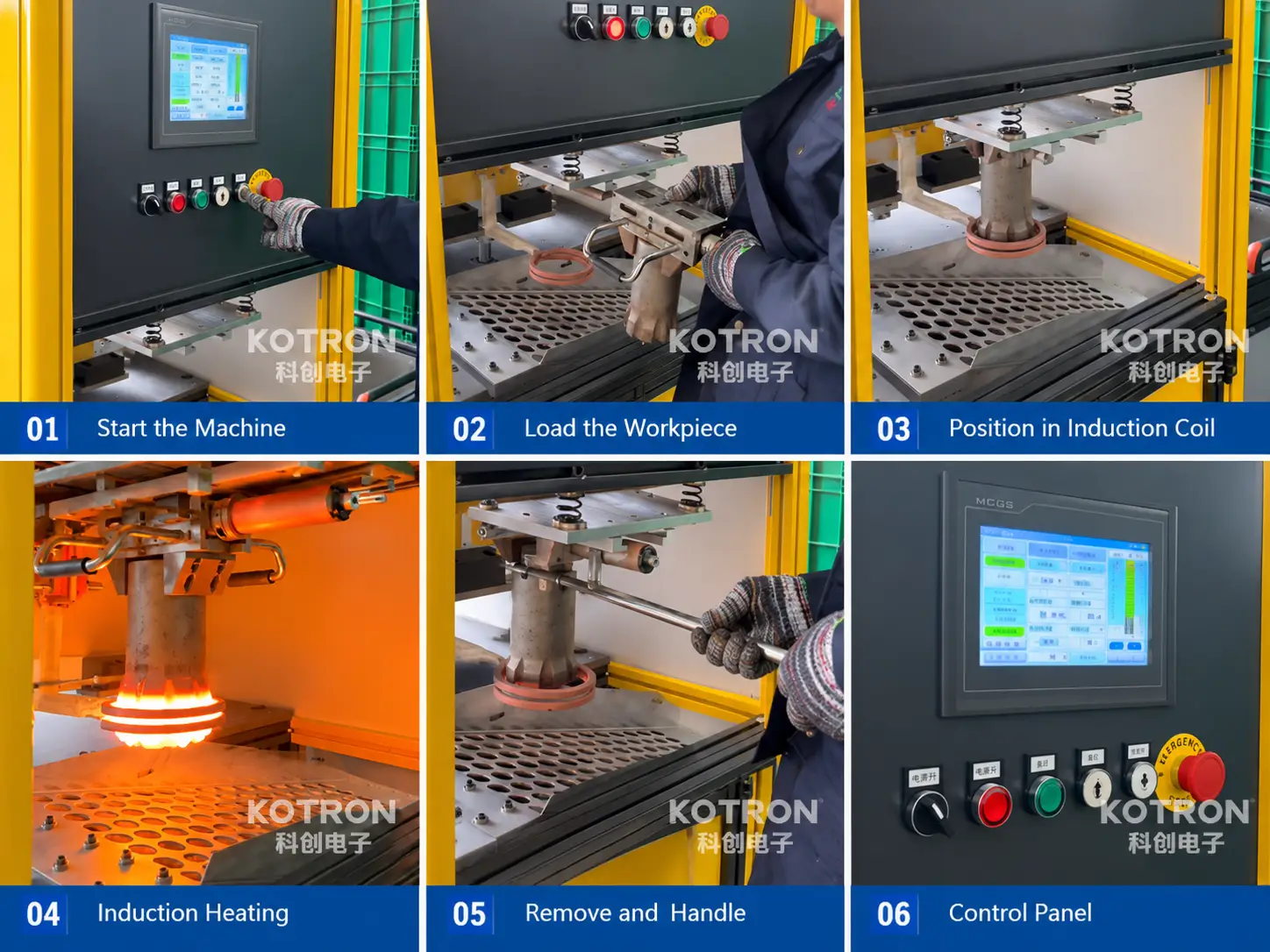
The video shows the complete operating sequence, from machine start-up and workpiece loading to positioning, induction heating and carbide release.
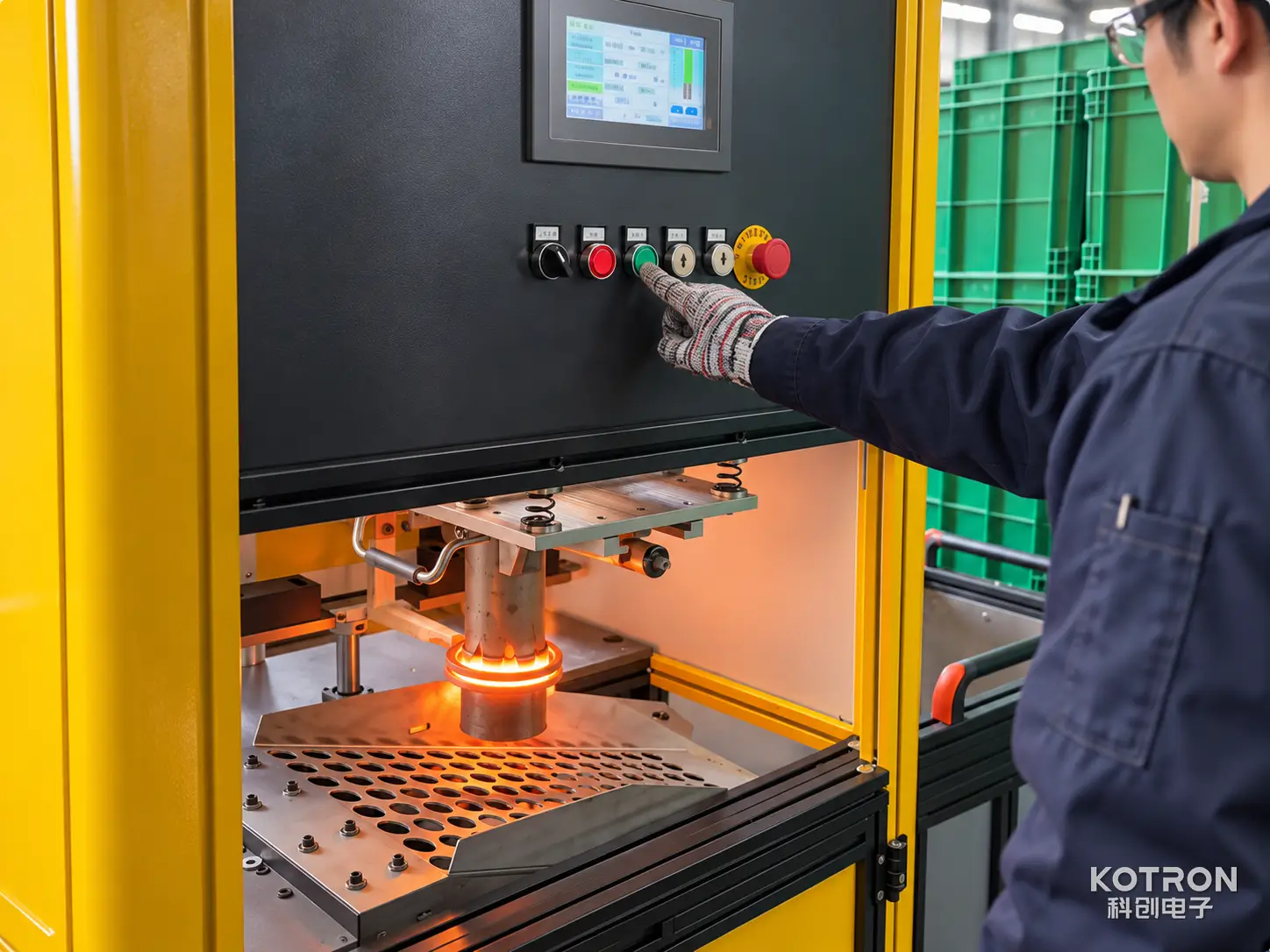
The operator places the rock drill bit into the fixture and positions the tooth area relative to the induction coil. ระหว่างการให้ความร้อน, the spring-supported upper plate moves, transmitting vibration to the fixture and workpiece. After the heating process reaches the required condition, the mechanically retained carbide inserts release and fall away from the drill bit.
This application uses mechanical carbide retention rather than a brazed joint. The removal process therefore does not rely on melting brazing alloy.
Ⅱ. Workpiece and Carbide Retention Method
Rock drill bits use carbide components at their working areas to provide resistance to impact and abrasive wear.
ในแอปพลิเคชันนี้, the carbide inserts are mechanically retained in the drill bit teeth rather than attached through a brazed connection.
This distinction determines the heating approach. The target is the tooth area surrounding the carbide insert, where localized heating is applied to assist the release of the mechanically retained component.
The actual retention arrangement, insert geometry and surrounding workpiece dimensions should be considered when developing the process.
Different drill bit designs may have different insert positions, dimensions and mechanical retention conditions. These differences affect the heating area, coil arrangement and workpiece fixture.
Ⅲ. Localized Induction Heating for Automatic Carbide Release
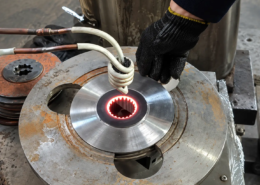
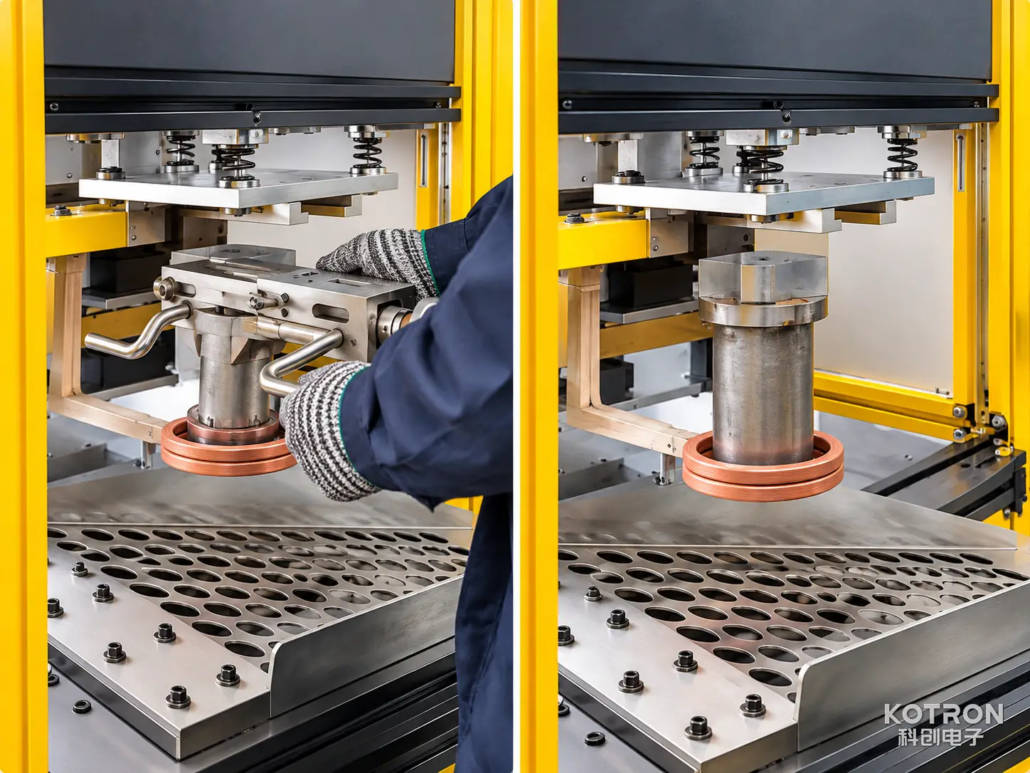
The induction coil is positioned around the designated tooth area of the rock drill bit.
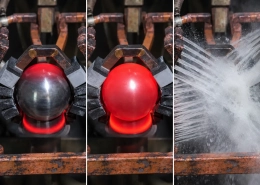
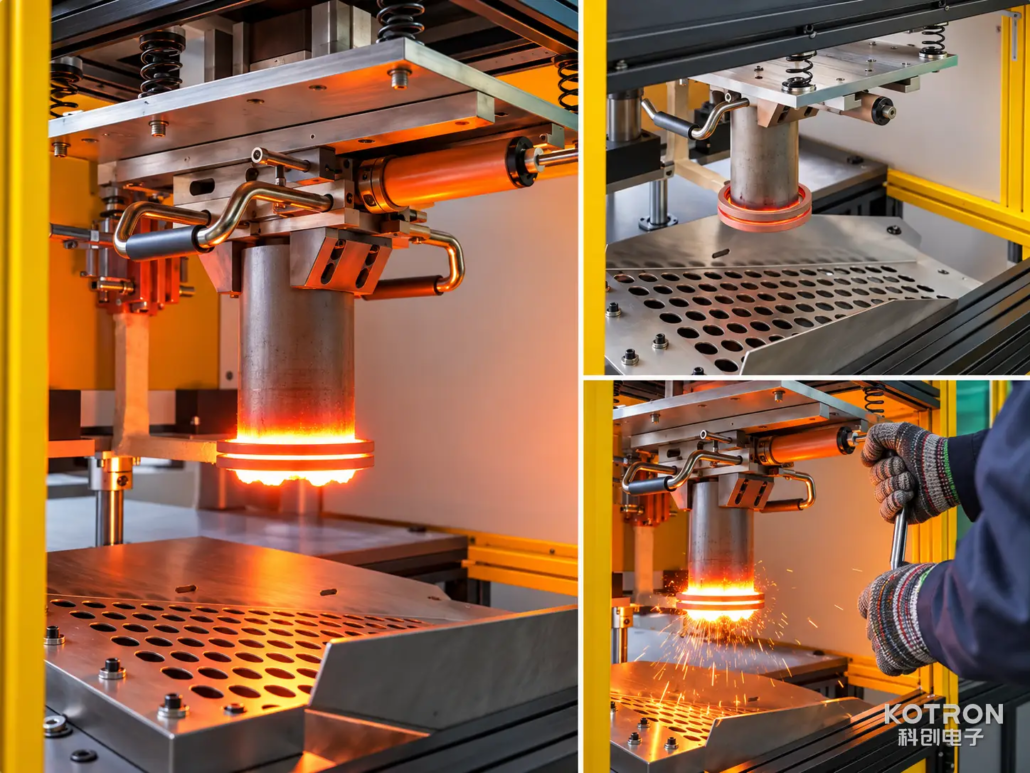
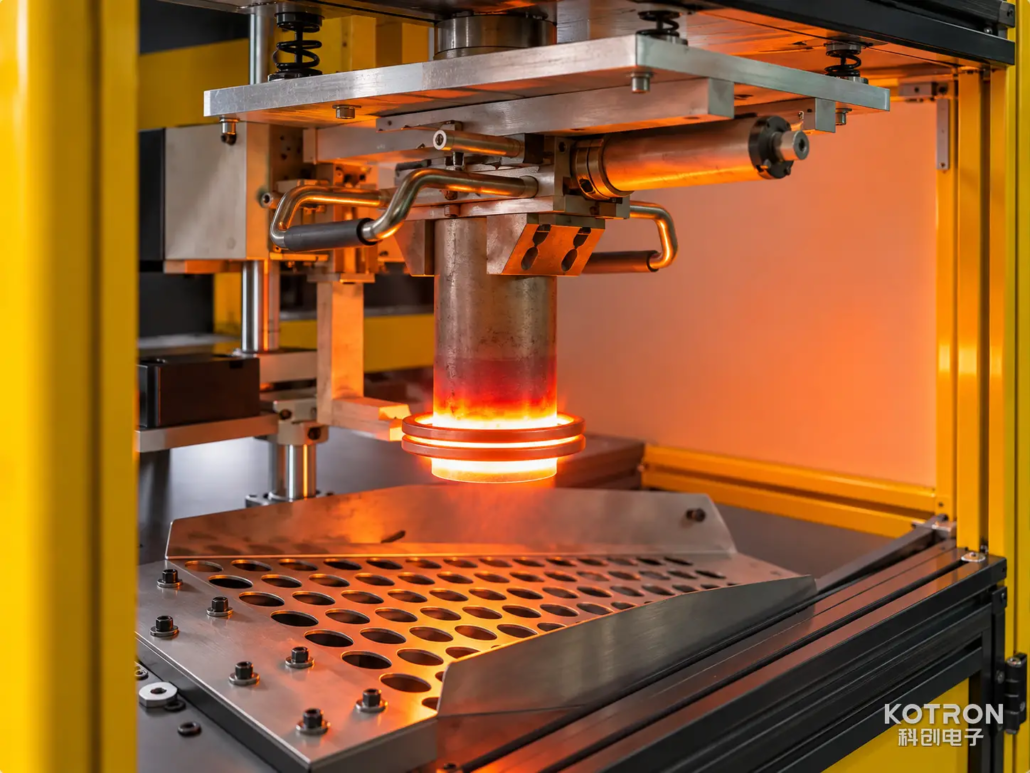
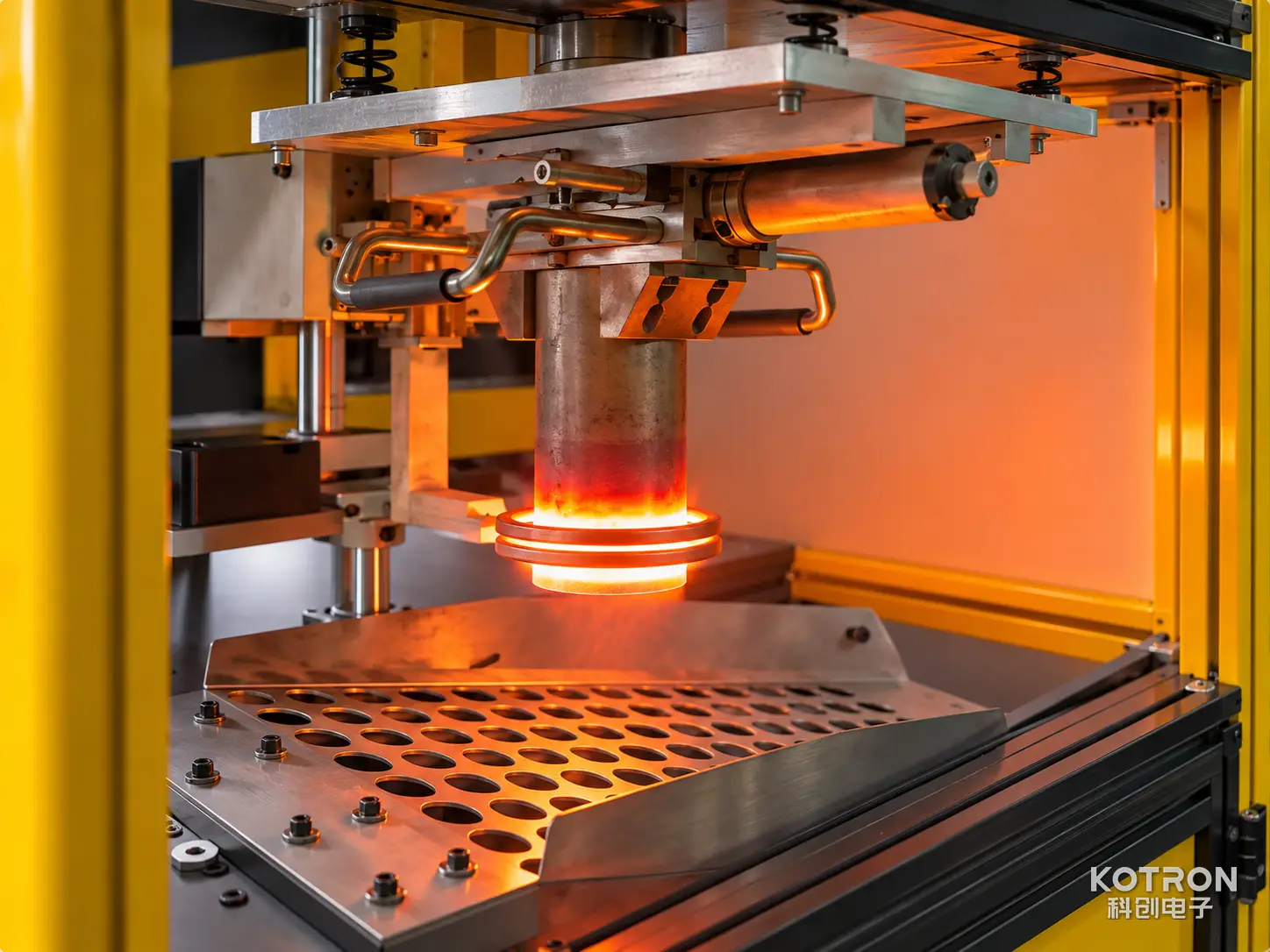
ระหว่างดำเนินการ, electromagnetic induction generates heat in the conductive workpiece. Heating is concentrated around the area where the carbide inserts are mechanically retained, rather than heating the entire drill bit uniformly.
The purpose of this localized heating process is to change the local fit between the carbide insert and the surrounding bit material, allowing the mechanical retention to be released.
When the required process condition is reached, the carbide insert drops away from the tooth area without requiring the operator to pull it out manually.
The heating arrangement must be developed according to the actual workpiece geometry and retention method. The required process conditions should be established through application testing rather than assumed from the carbide dimensions alone.
Ⅳ. Spring-Supported Fixture and Workpiece Vibration
A distinctive feature of this machine is its spring-supported fixture arrangement.
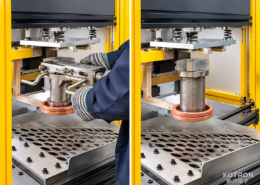
The upper plate is supported by springs and connected to the workpiece fixture. ระหว่างดำเนินการ, movement of the upper plate is transmitted to the fixture and the loaded drill bit, producing vibration during the heating cycle.
The fixture maintains the workpiece in its designated processing position while allowing the movement shown in the video.
This mechanical arrangement operates together with the localized induction heating process. The heating and fixture movement form part of the equipment setup for automatic carbide release.
The spring arrangement, fixture structure and movement must be matched to the actual workpiece and operating sequence.
Ⅴ. Induction Coil Positioning and Workpiece Handling
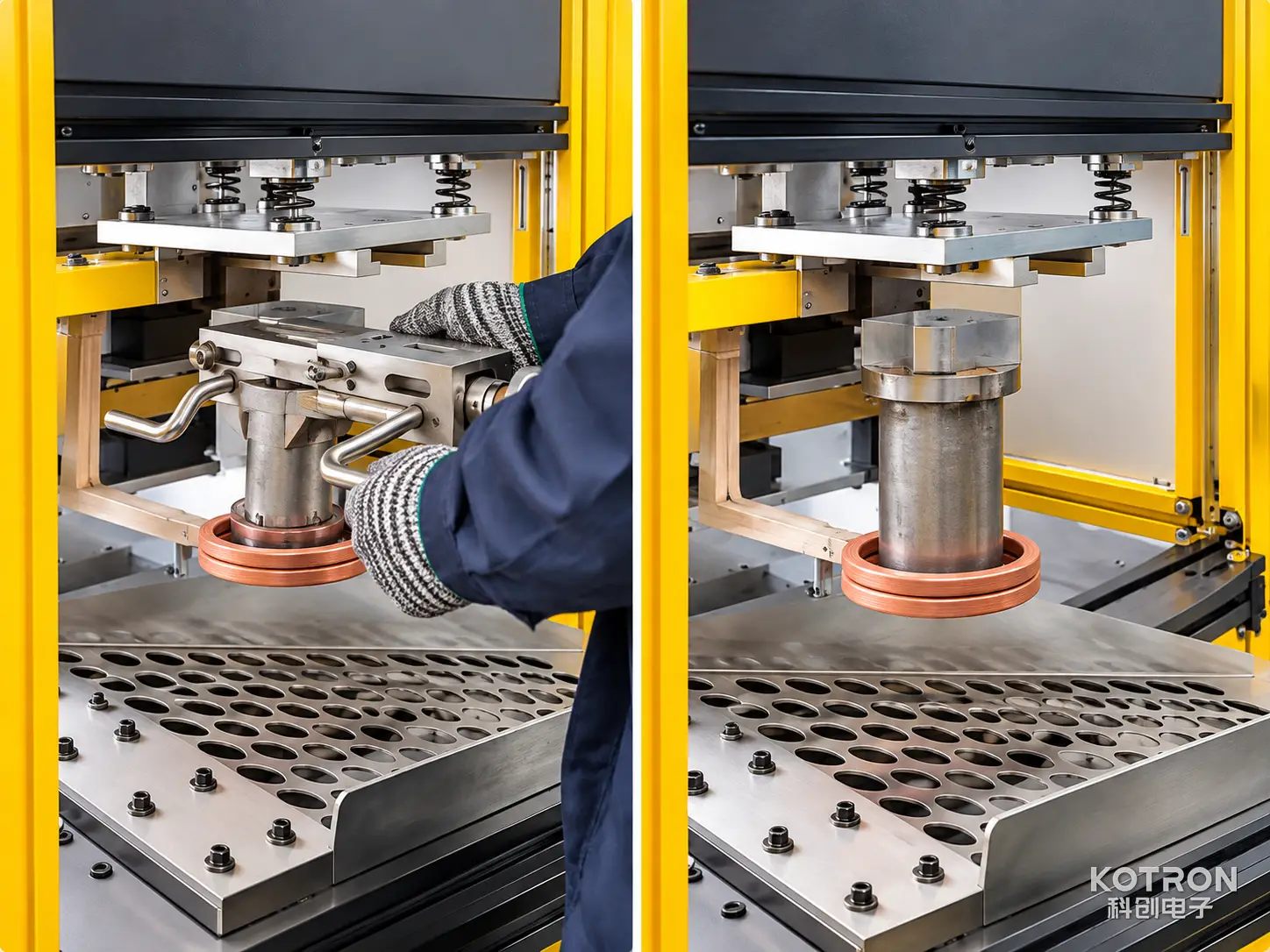
The induction coil and workpiece fixture are developed around the geometry of the rock drill bit.
Their arrangement determines how the tooth area is positioned relative to the heating zone.
ขดลวดเหนี่ยวนำ
หลักการ ขดลวด is positioned to concentrate heating around the carbide-bearing tooth area. Its geometry and working position depend on the available space around the workpiece and the required heating zone.
อุปกรณ์จับยึดชิ้นงาน
The fixture supports and locates the drill bit during processing. Its contact points and positioning arrangement must suit the bit geometry while allowing the required movement during the heating cycle.
Loading and Unloading
The supplied video shows an operator loading and positioning the workpiece before processing and handling it after the cycle. The carbide release itself is automatic; this should not be confused with fully automatic workpiece loading and unloading.
For different drill bit designs, the fixture and coil arrangement should be evaluated against the actual workpiece.
Ⅵ. Machine Configuration for This Application
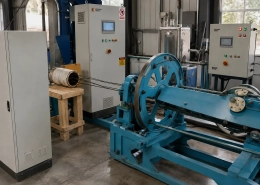
The machine shown in this application combines an induction heating arrangement with dedicated mechanical workholding and an enclosed operating area.
The visible equipment elements include:
| ส่วนประกอบ | การทำงาน |
|---|---|
| หน่วยทำความร้อนเหนี่ยวนำ | Supplies the energy required for localized heating |
| ขดลวดเหนี่ยวนำ | Applies heating to the designated drill bit tooth area |
| อุปกรณ์จับยึดชิ้นงาน | Locates and supports the rock drill bit |
| Spring-Supported Plate | Supports the fixture and transmits movement during processing |
| Enclosed Working Area | Houses the heating and workpiece-processing arrangement |
| Control Panel | Provides the operator interface for machine operation |
The final equipment configuration should be determined by the workpiece and required production process.
กำลังเหนี่ยวนำ, ความถี่ในการทำงาน, coil dimensions and other electrical specifications should be selected after evaluating the actual drill bit and heating requirements. They are not assumed to be identical for every rock drill bit.
Ⅶ. ข้อมูลใดที่จำเป็นสำหรับการเลือกอุปกรณ์?
The most useful starting point is a photograph or drawing of the actual rock drill bit, particularly the tooth area and carbide insert arrangement.
สำหรับการประเมินเบื้องต้น, กรุณาระบุ:
•Workpiece Photos or Drawings: Overall views and close-ups of the carbide-bearing tooth areas.
•วัสดุชิ้นงาน: หลักการ material of the drill bit body, ถ้ารู้.
•ขนาดชิ้นงาน: Main dimensions and the geometry of the areas to be processed.
•Carbide Insert Details: Insert shape, ขนาด, quantity and mechanical retention method, ถ้ารู้.
•ข้อกำหนดการผลิต: Expected processing quantity and required operating cycle.
These details help determine the heating area, induction coil arrangement, fixture design and overall machine configuration.
Ⅷ. คำถามที่พบบ่อย
Does this machine remove brazed carbide tips?
This application is intended for mechanically retained carbide inserts in rock drill bits. It does not rely on melting brazing alloy. Brazed carbide removal is a different induction heating application.
Does the carbide insert fall off automatically?
ได้. The intended result of this process is the automatic release of the mechanically retained carbide inserts after localized heating reaches the required process condition.
Why does the fixture vibrate during heating?
The machine uses a spring-supported upper plate that transmits movement to the fixture and workpiece during processing. The actual vibration characteristics and their precise contribution to the release process depend on the equipment design and should be established by the technical team.
Can the machine process different rock drill bit designs?
Different bit geometries and carbide retention arrangements may require different coil positions, fixtures and heating conditions. Compatibility should be evaluated using the actual workpieces.
Does automatic carbide release mean the entire machine is fully automatic?
ไม่ใช่. Automatic release refers to the separation of the carbide inserts. กำลังโหลดชิ้นงาน, positioning and unloading may still involve an operator, as shown in this application video.
Ⅸ. Request a Rock Drill Bit Carbide Removal Solution
If you need to remove mechanically retained carbide inserts from rock drill bits, send us photos or drawings of your workpieces.
Please include the drill bit material, มิติข้อมูลหลัก, carbide insert details and expected production requirement where available.
Our engineering team can evaluate the localized heating arrangement, คอยล์เหนี่ยวนำ, workpiece fixture and spring-supported movement according to your application.
Contact KOTRON to Discuss Your Rock Drill Bit Carbide Removal Application
Send your workpiece photos or drawings, material details and production requirements — KOTRON can help determine the right heating arrangement, induction coil and fixture configuration.