CNC Induction Hardening Machine
Programmable Induction Hardening for Shafts, Discs and Custom Metal Parts
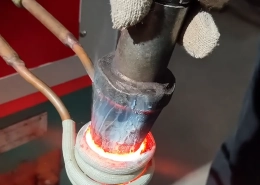
Ⅰ. See the Machine in Operation
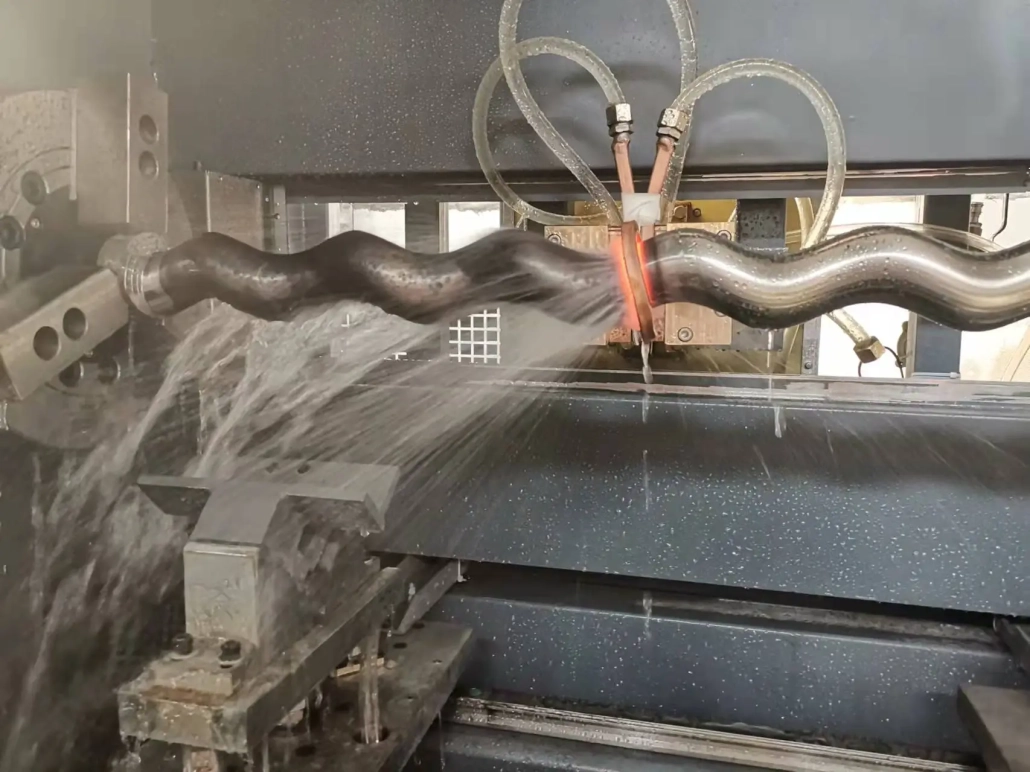
See how the workpiece is positioned, moved through the induction heating zone and quenched under programmed control.
II. What Can This Machine Harden?
The machine is intended for surface hardening of metal parts where the working area requires improved hardness and wear resistance while the core properties of the component need to be retained.
Typical workpieces include:
It can be used for components found in automotive manufacturing, construction machinery, tractors, textile machinery, general machinery and other industrial equipment.
III. Different Hardening Methods for Different Parts
Not every workpiece should be hardened in the same way. The machine movement and induction process can be programmed according to the required hardened area.
Fixed-Position Hardening
The workpiece remains at a defined position while a selected area is heated and quenched. This is suitable for local hardening where only a specific section requires treatment.
Continuous Scanning Hardening
The workpiece or heating assembly moves continuously during heating and quenching. This method is commonly used for shafts and other parts with a longer hardened surface.
Positioning and Scanning Hardening
Several selected sections can be processed according to a programmed sequence, allowing one component to have different hardening zones.
The supplied machine information confirms support for fixed-point integral hardening, continuous scanning and positioning-scanning processes.
IV. CNC Control for Repeatable Production
The machine uses a numerical control system to coordinate the hardening process.
Operators can select, modify, store and recall processing programs for different parts. Once a suitable process has been established, the corresponding program can be retained for later production rather than setting the machine from the beginning for every batch.
Depending on the machine configuration, programmed parameters can include:
The control system also provides equipment operation, alarm and diagnostic information.
V. IGBT Induction Power with DSP Digital Control
The induction power supply is an important part of the hardening process because power output must respond quickly and remain controllable throughout the heating cycle.
Our system combines IGBT power conversion technology with DSP digital control. The IGBT power stage provides fast electronic power switching, while the DSP control system manages output regulation, operating parameters and protection functions digitally.
Power Regulation Range
0.1%–100% digital
Power Stability
≤ ±0.1%
For XZG160, XZG200 and XZG250 configurations
Where the advanced monitoring configuration is used, the DSP system can also support functions such as:
These functions are particularly useful when the same parts are produced repeatedly and the heating process needs to be reviewed or traced later.
VI. Vertical or Horizontal — Choose by the Workpiece
The orientation of the machine should follow the workpiece and handling requirements rather than being treated as a performance grade.
Vertical Machines
Commonly selected when the component can be conveniently held and processed in an upright position. Well suited to many shaft, pin and disc applications and can reduce horizontal floor-space requirements.
Horizontal Machines
Often more practical for long or heavy shafts that require additional support along their length or are easier to load horizontally.
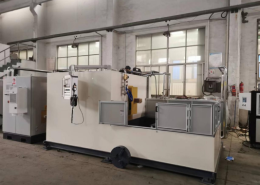
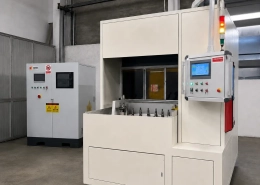
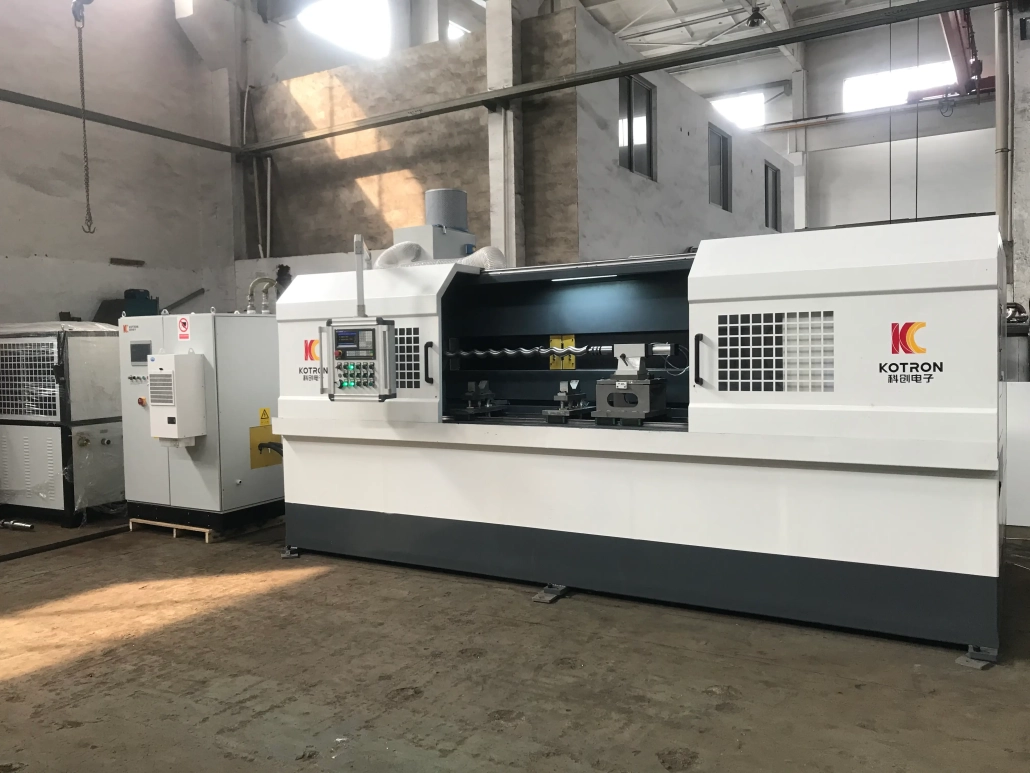
Vertical machine
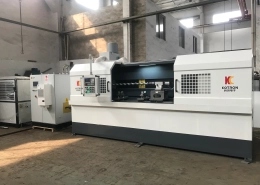
Horizontal machine
The choice should consider:
For this reason, the machine structure should be selected after the workpiece drawing and production conditions are reviewed.
VII. Single-Station or Double-Station Configuration
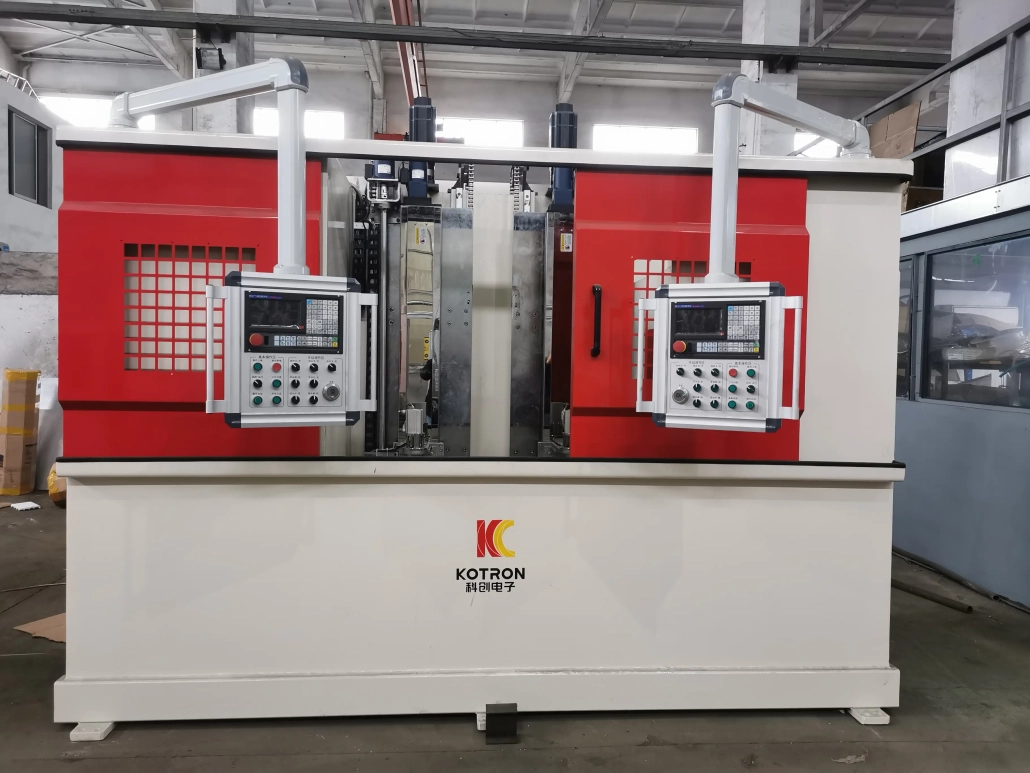
A double-station machine can be useful in batch production where loading and unloading time would otherwise interrupt the production cycle. Depending on the machine design, the two positions may be arranged for alternating production or other coordinated operating sequences.
The XZG machine series can be supplied in a vertical double-station structure. The appropriate arrangement depends on production volume, workpiece handling and cycle time — a single station remains the practical choice for many applications.
VIII. Main Machine Structure
A complete induction hardening machine typically brings the mechanical movement, heating and quenching functions together around one controlled process.
The system can be configured with:
For the supplied machine, the main and auxiliary guideways use linear bearings. The drive system uses a ball screw arrangement for controlled machine movement.
IX. Technical Specifications
The following specifications are based on the XZG160, XZG200 and XZG250 configurations provided. Mechanical travel, workpiece dimensions, load capacity and other machine-tool parameters should be confirmed according to the final machine configuration.
| Specification | XZG160 | XZG200 | XZG250 |
|---|---|---|---|
| Input Voltage | 380 V / 50 Hz | 380 V / 50 Hz | 380 V / 50 Hz |
| Input Power | 160 kVA | 200 kVA | 250 kVA |
| Oscillating Frequency | 10–30 kHz | 10–30 kHz | 10–30 kHz |
| Power Regulation Range | 0.1%–100%, Digital | 0.1%–100%, Digital | 0.1%–100%, Digital |
| Power Factor | >0.95 | >0.95 | >0.95 |
| Startup Time | 0.1 sec | 0.1 sec | 0.1 sec |
| Power Stability | ≤±0.1% | ≤±0.1% | ≤±0.1% |
Note: The correct power rating and machine size should be selected from the actual workpiece and hardening process rather than from power alone.
X. Designed Around the Part, Not Just the Machine Model
Induction hardening equipment is often used for parts that differ significantly in geometry. A long shaft, a short pin and a disc-shaped component may all require surface hardening, but their machine arrangement, inductor, movement and quenching method can be very different.
For induction hardening, the size of the machine is only one part of the selection process. The heating frequency, available power, inductor design, scanning speed and quenching arrangement must be considered together with the material and the required hardened layer.
Several process variables work together — Induction Power + Frequency + Heating Time + Scanning Speed + Workpiece Rotation + Inductor Design + Quenching — and changing one of these parameters can change the heating pattern or hardened result.
For equipment selection, the most useful information is:
A drawing showing the required hardened area is particularly helpful when selecting the inductor and machine movement. Rather than selecting only from a standard machine model, we can configure the system around workpiece geometry, hardened position, case-depth requirement, heating frequency, required power, scanning method, clamping method, production cycle and automation level. This is especially useful for customers producing several related components on the same production line.
For repeated production, programmable movement and digitally controlled power output make it easier to reproduce an established process and identify deviations when they occur. This is also why hardness and case-depth requirements should be provided before equipment selection.
XI. Typical Industries
CNC induction hardening machines are used where steel components require localized wear-resistant surfaces.
The actual suitability of a component should be evaluated from its material, geometry and heat-treatment requirement rather than from the industry name alone.
XII. Frequently Asked Questions
+ Can one machine harden different parts?
Yes, within the mechanical and electrical capacity of the machine. Different workpieces may require different inductors, fixtures and CNC process programs.
+ How do I choose the required induction power?
Power cannot be selected from workpiece diameter alone. Material, diameter, hardened area, required case depth, heating time and production rate should all be considered.
+ Can the machine perform local hardening instead of hardening the entire part?
Yes. The supplied machine description supports fixed-position, continuous scanning and positioning-scanning processes, allowing the hardening area to be selected according to the component.
+ Why choose a vertical or horizontal machine?
The main considerations are workpiece dimensions, weight, loading method and required support. Long or heavy shafts may be easier to handle horizontally, while many conventional shaft and pin applications can be conveniently processed vertically.
+ What is the advantage of CNC control?
Different hardening programs can be stored and recalled for repeated parts. This is useful when production involves multiple workpiece types or recurring batches.
+ Can production data be recorded?
With the corresponding DSP monitoring configuration, heating parameters, alarms, process curves and production records can be stored for later review.
Send Us Your Workpiece Drawing
The fastest way to determine the right CNC induction hardening machine is to start with the part itself.
Please send us:
Based on these details, the machine structure, induction power, frequency, inductor, scanning method and control configuration can be evaluated together.