
كيفية حساب درجة حرارة التدفئة المناسبة من التداخل والتخليص
A Practical Guide to Calculating Heating Temperature and Avoiding Assembly Problems
When a gear, hub or sleeve needs to be shrink-fitted onto a shaft, one of the first questions is: How hot should the outer component be heated?
Heating expands the bore, allowing it to fit over a shaft that is slightly larger than the bore at room temperature. As the component cools, the interference fit is established.
The required temperature depends on the interference, fit diameter, material and clearance needed during assembly. Heating too little may prevent the parts from fitting together, while excessive heating can create unnecessary risks for the component.
This guide explains a simple way to estimate shrink fit heating temperature, with a calculation example and practical checks for production.
2. How to Calculate Shrink Fit Heating Temperature
3. Why Might Parts Still Fail to Assemble at the Calculated Temperature?
4. How to Choose a Practical Heating Temperature
5. How Induction Heating Supports Shrink Fitting
1. What Determines Shrink Fit Heating Temperature?
Four main factors determine how much heating is needed.
| العامل | لماذا هو مهم |
|---|---|
| Interference | Greater interference requires more bore expansion |
| Fit Diameter | A larger bore expands more for the same temperature rise and material |
| مادة | Different metals expand at different rates |
| Assembly Clearance | Extra space is needed to insert and position the shaft |
Interference is the starting point.
If a shaft measures 50.04 mm and the mating bore measures 50.00 مم, the diametral interference is 0.04 مم.
Heating the outer component until the bore expands by exactly 0.04 mm سوف يزيل هذا التداخل فقط. لن يكون هناك تصريح إضافي للتجميع.
ولذلك يحتاج التجويف إلى التوسع بدرجة كافية للتغلب على التداخل وتوفير خلوص مناسب للتجميع.
استخدم الحد الأقصى للتداخل من الرسم.
عادةً ما يكون لأبعاد العمود والتجويف تفاوتات تصنيعية. يحدث التوافق الأشد عندما يكون العمود عند الحد الأقصى للقطر المسموح به ويكون التجويف عند الحد الأدنى للقطر المسموح به.
على سبيل المثال:
— أقصى قطر رمح: 80.06 مم
— الحد الأدنى لقطر التجويف: 80.00 مم
— أقصى تدخل قطري: 0.06 مم
هذا الحد الأقصى من التداخل هو نقطة البداية المناسبة عند التحقق مما إذا كانت عملية التسخين يمكنها استيعاب أضيق تجميع مسموح به.
يجب فحص الحد الأدنى من التداخل بشكل منفصل للتأكد من أن الوصلة النهائية تلبي متطلبات التصميم الخاصة بها.
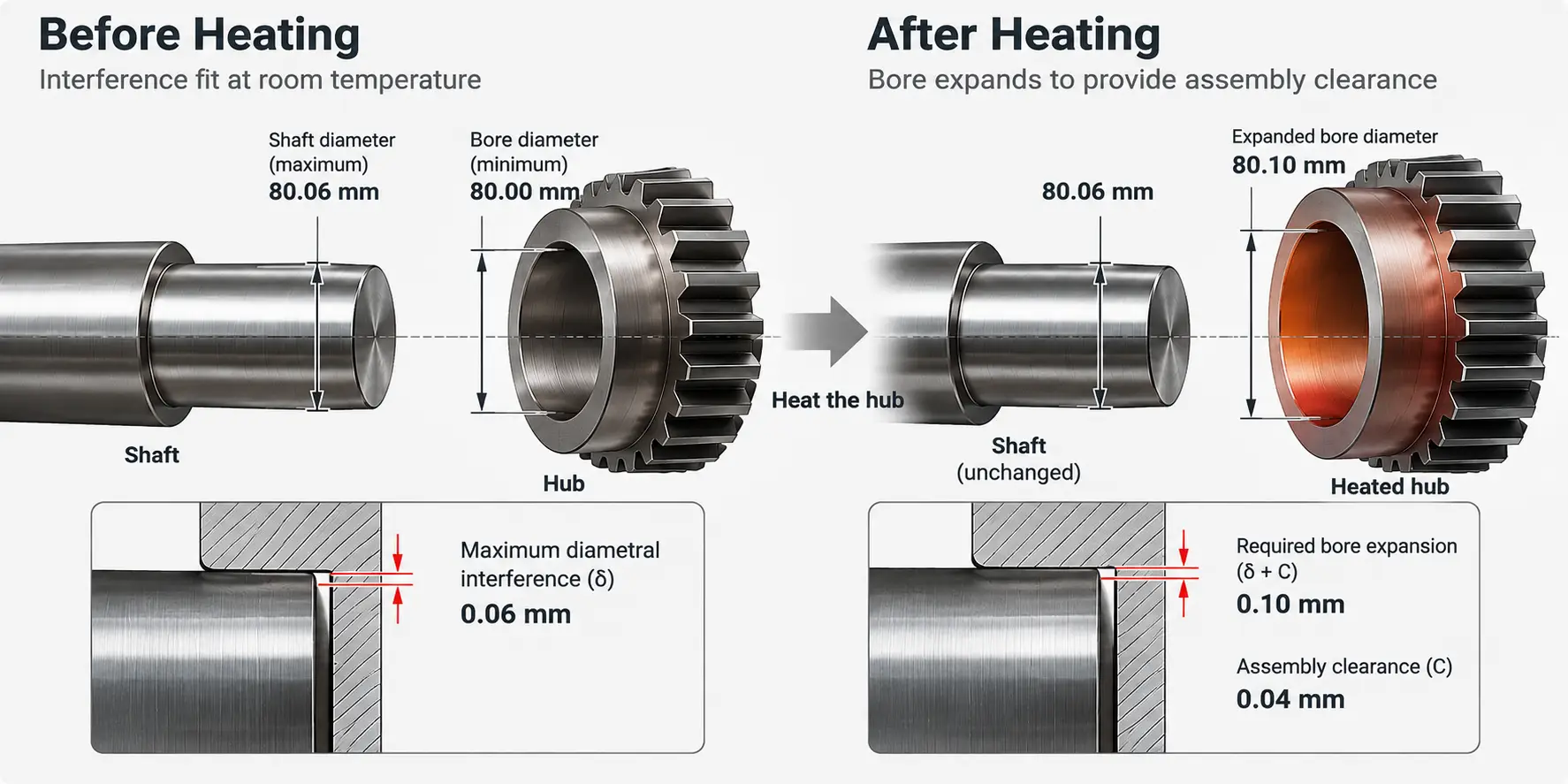
Interference, التمدد الحراري وتخليص التجميع في شكل مناسب للانكماش
2. How to Calculate Shrink Fit Heating Temperature
من أجل تجميع بسيط للعمود والمحور, ويمكن تقدير درجة حرارة التدفئة المطلوبة باستخدام التمدد الحراري.
تفترض الحسابات التالية أن المكون الخارجي يتم تسخينه بشكل موحد تقريبًا بينما يظل العمود بالقرب من درجة حرارته الأولية.
الخطوة 1 — احسب التوسعة المطلوبة
توسيع التجويف المطلوب = الحد الأقصى للتداخل + Assembly Clearance
الخطوة 2 — حساب ارتفاع درجة الحرارة
Δت = (δ + C) / (α × D)
أين:
— Δت = ارتفاع درجة الحرارة المطلوبة (°C)
— δ = الحد الأقصى للتداخل القطري (مم)
— C = مطلوب خلوص التجميع القطري (مم)
— α = متوسط معامل التمدد الحراري الخطي (1/°C)
— D = القطر المناسب (مم)
درجة حرارة المكون المقدرة هي:
درجة حرارة التدفئة = درجة الحرارة الأولية + Δت
مثال: تسخين محور الصلب على 80 مم رمح
Suppose a steel hub must be heated before being assembled onto a shaft.
| المعامل | Example Value |
|---|---|
| Fit Diameter | 80 مم |
| Maximum Interference | 0.06 مم |
| Required Assembly Clearance | 0.04 مم |
| Assumed Steel Expansion Coefficient | 12 × 10&supminus;&sup6; /°C |
| Initial Temperature | 20°C |
أولاً, calculate the required bore expansion:
0.06 + 0.04 = 0.10 مم
Then calculate the temperature rise:
Δت = 0.10 / (12 × 10&supminus;&sup6; × 80)
Required temperature rise ≈ 104°C
Add the initial temperature:
20 + 104 = 124°C
Under these assumptions, the hub needs to reach approximately 124°C to provide the calculated expansion.
ثم يقوم 0.04 mm assembly clearance is an illustrative assumption, not a standard allowance for every 80 mm fit. The actual clearance should be selected according to the assembly method and verified in practice.
The result is also an initial calculation rather than a final equipment setting. Actual heating conditions, temperature limits and heat loss during assembly still need to be considered.
إذا تغير كلا المكونين درجة الحرارة بشكل ملحوظ, يجب أن يتم تضمين التوسع أو الانكماش لكلا الجزأين في الحساب.
3. Why Might Parts Still Fail to Assemble at the Calculated Temperature?
قد يصل المحور إلى درجة الحرارة المحسوبة ولا يزال من الصعب تركيبه على العمود.
هذا لا يعني دائمًا أن درجة الحرارة تحتاج إلى زيادة.
يمكن أن تؤدي العديد من المشكلات إلى تقليل الخلوص المتاح أو منع تجميع المكونات بشكل صحيح.
| ماذا يحدث أثناء التجميع? | ما ينبغي التحقق منه? |
|---|---|
| لا يمكن للعمود أن يدخل التجويف | التدخل الفعلي, توسيع تتحمل وتوزيع درجة الحرارة |
| يدخل العمود ولكنه عالق | تخليص الجمعية, التبريد أثناء الإدراج والمحاذاة |
| يتم تجميع بعض الأجزاء بنجاح بينما يفشل البعض الآخر | التحمل الأبعاد واتساق التدفئة |
| درجة الحرارة المعروضة صحيحة ولكن التجميع صعب | Temperature measurement location and actual bore expansion |
التدفئة غير المتكافئة
During rapid heating, the surface and inner regions of a component may not reach the same temperature.
على سبيل المثال, a temperature sensor may indicate that the heating target has been reached, while the bore has not expanded sufficiently.
The heating method and measurement location should match the actual workpiece geometry.
Heat Loss Before Assembly
A heated hub begins losing heat to its surroundings after heating stops.
If the component must be moved to another station, the bore may contract before the shaft is fully inserted.
For larger or heavier components, transfer time and positioning can become important parts of the assembly process.
Incorrect Dimensions or Poor Alignment
Even with sufficient heating, an oversized shaft, يمكن أن تمنع مشكلة التجويف أو المحاذاة ذات الحجم الصغير التجميع السلس.
إذا أصبحت الأجزاء عالقة, قد يؤدي إجبارهم معًا إلى إتلاف أسطح التزاوج.
قبل زيادة درجة حرارة التدفئة, تحقق من الأبعاد الفعلية, حالة التدفئة وتسلسل التجميع.
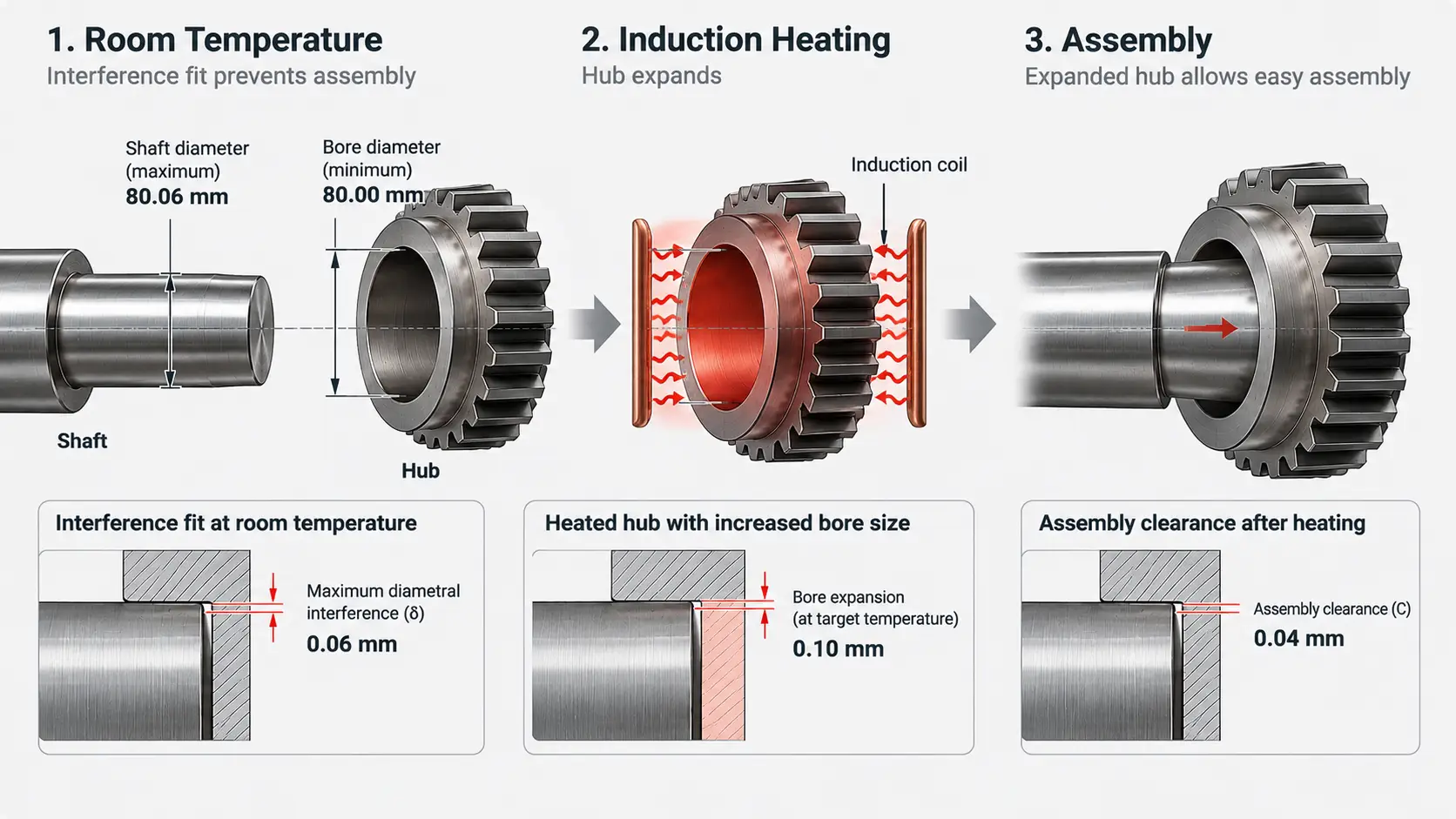
درجة الحرارة المحسوبة مقابل. التجمع الفعلي
4. How to Choose a Practical Heating Temperature
درجة الحرارة المحسوبة تعطي نقطة بداية مفيدة, ولكن يجب تحديد هدف الإنتاج من خلال تجارب التجميع الفعلية.
على سبيل المثال, أعطى الحساب السابق درجة حرارة مركزية نظرية تبلغ حوالي 124°C.
هذا لا يعني أنه يجب ضبط كل نظام تسخين مناسب تلقائيًا على 124°C. قد يبرد المكون أثناء النقل, وقد لا تمثل درجة حرارة السطح المقاسة توسع التجويف بشكل كامل.
يجب أن تجيب عملية التسخين العملية على ثلاثة أسئلة.
① هل درجة الحرارة عالية بما يكفي للتجميع?
يجب أن يوفر التجويف المسخن خلوصًا كافيًا في وقت إدخال العمود.
تحقق من أبعاد الملاءمة الفعلية, توزيع درجة الحرارة والوقت بين التسخين والتجميع.
② هل درجة الحرارة آمنة للمكون?
يجب أن يظل هدف التسخين ضمن الحدود التي تسمح بها حالة المادة والمكونات.
الأجزاء المعالجة بالحرارة, قد يكون للأسطح المطلية والتجمعات الحساسة لدرجة الحرارة قيود إضافية.
إذا تجاوزت درجة الحرارة المحسوبة الحد المسموح به, مراجعة التداخل, إزالة التجميع وطريقة التجميع بدلاً من مجرد زيادة الحرارة.
في بعض التطبيقات, تبريد العمود يمكن أن يقلل من كمية التسخين المطلوبة للمكون الخارجي. ومع ذلك, the dimensional changes and handling requirements of both parts must be considered.
③ Can the Same Result Be Repeated in Production?
A process that works for one component may not work consistently across a batch if dimensions, heating conditions or assembly timing vary.
During process trials, check:
— Whether parts within the specified tolerance range can be assembled
— Whether heating is sufficiently consistent
— Whether the available assembly time is adequate
— Whether the finished assembly meets its dimensional and functional requirements
The production heating target should be based on these results, not only on a calculated temperature.
5. How Induction Heating Supports Shrink Fitting
Induction heating is used for shrink fitting gears, الطواحين, الأكمام, motor components and other metal parts.
Instead of heating an entire assembly in a furnace, نظام ملف الحث can be designed to heat the required component or region.
This can be useful when the heating process must be coordinated with positioning, transfer and assembly.
Coil Design and Heating Distribution
The induction coil should match the component geometry and the region that needs to expand.
على سبيل المثال, a gear hub and a long sleeve may require different coil arrangements to obtain suitable heating conditions.
The goal is not simply to heat the surface quickly, but to achieve the expansion needed for assembly without exceeding the component’s temperature limits.
Temperature Monitoring and Process Control
Temperature monitoring can help maintain consistent heating conditions between parts.
ومع ذلك, sensor readings should be verified against the actual workpiece and assembly result, خاصة عندما يكون التسخين سريعًا أو يكون توزيع درجة الحرارة غير متساوٍ.
لمزيد من المعلومات حول ردود الفعل على درجة الحرارة والتحكم في الطاقة, انظر التحكم في درجة حرارة التدفئة التعريفي: التحكم في الطاقة مقابل. ردود فعل درجة الحرارة.
تنسيق التدفئة والتجميع
في الإنتاج المتكرر, وقت التسخين, وينبغي النظر في مسافة النقل وتحديد المواقع معا.
أ نظام تركيب الانكماش الآلي قد يجمع بين التسخين التعريفي والتعامل والتجميع المتحكم فيه لتقليل التباين بين الدورات.
لاعتبارات اختيار المعدات, انظر قبل أن تشتري آلة تثبيت بالانكماش بالحث: 6 القرارات التي تهم.
الوجبات الجاهزة الرئيسية
تقليص درجة حرارة التدفئة المناسبة يمكن تقديرها من الحد الأقصى للتداخل, تصريح التجميع, تناسب القطر والتمدد الحراري للمادة. يوفر الحساب نقطة البداية; تعتمد درجة حرارة الإنتاج الموثوقة أيضًا على توسع التجويف الفعلي, فقدان الحرارة, حدود المكونات وتوقيت التجميع.
الأسئلة المتداولة
انقر فوق سؤال لتوسيع الإجابة.
ما هو مقدار تصريح التجميع الذي يجب أن أضيفه?
لا يوجد بدل قياسي لكل مناسبة. The clearance is selected according to the assembly method and verified in practice; ال 0.04 mm used in the example is illustrative, not a fixed rule.
Can cooling the shaft reduce the required heating temperature?
نعم. In some applications cooling the shaft reduces the amount of heating needed for the outer component, but the dimensional changes and handling requirements of both parts must be considered.
Why might the parts still not assemble at the calculated temperature?
The calculated value is only a starting point. تسخين غير متساوٍ, heat loss during transfer, incorrect dimensions or poor alignment can all reduce the available clearance, so check these before increasing the temperature.
Is the calculated temperature the final equipment setting?
لا. It is an initial calculation. Actual heating conditions, temperature limits and heat loss during assembly still need to be considered, and the production target should be confirmed through assembly trials.
ناقش تطبيق تركيب الانكماش الخاص بك
توفر شركة Kechuang معدات التسخين التعريفي المخصصة وحلول التركيب المتقلص للتروس, الطواحين, الأكمام والمكونات الصناعية الأخرى. مشاركة أبعاد الشغل الخاص بك, المادة, متطلبات التداخل وظروف الإنتاج لمناقشة عملية التسخين والتجميع المناسبة.


