Induction Brazing for HVAC & Refrigeration Copper Components
Brazing Solutions for Refrigerant Distributors, Copper Tube Fittings and Formed Tube Joints
HVAC brazing applications range from small copper tube joints to refrigerant distributors with dozens of branch tubes. Although the brazing principle is similar, coil design, fixtures and machine layout can vary considerably from one part to another.
Our systems can be configured for automatic feeding, fixed-station or handheld induction brazing according to the workpiece geometry, joint position and production requirements.
Ⅰ. HVAC Brazing Applications in Operation
The following two applications show how different refrigeration components can be processed with induction brazing.
Video 1
Video 2
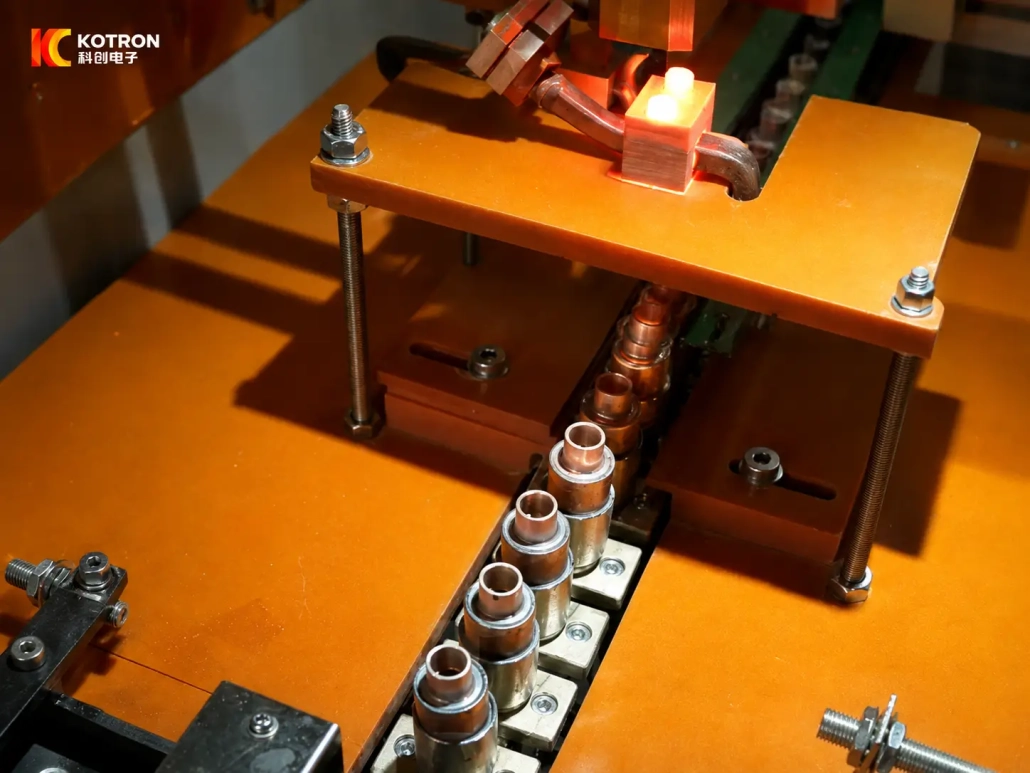
Video 1 — Automatic Brazing of a Two-Outlet Refrigerant Distributor
The components are held in individual fixtures and transferred through the brazing position in sequence. For repeated parts with a stable joint location, this indexed arrangement provides consistent positioning from cycle to cycle.
Video 2 — Induction Brazing of a Multi-Outlet Refrigerant Distributor
A large multi-outlet distributor presents a different challenge. Many copper tubes are concentrated around one distributor body, leaving less space around each joint and placing different demands on coil access and workpiece handling.
Both parts belong to the same refrigeration component family, but their brazing setups are very different.
Ⅱ. HVAC & Refrigeration Parts We Brazed
The applications on this page cover several common copper connections used in air-conditioning and refrigeration equipment.
| Application | Typical Joint |
|---|---|
| Refrigerant distributor | Distributor body to outlet tubes |
| Multi-outlet distributor | Distributor body to multiple branch tubes |
| Copper tube fitting | Copper tube to fitting or connector |
| Bent tube connection | Bent copper tube to fitting |
| Formed or reduced tube end | Formed copper tube to mating component |
These applications do not represent five completely different brazing processes.
Straight and bent tube-to-fitting joints, for example, use a similar brazing principle. What changes is the geometry around the joint, the way the part is positioned and the available space for the induction coil.
Distributor brazing presents another set of conditions because several branch connections may be located close to one another.
Ⅲ. Refrigerant Distributor Induction Brazing
A refrigerant distributor divides refrigerant from one inlet into multiple evaporator circuits.
A small two-outlet distributor is relatively compact. When the same component is produced repeatedly, dedicated fixtures can position each part and transfer it through an automatic induction brazing station.
A multi-outlet distributor requires a different approach.
As the number of branch tubes increases, access around the distributor body becomes more restricted. Nearby tubes can limit the space available for the coil and affect how heat is distributed around the target joint.
For this type of component, adding more heating power alone does not solve the problem. Joint position, surrounding copper mass and coil geometry need to be considered together.
The applications shown here range from a two-outlet refrigerant distributor to a 42-outlet commercial HVAC distributor.
Ⅳ. Copper Tube-to-Fitting Brazing
Copper tube joints are common throughout HVAC and refrigeration piping assemblies.
The tube may be straight or bent, while the mating component may be a sleeve, connector, fitting or another formed copper part. The induction coil is arranged around the connection area so that the required joint is heated locally.
Video 1
Video 2
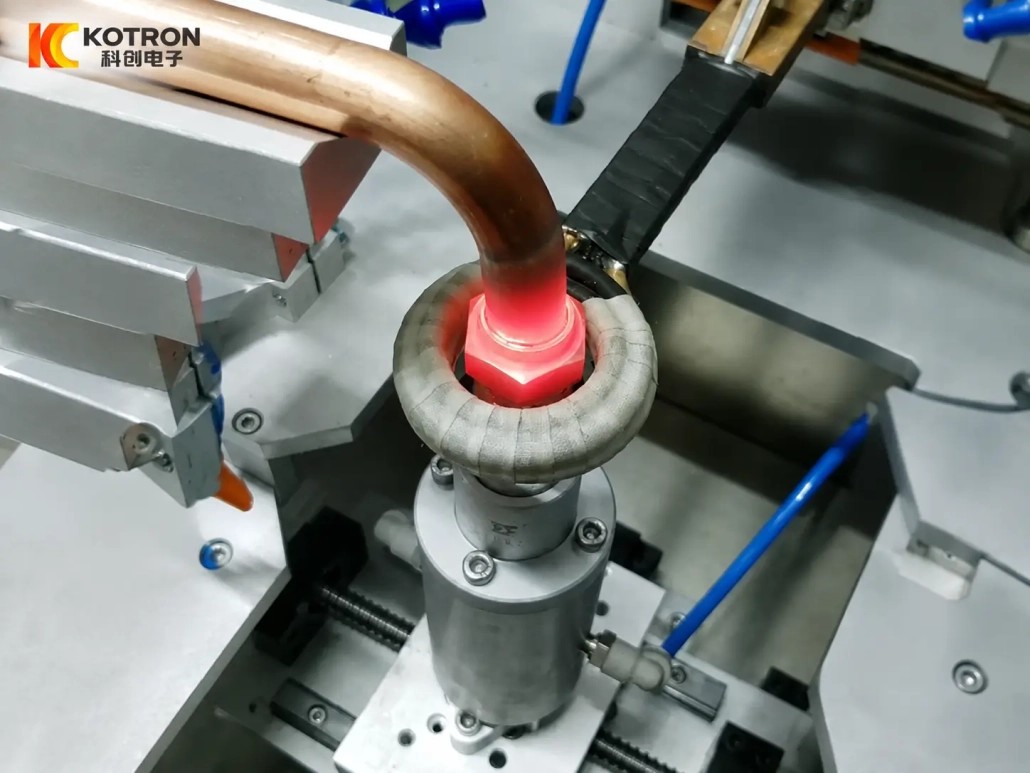
Video 1 — Bent Copper Tube-to-Fitting Brazing
In this application, a bent copper tube enters a fitting and the joint is positioned inside the induction coil. The bend affects how the workpiece can be loaded and how much space remains around the brazing area.
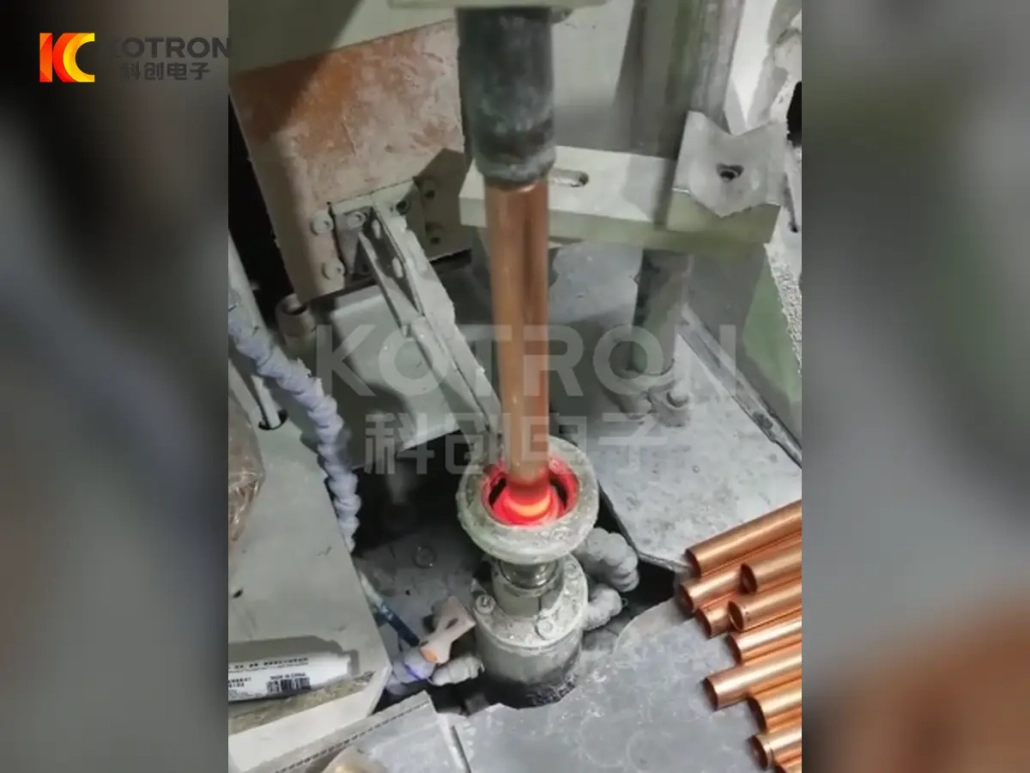
Video 2 — Straight Copper Tube-to-Fitting Brazing
This application uses a straighter tube arrangement. The joint category is similar, but the fixture and workpiece orientation are different.
Both are better treated as copper tube-to-fitting induction brazing applications rather than as separate brazing technologies.
Ⅴ. Brazing Formed and Reduced Copper Tube Ends
Some refrigeration copper tubes are formed before brazing so that one component can fit into another.
The end may be reduced or otherwise shaped to create the required overlap and assembly position. This is a joint structure rather than a separate type of HVAC component.
The formed connection is positioned in the induction heating zone and brazing filler is introduced at the joint.
For this type of application, suitable descriptions include:
Induction Brazing of Reduced Copper Tube Joints
or
Induction Brazing of Formed Copper Tube Ends
The final terminology should follow the actual tube-forming process used for the component.
Ⅵ. Coil and Fixture Design Change with the Part
The same induction power platform may support several brazing applications, but the coil is not necessarily interchangeable between them.
A simple circular tube joint can often be surrounded by a compact coil. A bent tube may leave less working space around the same type of joint. A multi-outlet distributor can be more difficult because neighboring tubes sit close to the heating area.
Coil design therefore needs to consider:
①Tube and fitting dimensions
②Joint location
③Available access around the joint
④Nearby copper tubes or components
⑤Required heating zone
⑥Loading direction
⑦Workpiece orientation
The fixture is equally important.
On automatic and fixed-station equipment, the joint should return to a repeatable position relative to the coil during every cycle. Changes in workpiece position can directly change the heating result.
Ⅶ. Automatic, Fixed-Station or Handheld Brazing?
There is no single machine layout that suits every HVAC copper component.
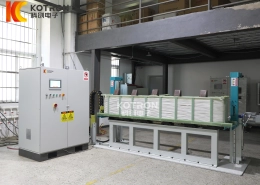
Automatic indexed or conveyor brazing is practical for repeated parts with stable dimensions and predictable joint positions. Dedicated fixtures can carry each component through the brazing station in sequence.
Fixed-station brazing can be used when the part is loaded into a defined fixture but continuous automatic transfer is unnecessary.
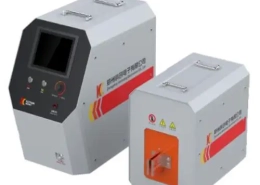
Handheld induction brazing provides greater flexibility for large assemblies, difficult-to-access joints or components with several brazing positions.
Production volume is only one factor. Part size, joint accessibility, number of brazing positions, loading method and available working space can be just as important.
The machine format should therefore follow the workpiece and production process rather than being selected first and forcing the part to fit the equipment.
Ⅷ. What Affects the Brazing Process?
Heating power is only one part of a stable brazing process.
Joint geometry and clearance affect how brazing filler enters and fills the connection.
Coil position determines where energy is concentrated. This becomes particularly important on small joints or densely arranged distributor tubes.
Part mass and surrounding copper affect heat distribution. A multi-outlet distributor, for example, may behave very differently from a simple tube connector.
Heating time and power must be matched to the actual joint rather than selected from tube diameter alone.
Filler feeding also depends on the production method. Some applications use manual filler feeding, while other systems may be configured for a more automated sequence where required.
A brazing test with the actual part is often the most reliable way to determine the final process arrangement.
Ⅸ. What We Need for Your HVAC Brazing Application
For a technical proposal, the joint itself is the best starting point.
| Information | What to Send |
|---|---|
| Workpiece | Drawing, photo or sample |
| Materials | Tube and fitting materials |
| Tube size | Diameter and wall thickness |
| Joint structure | Straight, bent, distributor, reduced end, etc. |
| Brazing position | Marked on the drawing if possible |
| Filler material | If already specified |
| Production volume | Per hour, shift or day |
| Current process | Flame brazing or another method |
| Loading method | Manual or automatic |
| Automation requirement | Handheld, fixed station or automatic feeding |
A short video of the existing brazing process can also be useful when the joint structure or handling method is difficult to explain from a drawing alone.
Based on this information, the induction power supply, coil, fixture and machine format can be evaluated together.
Ⅹ. Frequently Asked Questions
Click a question to expand the answer.
Can one induction brazing machine process different HVAC copper parts?
Sometimes. Parts with similar dimensions and joint positions may use the same power platform with different coils or fixtures. Components with very different geometry or handling requirements may need separate configurations.
Can refrigerant distributors be induction brazed?
Yes. The applications shown here include both a small two-outlet distributor and a large multi-outlet distributor. Their coil and handling requirements are different.
Can bent copper tubes be induction brazed?
Yes, provided the joint can be accessed by the coil and positioned reliably. The bend mainly affects loading, fixture design and available space around the joint.
Is automatic brazing always better?
No. Automatic feeding is useful for repeated parts and stable production, while fixed-station or handheld systems may be more practical for larger assemblies, variable joint locations or lower-volume production.
Send Us Your Copper Brazing Application
A small copper fitting and a 42-outlet refrigerant distributor may both be used in HVAC equipment, but they should not be treated as the same brazing job.
Send us your workpiece drawing, material, tube dimensions, joint position, filler material, production rate and automation requirements. We can then evaluate whether the application is better suited to an automatic feeding system, fixed-station induction brazing machine or handheld induction brazing system.