3000 kW Steel Bar Hot Rolling, Quenching and Tempering Line
Ⅰ. See the 3000 kW Steel Bar Line in Operation
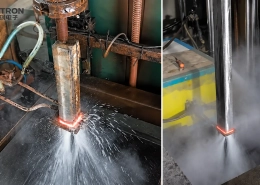
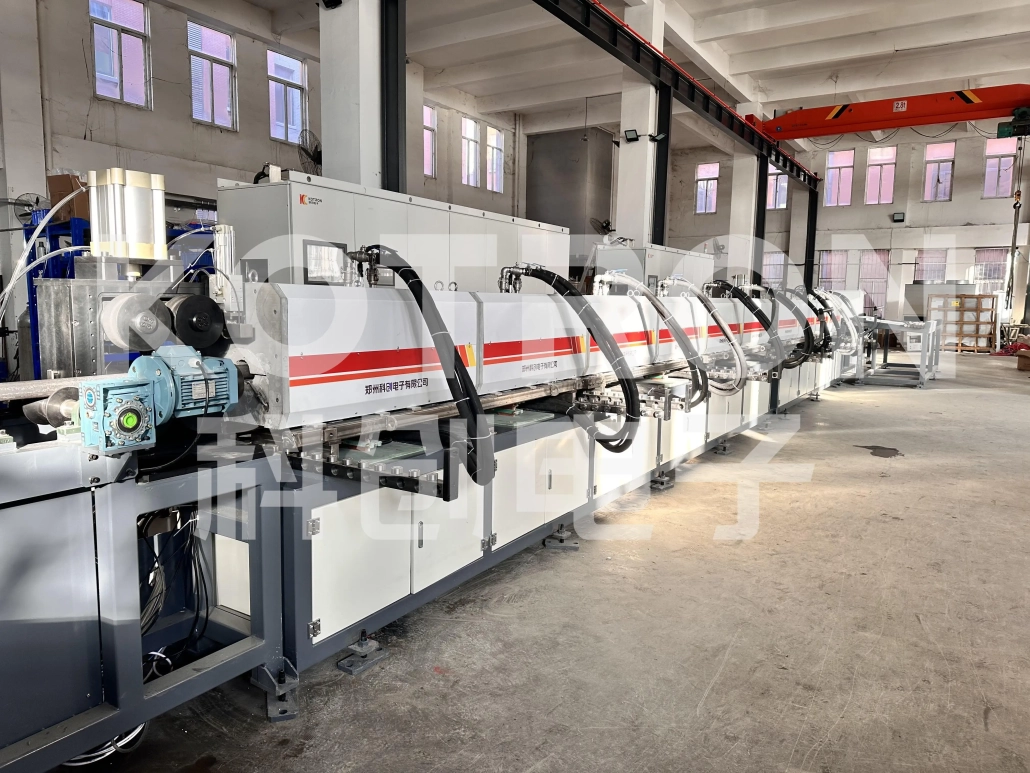
The video shows one operating section of the 3000 kW line. Long steel bars are fed continuously through the induction heating system, heated to a high processing temperature and transferred automatically to the following station.
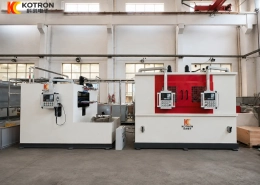
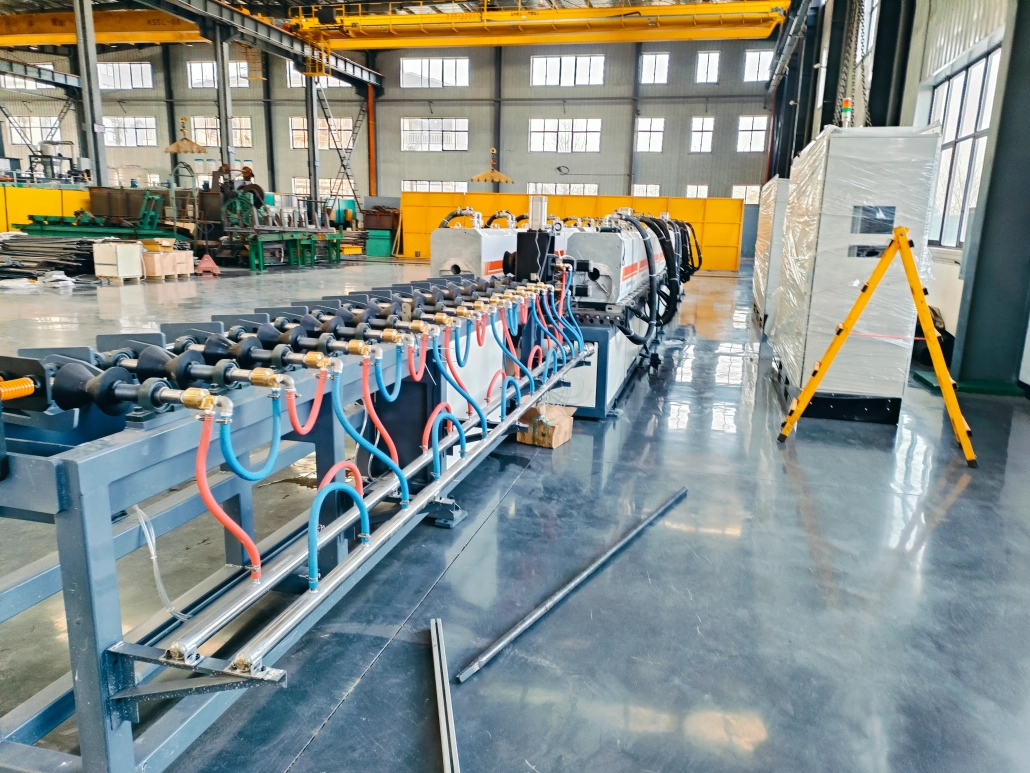
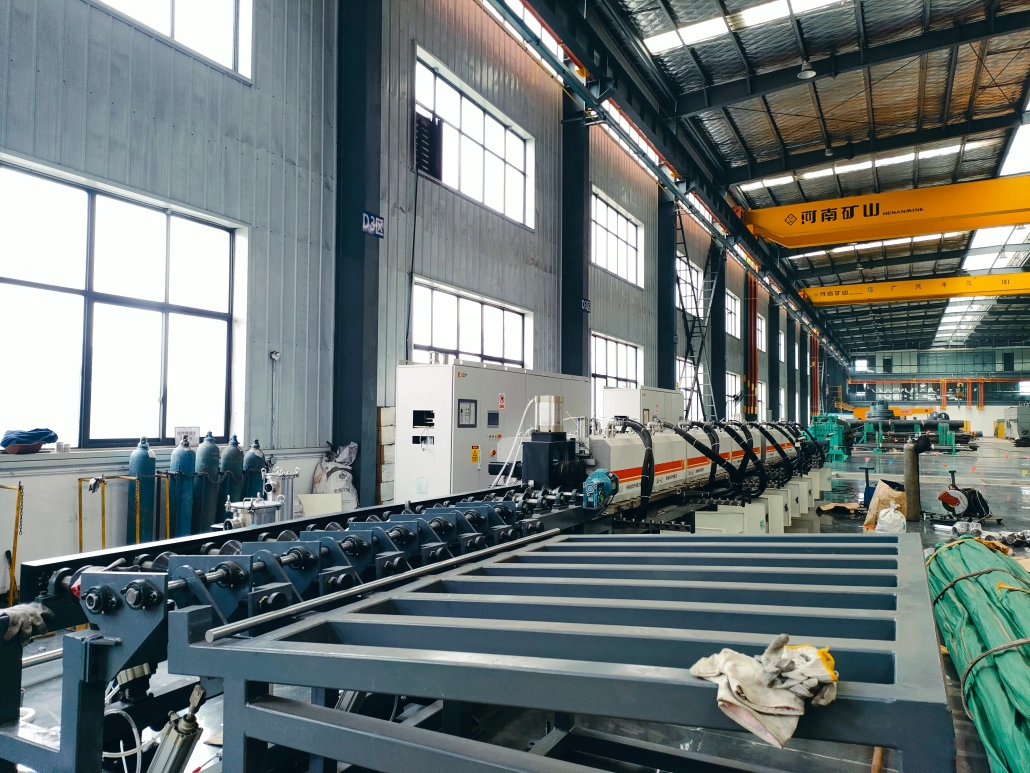
The visible equipment represents one project configuration rather than a fixed standard machine.
For a different bar diameter, steel grade, rolling process or production target, the induction heating capacity, coil arrangement, conveyor length and downstream equipment can all be redesigned.
Ⅱ. How the Steel Bar Hot Rolling and Heat Treatment Line Works
A typical production sequence can be arranged as:
1
Bar Loading
2
Roller Feeding
3
Induction Through-Heating
4
Hot Rolling
5
Quenching
6
Tempering
7
Cooling
8
Unloading
Each stage has a different function.
Induction through-heating raises the temperature of the steel bar before hot working. Unlike surface hardening, the objective here is to heat a substantial section of the bar so that the temperature distribution is suitable for the following rolling process.
The heated bar then enters the hot rolling section, where plastic deformation changes its dimensions or shape according to the required product.
After rolling, the bar can continue into the quenching and tempering section. Quenching and subsequent high-temperature tempering are used to develop the mechanical properties required for the final bar or component.
The complete process therefore combines two different objectives:
Hot rolling controls the geometry.
Quenching and tempering control the final heat-treated condition.
The exact temperature, cooling method and tempering process depend on the steel grade, bar dimensions and target properties.
Ⅲ. Main Equipment in the Production Line
The production line can be built from several coordinated modules.
Loading and Storage System
Long bars are prepared and transferred into the production line. The loading arrangement can be selected according to bar length, weight and production method.
Roller Conveyor
Rollers guide the bars through the heating and processing sections at a controlled speed. Conveyor length and drive arrangement are matched to the factory layout and production cycle.
Multi-Stage Induction Heating System
Several induction heating sections can be arranged along the production direction. This allows the required energy to be introduced progressively as the bar moves through the line.
Temperature Measurement
Temperature monitoring can be installed at selected locations to check the condition of the bar before it enters the next process.
Hot Rolling Section
The rolling equipment is configured according to the required dimensional change, bar specification and final product.
Quenching Section
After heating or rolling, controlled cooling can be applied according to the selected heat-treatment process.
The quenched bar is reheated to the required tempering condition. Induction heating provides a controllable way to integrate this step into a continuous production line.
Cooling and Unloading
After tempering, the product is cooled and transferred out of the line for subsequent processing or storage.
The complete equipment arrangement can be supplied or integrated according to the actual project scope.
Ⅳ. 3000 kW High-Power Induction Heating System
The induction heating section is one of the key parts of this line.
In the project shown here, the installed induction heating capacity reaches 3000 kW. This high-power configuration is used to provide the energy required for continuous heating of long steel bars at production-line speed.
The bars pass through induction coils without direct contact with the heating element. Energy is generated in the steel itself by the alternating electromagnetic field.
For steel bar through-heating, simply increasing power is not enough.
Several factors must be considered together:
Because induction heating is affected by electromagnetic penetration and heat conduction, frequency selection is particularly important when heating larger cross-sections.
The aim is not to make the surface as hot as possible. The system has to provide a temperature condition suitable for the following rolling or heat-treatment process.
Our induction heating systems can use IGBT power conversion and DSP digital control. Depending on the project configuration, operating parameters such as voltage, current, power and frequency can be monitored and coordinated with the production line.
Temperature measurement and line-speed control can also be integrated where required.
3000 kW should therefore be understood as one project configuration, not as a fixed power rating for every steel bar line.
A smaller or larger bar, a different production rate or another heating process may require a different power and frequency combination.
Ⅴ. Customized for Bar Size, Material and Production Capacity
A steel bar processing line cannot be selected from power alone.
Changes in the workpiece often require changes throughout the production line.
| Customer Requirement | Line Configuration Affected |
|---|---|
| Bar diameter | Induction power, frequency, coil size and guides |
| Bar length | Conveyor and material handling |
| Steel grade | Heating, quenching and tempering process |
| Target rolling temperature | Heating capacity and temperature control |
| Production rate | Line speed and induction heating power |
| Rolling requirement | Rolling equipment and process sequence |
| Required mechanical properties | Quenching and tempering parameters |
| Existing rolling equipment | Mechanical and electrical interfaces |
| Factory layout | Line length and equipment arrangement |
| Automation level | PLC, HMI, sensors and data functions |
For example, increasing line speed means that each section of the bar spends less time inside the induction coil. The required heating capacity may therefore have to increase.
Increasing bar diameter changes both the mass that must be heated and the way electromagnetic energy penetrates the steel. This may affect power, frequency, heating length and coil design at the same time.
This is why our approach is based on the bar and process first, followed by equipment selection.
A customer building a new plant may require the complete heating, rolling and heat-treatment line. Another customer may already have a rolling mill and only need a new high-power induction heating or quenching-and-tempering section.
Both types of project can be evaluated.
Ⅵ. Additional Line Configuration
Automation and Process Control
PLC and HMI systems can coordinate bar feeding, heating, conveying, cooling and other production steps. Alarm functions, operating recipes and process records can be added according to project requirements.
Temperature Monitoring
Temperature measurement can be arranged at critical points such as the outlet of the induction heating section, before rolling or during the tempering process.
Quenching and Cooling
Spray arrangement, cooling capacity and circulation systems are selected according to bar size, steel grade and the required heat-treatment process.
Material Handling
Roller conveyors, transverse transfer mechanisms, loading racks and unloading systems can be configured around bar dimensions and factory space.
The line can be evaluated for steel bars and similar long products requiring continuous heating, hot working and subsequent heat treatment. Final suitability depends on material, dimensions and process requirements rather than the product name alone.
Ⅶ. Frequently Asked Questions
Click a question to expand the answer.
Is 3000 kW the standard power for this production line?
No. The 3000 kW system is one actual project configuration. Required power is determined from the bar size, steel grade, heating temperature, production speed and process arrangement.
How is the induction heating frequency selected?
Frequency is selected together with bar diameter, required heating depth, power density and heating time. Larger cross-sections and through-heating applications require particular attention to the temperature difference between the surface and core.
Can the induction heating system be connected to an existing rolling mill?
Yes. Where practical, the induction heating section can be designed for integration with existing conveying, rolling or control equipment. The existing layout and process sequence need to be reviewed before the final design.
Can the line process different bar specifications?
A production line can be designed around a defined range of bar sizes, but changes in diameter may require different guides, induction coils or process recipes. The practical range should be determined during project design.
How is the quenching and tempering process selected?
The process depends on the steel grade, bar dimensions and required final properties. Heating and cooling parameters should therefore be established from the actual product requirement rather than from a universal recipe.
Request a Customized Steel Bar Processing Line
If you are planning a new steel bar hot rolling and quenching & tempering line, or need to upgrade the induction heating section of an existing production line, send us your basic bar information and production requirement.
Bar size + Material + Target production rate + Required process
From these details, the induction heating power, frequency, coil arrangement, line layout and heat-treatment configuration can be evaluated for your project.
Request a Technical Proposal →
Discuss Your Steel Bar Production Line