Fully Automatic Induction Hardening and Tempering Equipment for Rail Transit Components
Multi-Station Induction Heat Treatment for Rail Transit Anchor Bolts
This automatic induction hardening and tempering machine is developed for batch heat treatment of rail transit anchor bolts.
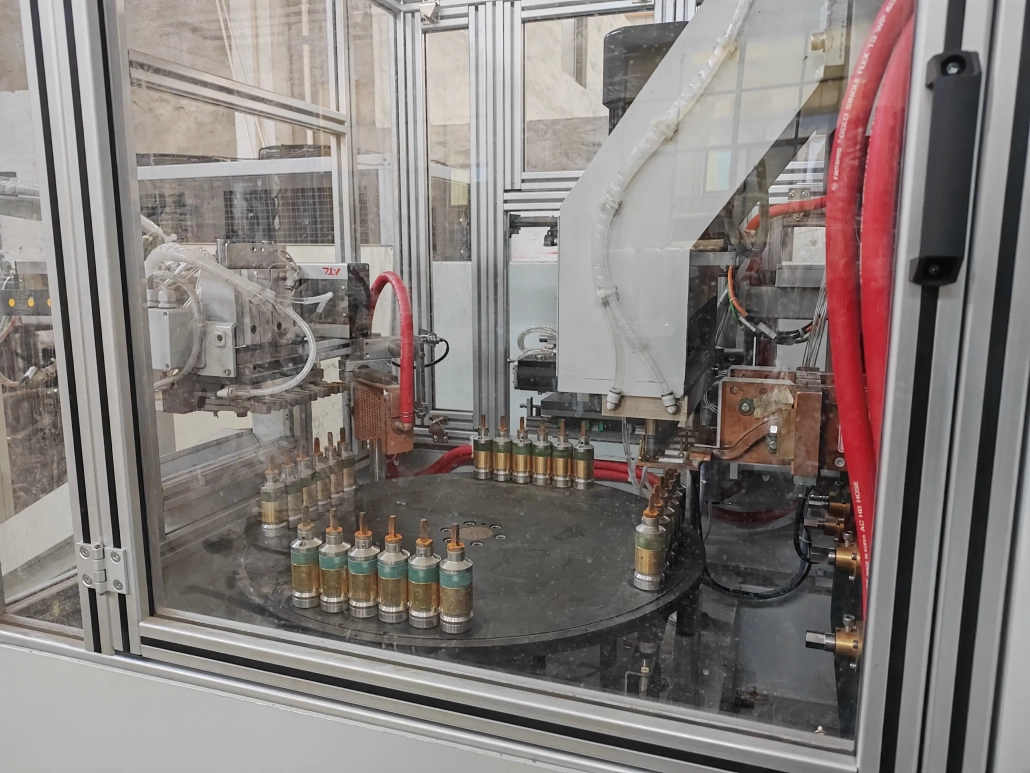
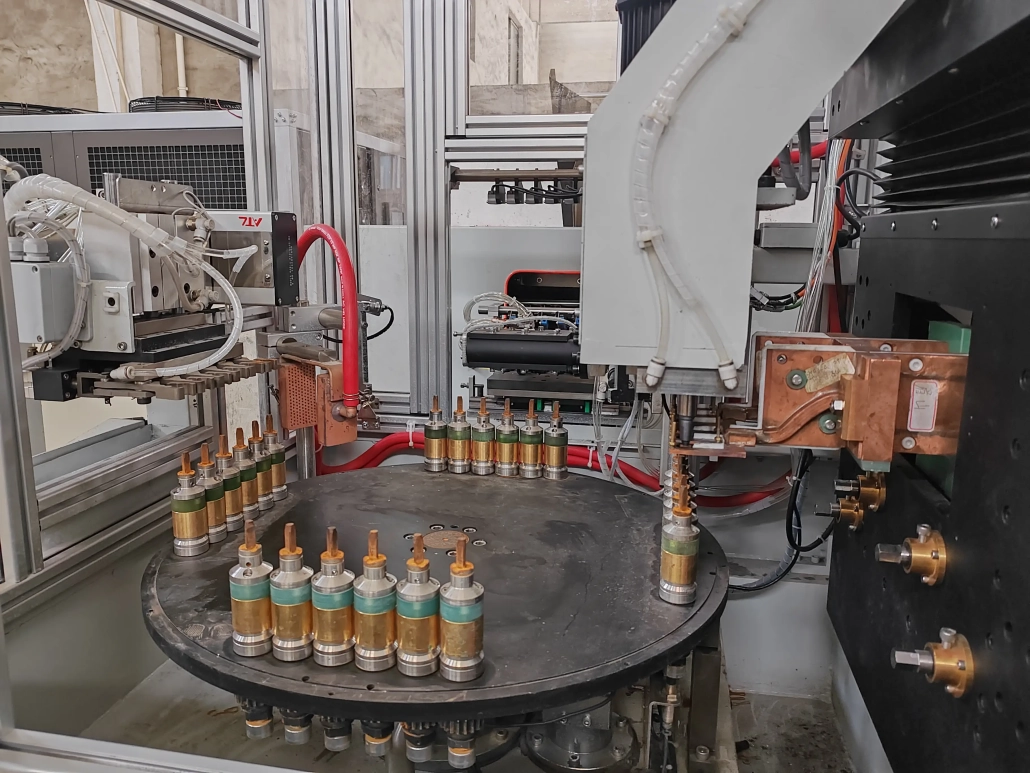
The machine uses a multi-station rotary indexing structure. Multiple anchor bolts are loaded as one group and processed simultaneously, with the workpieces transferred through the programmed heat-treatment sequence by the indexing table.
Hardening, quenching, tempering, workpiece positioning and automatic station transfer are integrated into one system.
Ⅰ. Watch the Anchor Bolt Hardening and Tempering Process
The video shows the actual operation of the multi-station machine.
Several anchor bolts are clamped and processed simultaneously as one group. After one process step is completed, the rotary table indexes the workpieces to the next position according to the programmed sequence.
This arrangement is intended for repeated production where processing bolts individually would require more separate handling and machine cycles.
Ⅱ. Multi-Station Group Processing
Unlike a conventional single-workpiece induction hardening machine, this system is built around group processing.
Multiple anchor bolts are positioned vertically in dedicated fixtures and processed together during each indexed cycle.
The machine combines:
The number of anchor bolts in each group, fixture arrangement and station layout are configured according to the workpiece dimensions and required production rate.
For recurring anchor bolt production, this structure reduces repeated individual handling and provides a defined process sequence for each group of parts.
Ⅲ. Hardening and Tempering in One Automated System
The machine integrates the main steps required for induction hardening and subsequent tempering.
A typical process can include:
01
Loading
02
Positioning
03
Induction Hardening
04
Quenching
05
Indexing
06
Induction Tempering
07
Cooling
08
Unloading
The exact station arrangement is configured according to the actual workpiece and heat-treatment requirement.
During the hardening stage, induction heating rapidly raises the required section of the anchor bolt to the process temperature, followed by controlled quenching.
The workpiece then moves through the indexing sequence to the tempering stage. Tempering is used after hardening to obtain the required combination of mechanical properties.
The final process should be determined from the anchor bolt material, specification and required mechanical properties rather than from heating temperature alone.
Ⅳ. Multi-Station Rotary Indexing Design
The rotary indexing table is the mechanical center of the machine.
Several groups of workpieces can occupy different positions around the table. Once a programmed operation is complete, the table rotates and transfers the parts to the next process position.
The machine can integrate:
The mechanical movement and induction heating sequence are coordinated through the machine control system.
Station quantity and fixture layout are selected for the actual production process and should not be treated as fixed specifications for every application.
Ⅴ. Induction Power and Digital Process Control
Hardening and tempering require different heating conditions.
Power, operating frequency, heating time and load conditions can therefore be adjusted according to the requirements of each process stage.
For multi-station heat treatment, a time-shared multi-frequency induction power configuration can be used where the process requires different loads to operate with different settings.
The available DSP-based control platform supports digital management of the induction heating process and can provide functions such as power adjustment, current and voltage monitoring, frequency monitoring, different settings for different loads, local or remote control, load-matching indication, alarm recording, and operator-level access management.
The induction power and frequency are selected according to the anchor bolt size, material, number of parts processed simultaneously and required production cycle.
The objective is not simply to use higher power, but to match the electrical system to the actual hardening and tempering process.
Ⅵ. Complete Machine System
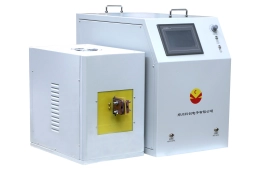
The equipment is more than an induction power supply and a rotary table.
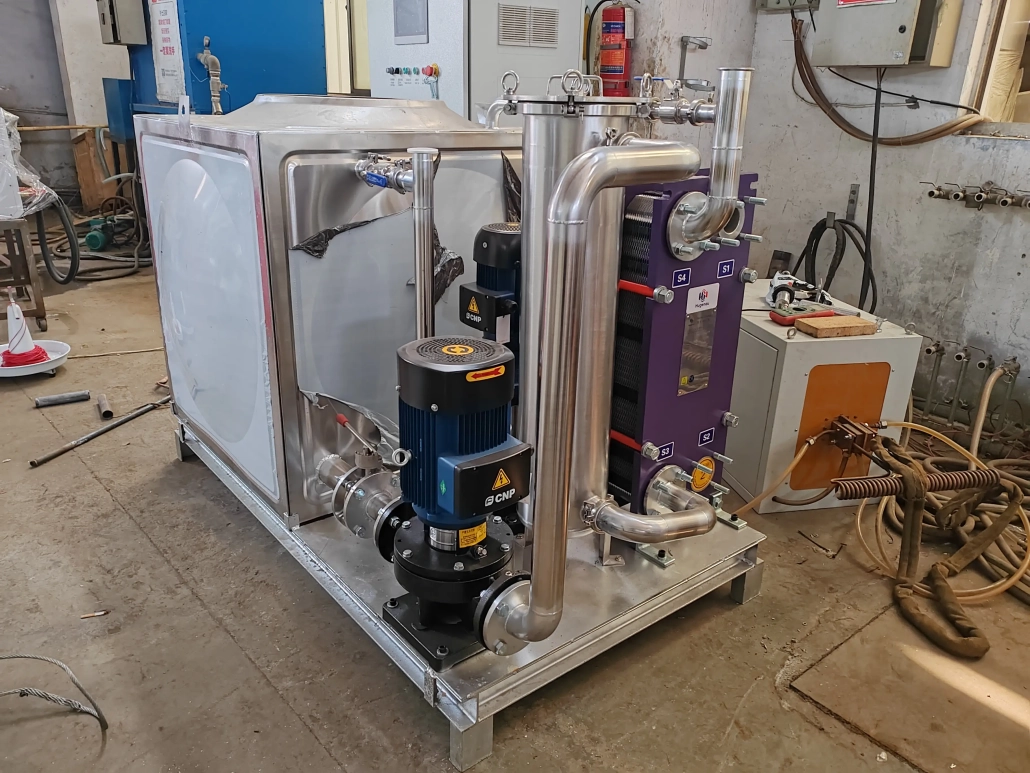
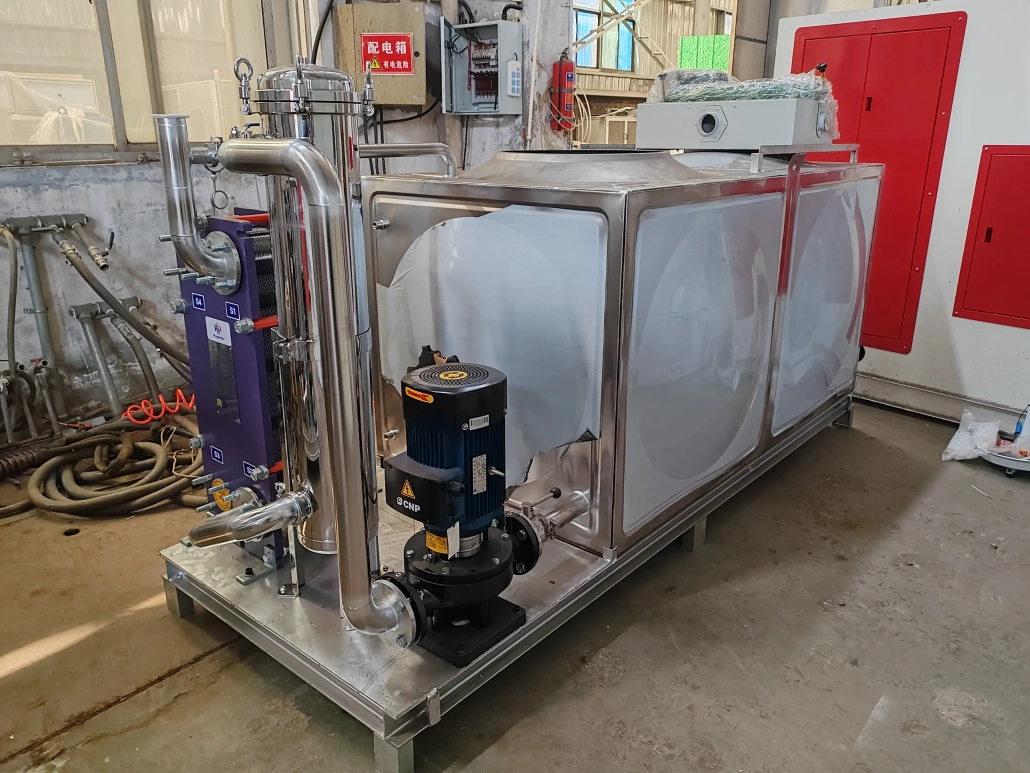
A complete anchor bolt heat-treatment system can include:
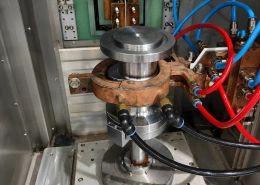
The induction coil and fixture are designed around the actual anchor bolt.
Workpiece diameter, heated area, spacing between bolts, number of parts in each group and required heating rate all influence the final inductor arrangement.
The quenching system is also matched to the workpiece and heating process. Heating and quenching should be considered together because both affect the final heat-treatment result.
Ⅶ. Optional Process Monitoring and Traceability
Where production records or process traceability are required, the machine can be equipped with a monitoring system.
Depending on the selected configuration, operating information such as current, voltage, frequency, energy, flow and temperature can be collected and stored.
Additional functions can include process curve recording, upper and lower limit alarms, historical process records, workpiece recipe management, abnormal-cycle identification, and production data review.
This is particularly useful for repeated production where established process conditions need to be monitored from batch to batch.
Process monitoring is configured according to the customer’s quality-control requirements rather than being treated as a mandatory feature for every machine.
Ⅷ. Technical Configuration
| Item | Configuration |
|---|---|
| Application | Rail transit anchor bolts |
| Process | Induction hardening and tempering |
| Machine structure | Multi-station rotary indexing |
| Processing method | Multiple anchor bolts processed as one group |
| Workpiece fixture | Customized |
| Inductor | Customized |
| Induction power | Selected according to process |
| Operating frequency | Selected according to process |
| Quenching system | Customized |
| Control | DSP digital control |
| Process monitoring | Optional |
Final specifications are determined from the actual anchor bolt and production requirement.
Ⅸ. What We Need for Machine Selection
To prepare a suitable machine configuration, please provide the anchor bolt drawing, material and grade, diameter and length, heat-treatment requirement, required mechanical properties or hardness, and required production rate.
If several anchor bolt sizes will be processed on the same machine, drawings for each specification are useful.
From this information, the station layout, group quantity, induction power, frequency, inductor, fixture and process sequence can be evaluated together.
Ⅹ. Frequently Asked Questions
Click a question to expand the answer.
Can multiple anchor bolts be processed at the same time?
Yes. The machine is designed to process multiple anchor bolts simultaneously as one group.
Are hardening and tempering completed on the same machine?
Yes. The system integrates induction hardening and tempering within a multi-station automated process.
Can one machine process different anchor bolt sizes?
Different sizes can be evaluated within the machine’s mechanical and electrical range. Different fixtures, induction coils and process programs may be required.
How is the required induction power selected?
Power selection depends on the material, workpiece dimensions, number of bolts processed simultaneously, heating requirement and production cycle. Diameter alone is not enough to determine the correct power.
Can process data be recorded?
Yes, when the corresponding monitoring configuration is selected. Process parameters, alarms and historical production records can be stored for later review.
Send Us Your Anchor Bolt Drawing
For a technical proposal, please send:
Drawing + Material + Dimensions + Heat-Treatment Requirement + Mechanical Properties + Production Rate
Based on these details, we can evaluate the machine structure, number of workpieces per group, induction power, frequency, inductor, fixture, quenching method and control configuration.
Ready to Configure Your Anchor Bolt Hardening and Tempering Line?
Send Your Anchor Bolt Drawing →
Request a Technical Proposal →