Medium-Frequency Induction Pipe Bending System
I.Built Around Your Pipe Specification
An induction pipe bending machine cannot be selected by pipe diameter alone.
The required power, operating frequency, pushing force, heating zone and cooling capacity are influenced by several factors, including the pipe material, wall thickness, bend radius, target temperature and production speed.
Before preparing a proposal, we evaluate:
The final mechanical structure and heating configuration are then developed for the actual workpiece.
How Induction Pipe Bending Works
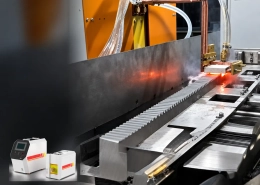
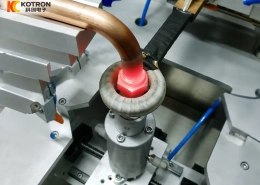
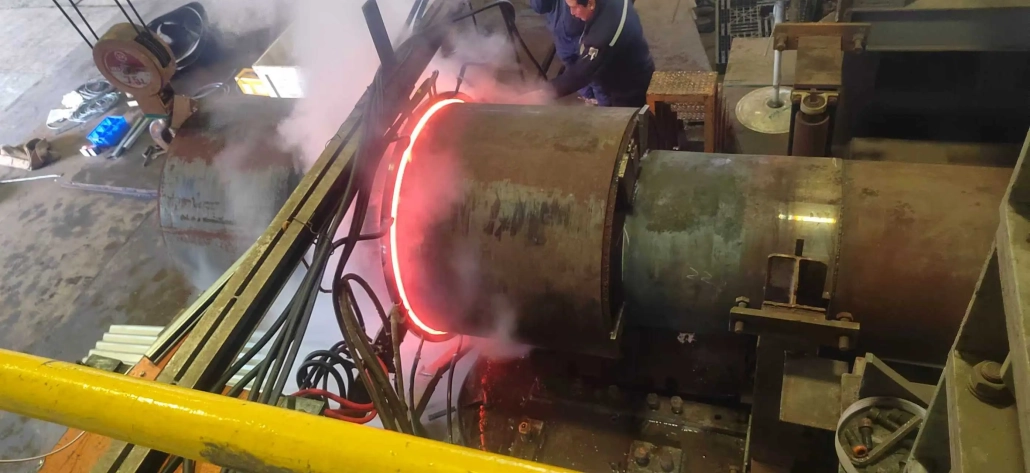
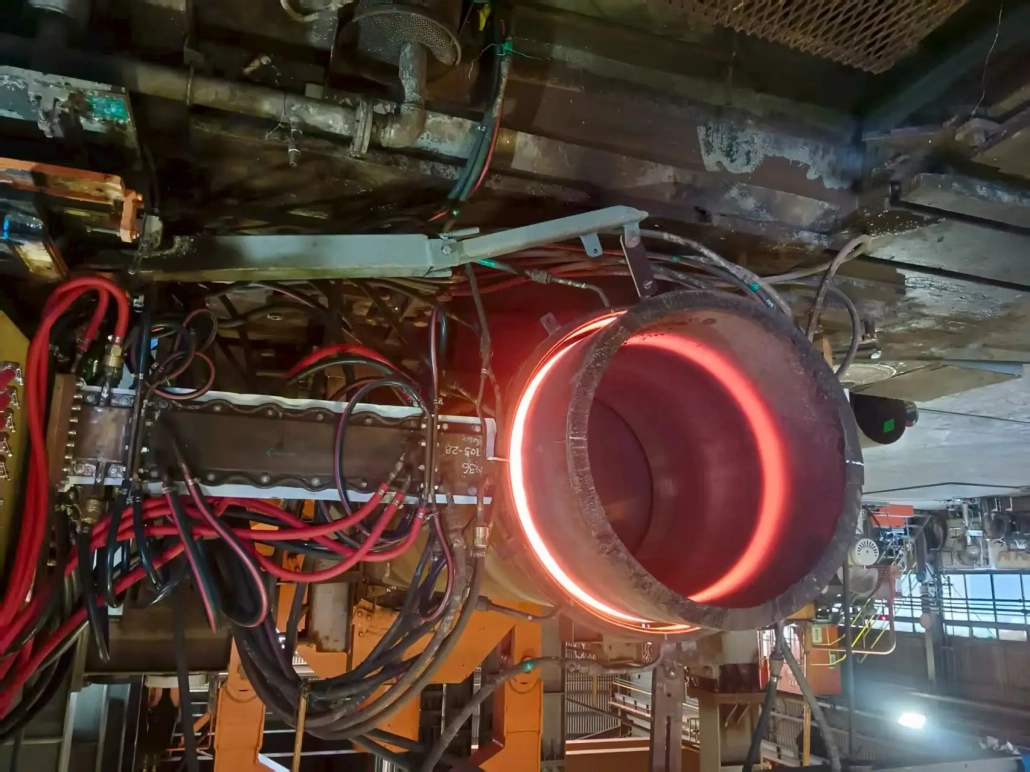
The pipe is positioned and clamped on the machine. An induction coil heats a narrow section of the pipe to the temperature required for forming.
As the pipe moves through the heating zone, the pushing system applies controlled force and the bending arm guides the heated section around the specified radius. The formed section is cooled immediately after it leaves the induction coil.
The process runs continuously:
Heating power, pipe speed and temperature must remain coordinated throughout the bend. These settings are adjusted according to the pipe specification and the required finished-part quality.
III. Main System Components
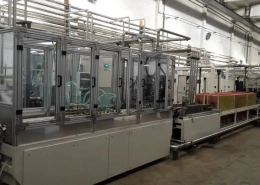
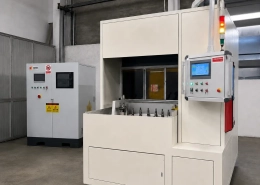
The equipment can be supplied as a complete production system rather than as a standalone induction power supply.
Bending Unit
The mechanical section holds, pushes and guides the pipe during forming. Its structure and pushing capacity are selected according to pipe size, wall thickness and bending radius.
Induction Heating Power Supply
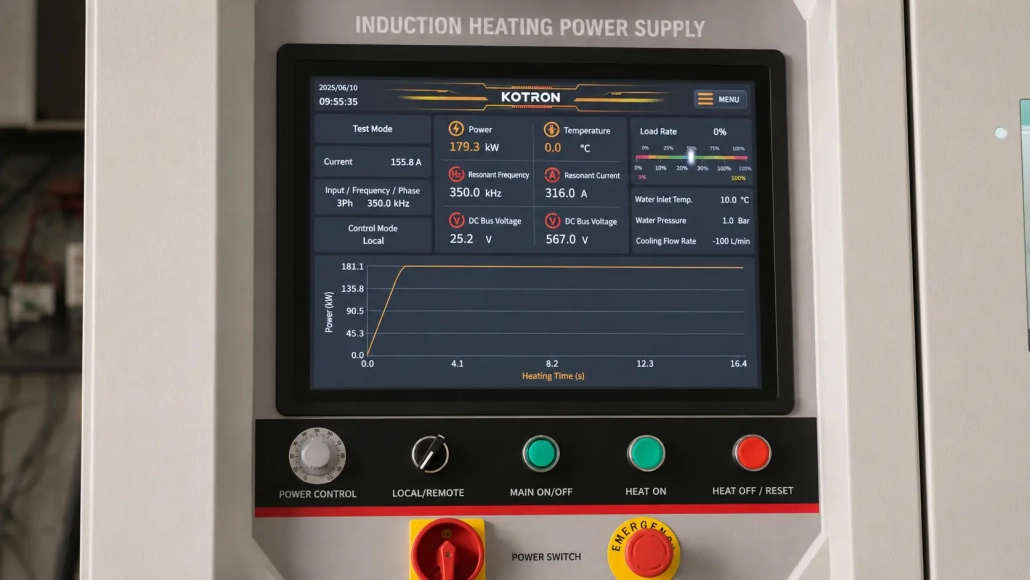
The medium-frequency power supply delivers energy to the induction coil. Power and frequency are selected to match the pipe dimensions, material and required heating rate.
Induction Coil
The coil creates the localized heating zone around the pipe. Its dimensions and structure are designed for the workpiece and required heat distribution.
Temperature Measurement
An infrared pyrometer measures the pipe temperature during operation. The temperature signal can be used for process monitoring and automatic power adjustment.
Cooling System
The cooling system controls the pipe temperature after bending and also provides cooling for the induction power supply and coil. The required arrangement depends on the production process.
PLC and Operator Interface
The PLC coordinates pipe movement, heating, temperature control, cooling and safety interlocks. Operators can set and recall production parameters through the HMI.
IV. Process Control That Operators Can Use
The control system presents the main production settings on one interface instead of requiring separate adjustment of unrelated equipment.
Operators can manage parameters such as:
Approved settings can be saved for repeated products. When the same pipe specification is produced again, the stored recipe provides a practical starting point and reduces unnecessary adjustment.
V. DSP Digital Process Monitoring
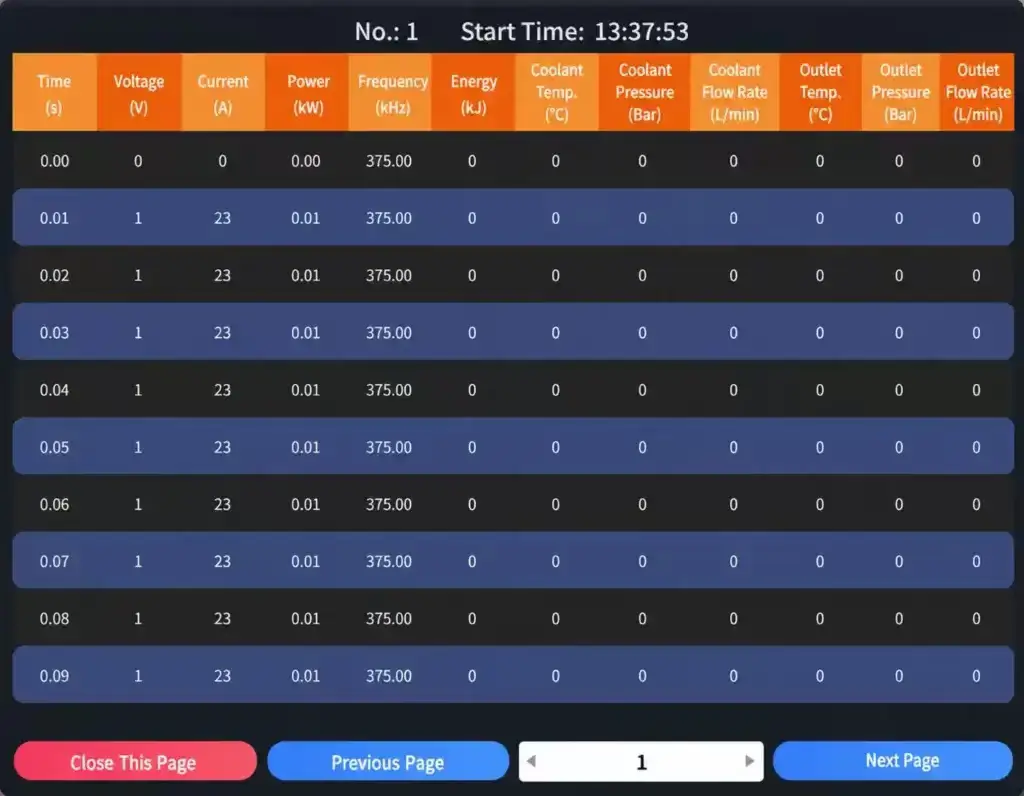
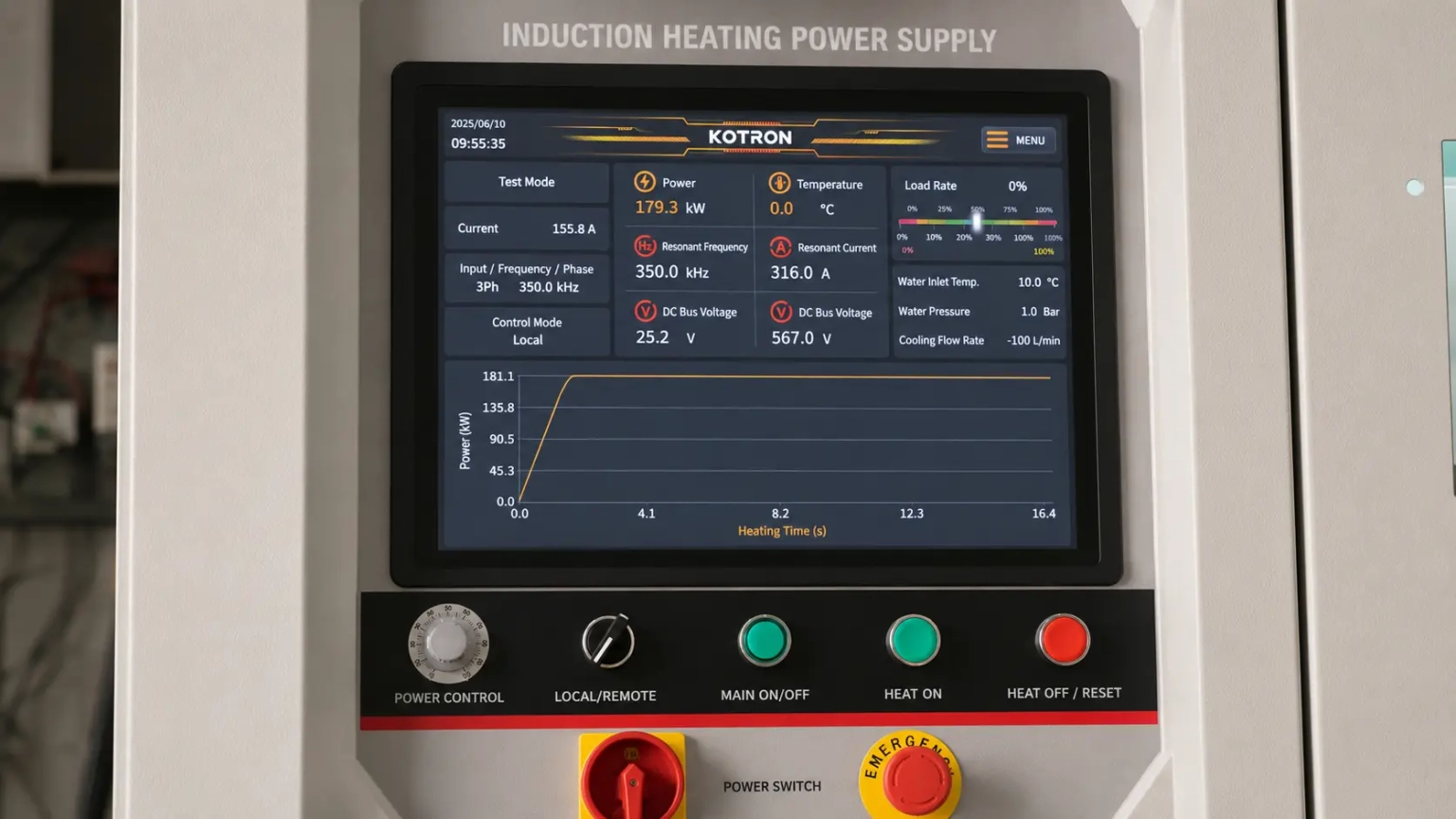
The DSP monitoring system records what happens during the heating and bending cycle.
With the appropriate sensors installed, the operator can view:
Upper and lower limits can be assigned to important parameters. If a value moves outside the permitted range, the system generates an alarm so that the operator can check the process.
The system can also store workpiece numbers, operator information, production dates, batch records and process parameters. Historical records can be searched later for production review or quality traceability.
Temperature monitoring requires a compatible infrared pyrometer or other temperature sensor.
VI. Practical Advantages
One Coordinated System
The bending machine, induction power supply, temperature control and cooling system are engineered to work together. This avoids the coordination problems that can occur when major components are selected separately.
Localized Heating
Only the section being formed is heated. The rest of the pipe remains outside the main heating zone.
Adjustable Process Settings
Heating power, temperature, pushing speed and bending angle can be adjusted for different pipe specifications.
Repeatable Production Recipes
Process parameters can be stored and reused for recurring products, reducing dependence on manual setup records.
Production Data Traceability
Heating curves, alarms, workpiece records and batch information can be retained for later review.
Project-Based Configuration
The machine is configured for the actual pipe and production target instead of relying on one general-purpose parameter set.
VII. Typical Applications
The system is intended for steel pipe bending applications used in industries such as:
Carbon steel, stainless steel and alloy steel applications can be evaluated according to the material grade, pipe dimensions and required bending process.
VIII. Equipment Configuration
The scope of supply can be arranged according to the project and may include:
Mechanical
Heating & Sensing
Cooling
Control & Data
The exact scope is confirmed in the technical proposal.
IX.Frequently Asked Questions
Click each question to expand the answer
Do you supply the complete pipe bending system?
How do you select the power rating?
Can one machine process different pipe sizes?
Can the system save production records?
Is temperature control included?
Send Us Your Pipe Specification
Provide the pipe material, dimensions, bending angle, radius and production rate. Our engineers will prepare a system configuration based on your workpiece and production conditions.