Induction Heating Systems for Metal Eyeglass Frame Manufacturing
Ⅰ. Automatic Induction Annealing of Metal Eyeglass Frames
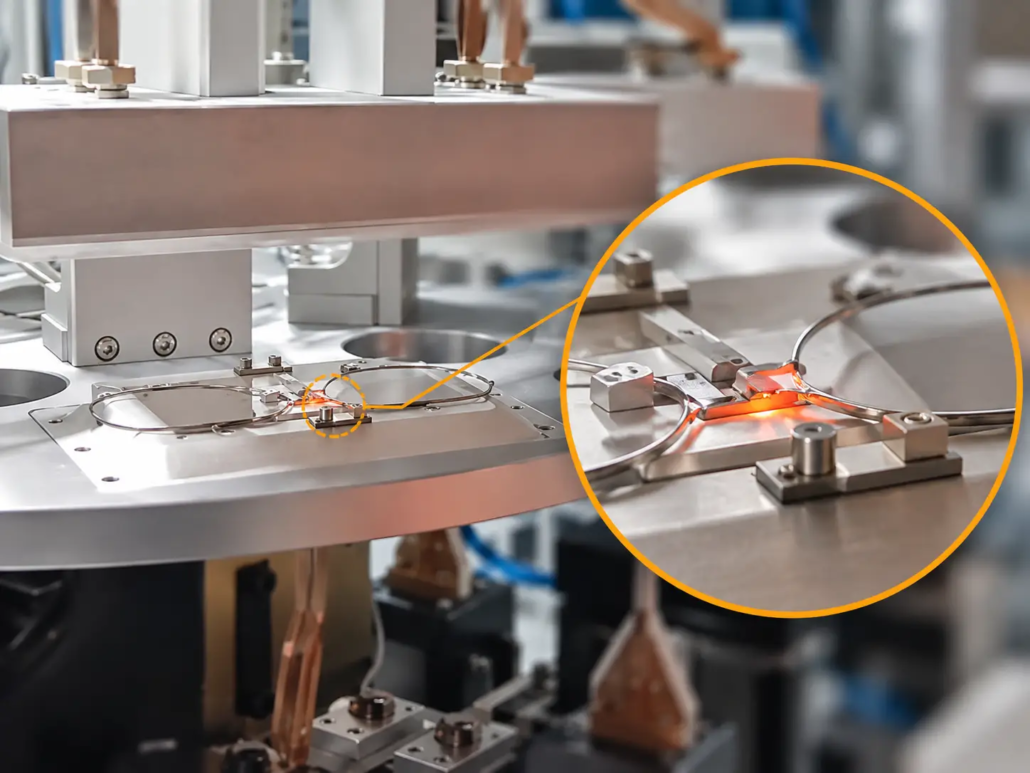
Video: Automated multi-station induction annealing of metal eyeglass frame fronts, with localized heating at the nose bridge area.
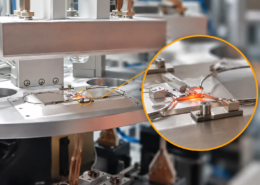
The video shows a rotary heating system processing metal eyeglass frame fronts. The nose bridge and adjoining frame components are already connected before heating.
The workpieces are positioned in fixtures on a multi-station rotary arrangement. Localized induction heating is applied to the nose bridge connection area rather than to the entire frame.
The operation is identified as induction annealing, intended to provide a localized thermal treatment of the assembled frame. The actual metallurgical result depends on the material and heating cycle.
Demonstrated Application
| Item | Description |
|---|---|
| Workpiece | Metal eyeglass frame front |
| Heating Location | Nose bridge connection area |
| Process | Localized induction annealing |
| Equipment Arrangement | Multi-station rotary heating system |
| Workpiece Holding | Frame positioning fixtures |
| Production Application | Metal eyewear manufacturing |
The video illustrates the equipment arrangement and heating location. Specific material grades, treatment temperatures, cycle times and finished-part inspection results have not been confirmed.
Ⅱ. Induction Heating Applications in Eyeglass Frame Manufacturing
Induction heating is used in metalworking processes that require heat to be concentrated in a selected area. In eyeglass frame manufacturing, the equipment must be matched to the intended operation, whether it involves changing material properties or joining components.
Localized Induction Annealing and Stress Relieving
Metal frame components may require thermal treatment after forming or assembly.
Annealing is performed using a heating cycle selected for the material and the required change in its condition. For suitable alloys, a localized treatment may be used to modify material properties in the heated region.
Stress relieving is a related heat-treatment application intended to reduce residual stresses introduced during previous manufacturing operations. Its effectiveness depends on the alloy, initial material condition and thermal cycle.
The featured equipment demonstrates localized annealing at the nose bridge area. A specific stress-relief result has not been established from the video alone.
Induction Brazing of Eyeglass Frame Components
Induction brazing is a separate application for joining metal eyewear components using a suitable filler metal.
Potential applications include nose bridge joints, selected frame connections and small metal fittings where the material combination and joint design are suitable for brazing.
The induction coil heats the joint area to support the brazing process. Equipment selection must account for the base materials, filler metal, joint geometry and any required flux or protective atmosphere.
We can supply customized induction brazing equipment for suitable eyeglass frame components.
The featured rotary machine demonstrates annealing, not brazing. Although both processes use induction heating, a brazing application may require different inductors, fixtures, control settings and equipment arrangements.
Ⅲ. Customized Inductors and Workpiece Fixtures
Eyeglass frame geometry presents specific challenges for localized induction heating. The nose bridge, lens rims and small connection features are closely spaced, while frame dimensions and shapes may vary between products.
The inductor and positioning fixture are therefore designed around the actual component and heating requirement.
Inductor Design
The induction coil determines how electromagnetic energy is coupled into the workpiece and influences the heating distribution.
For nose bridge annealing, the inductor must provide suitable access to the connection area while accounting for nearby frame sections.
The main design considerations are the material, component dimensions, required heating area, coil clearance and heating cycle.
Brazing applications require additional attention to joint geometry, filler metal placement and access around the connection.
A coil suitable for annealing one frame design should not be assumed suitable for every frame style or for brazing.
Frame Positioning and Fixtures
Accurate positioning helps maintain the intended relationship between the workpiece and the inductor during processing.
Fixtures may use locating features and supports shaped to the frame geometry. Their design must account for heating conditions, workpiece accessibility and the required handling method.
Where several frame styles are produced, interchangeable fixtures or separate tooling may be necessary. The range of workpieces that can share one heating arrangement must be evaluated during equipment design.
Ⅳ. Equipment Configuration and Automation
An induction heating system for eyewear manufacturing may be supplied as a dedicated workstation or incorporated into a larger production arrangement.
The multi-station rotary equipment shown in the video is one available approach to handling frame components during localized heating. Other applications, including induction brazing, may use different machine layouts.
Main Equipment Configuration
| Component | Configuration Considerations |
|---|---|
| Induction Power Supply | Power and operating frequency selected for the material, workpiece geometry and heating requirement |
| Induction Coil | Customized for the required heating area |
| Workpiece Fixture | Frame positioning and support during heating |
| Process Control | Heating power and duration regulation |
| Temperature Measurement | Measurement or feedback equipment where required |
| Workstation | Single-station or multi-station arrangement according to the application |
| Automation | Workpiece loading, positioning, station movement and unloading as required |
Power Supply and Heating Control
Our induction heating solutions can use digitally controlled power supplies to regulate heating output and duration.
Power supply selection must be considered together with the inductor, workpiece material and required heating cycle. The operating frequency and power are not determined by the application name alone.
Programmable heating settings and temperature-feedback control may be incorporated where appropriate. Actual temperature distribution also depends on coil geometry, component properties and positioning.
Multi-Station Rotary Systems
The demonstrated equipment uses a rotary arrangement with multiple workpiece positions.
For production applications, station movement, heating time and workpiece handling must be coordinated according to the required operating sequence.
The choice of a rotary system depends on production volume, frame dimensions, fixture arrangement and changeover requirements. A single-station workstation may be more suitable for smaller batches or applications involving frequent product changes.
Process Development and Verification
For annealing applications, the treatment cycle must be established according to the frame material and intended metallurgical result.
For brazing, joint preparation, filler metal selection and heating conditions must be evaluated together.
Where necessary, sample processing and inspection can help establish suitable operating parameters before the production configuration is finalized.
Ⅴ. Frequently Asked Questions
Click a question to expand the answer.
Can induction heating equipment be used for both eyeglass frame annealing and brazing?
Induction heating technology supports both applications, but the processes have different requirements. Annealing uses a defined thermal cycle to modify material condition, while brazing joins components using filler metal. Separate inductors, fixtures or equipment configurations may be necessary.
Can one machine process different eyeglass frame designs?
Different frame styles may be accommodated within the designed operating range. Changes in frame geometry, material or heating location may require fixture changeover, inductor adjustments or separate tooling.
Can induction annealing reduce distortion or discoloration?
Localized induction heating limits direct heat input to a selected region, which may help manage heating-related effects on surrounding areas. It does not eliminate the risk of distortion or surface discoloration. Results depend on the material, thermal cycle, workpiece geometry and processing environment.
Does every eyewear manufacturer need a rotary heating machine?
No. A rotary multi-station arrangement may suit repeated production of compatible workpieces. Single-station equipment can be considered for smaller production volumes, specialized processes or frequent product changeovers.
Can the heating system be integrated into an existing production process?
Integration is possible where the machine layout, workpiece handling and control requirements are compatible. The scope of automation and any connection to existing equipment must be evaluated for the specific project.
Ⅵ. Request a Customized Induction Heating Solution
We provide induction heating equipment for metal eyeglass frame manufacturing, including localized annealing systems and separate induction brazing solutions.
For an initial equipment evaluation, please provide:
— Frame or component drawings or photographs.
— Material or alloy type.
— Main dimensions and required heating or joining location.
— Intended process: annealing, stress relieving or brazing.
— Production quantity or required output.
With this information, we can evaluate the appropriate induction power supply, inductor, workpiece fixtures and equipment arrangement.
Need induction heating for metal eyeglass frames?
Send your eyeglass frame drawing and we will evaluate a customized annealing or brazing solution.