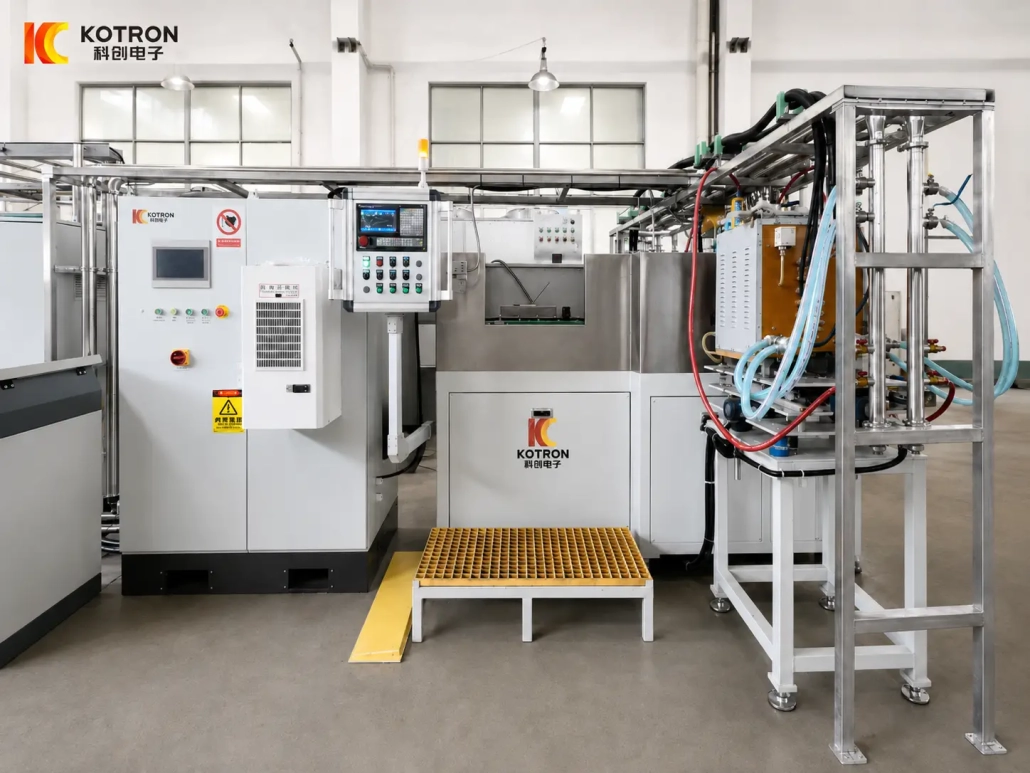
Multi-Station Pickaxe Induction Hardening Machine
Simultaneous Induction Hardening of Both Pickaxe Working Ends
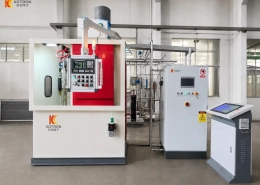
This multi-station induction hardening machine is used for batch heat treatment of pickaxe heads. Workpieces are loaded manually and then conveyed automatically through the hardening process. Both working ends are heated at the same time and spray quenched on the machine.
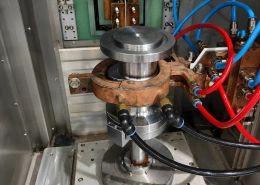
The system uses dedicated positioning fixtures and multi-turn flat induction coils to concentrate heating on the required areas of the pickaxe head.
Ⅰ. See the Pickaxe Hardening Process
Video 1: Manual loading and automatic pickaxe hardening process
Video 2: Pickaxe heads entering the induction heating zone
The first video shows the machine during normal production. Pickaxe heads are loaded manually while workpieces already in the machine continue moving forward through the heating and quenching process.
The second video starts earlier in the cycle. The pickaxe heads move forward and enter the induction heating zone, making the relationship between the workpiece, inductor and conveying system easier to see.
After loading, the machine transfers the pickaxe heads forward automatically. Both working ends are induction heated simultaneously and then spray quenched as part of the same production sequence.
There is no need to harden one end first and then turn the workpiece around for the other end.
Ⅱ. Simultaneous Localized Hardening of Both Working Ends
The working ends of a pickaxe are exposed to repeated impact and abrasion. The center section, including the handle eye, has a different function and does not need to be treated in the same way.
Induction heating makes it possible to concentrate the heating zone on the two ends.
On this machine, both sides are processed simultaneously. The central body remains outside the main heating area while the working ends are brought to the required heating condition and quenched.
This selective hardening principle is also used for other impact and hand tools where the working surface requires higher wear resistance while the rest of the component retains suitable toughness.
The final heating pattern depends on the pickaxe-head geometry, material and specified hardened area.
Ⅲ. Manual Loading and Automatic Workpiece Conveying
Pickaxe heads are placed into the positioning fixtures manually. Once loaded, the workpieces are conveyed forward automatically through the machine.
Multiple pickaxe heads remain arranged in sequence during production. The conveying mechanism carries them through the heating and spray-quenching area without requiring manual transfer between these process steps.
This arrangement separates manual loading from the hardening cycle. After a pickaxe head has been positioned in the fixture, its forward movement through the machine is handled automatically.
Consistent positioning is important because both working ends need to remain correctly aligned with the corresponding induction heating and quenching areas as the workpieces pass through the machine.
Ⅳ. Multi-Turn Flat Induction Coil and Pickaxe Positioning
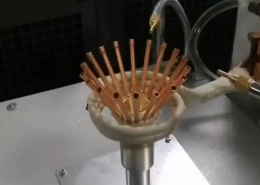
The machine uses a multi-turn flat induction coil rather than a conventional circular coil surrounding the workpiece.
Several parallel water-cooled copper conductors form the active heating section. The flat, open structure suits the long and relatively flat working ends of the pickaxe head and allows the workpiece to move through the heating area as part of the conveying process.
The coil geometry is matched to the position and length of the required hardened area. At the same time, the fixture keeps the pickaxe head aligned so that the two working ends pass through their corresponding heating zones.
Different pickaxe designs may vary in:
— Overall length
— Working-end shape
— Cross-section
— Required hardened length
— Handle-eye dimensions
These differences can affect both coil design and workpiece positioning.
For projects involving more than one pickaxe-head size, the drawings should be reviewed before deciding whether the same coil and fixture can be used.
Ⅴ. Integrated Spray Quenching and Process Control
The heated working ends are spray quenched directly on the machine.
Keeping heating and quenching in the same production sequence avoids manually transferring hot pickaxe heads to a separate quenching station.
The basic process is:
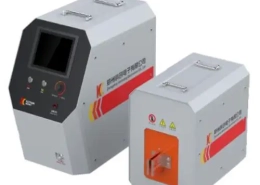
The induction heating section can use DSP digital control for power regulation and process control. Where required, monitoring functions such as operating-parameter display, alarms and production-data recording can also be configured.
Induction power, operating frequency and quenching conditions are selected according to the actual pickaxe head, material, hardened area and production requirement.
The quenching medium and cooling parameters also need to be confirmed for the specific heat-treatment process.
Ⅵ. Send Us Your Pickaxe Head Drawing
For equipment selection, please provide the pickaxe-head drawing and hardening requirements.
Useful information includes:
Photos or samples are also useful where the two working ends have different shapes.
Based on the workpiece information, the machine layout, multi-turn flat induction coil, positioning fixture, induction power and quenching arrangement can be evaluated together.
Frequently Asked Questions
Click a question to expand the answer.
Can both working ends of the pickaxe be hardened at the same time?
Yes. Both working ends are induction heated simultaneously and spray quenched in one continuous production sequence — there is no need to harden one end, then turn the workpiece around for the other.
Does the center section and handle eye get hardened too?
No. Selective induction heating concentrates the heating zone on the two working ends, leaving the central body outside the main heating area so it keeps suitable toughness.
What is a multi-turn flat induction coil, and why is it used here?
It is a flat, open coil made of several parallel water-cooled copper conductors. Its shape suits the long, relatively flat working ends of the pickaxe and lets the workpiece move through the heating zone during conveying.
What do you need from me to prepare a proposal?
The pickaxe-head drawing plus the material, working-end dimensions, required hardened areas, target surface hardness and case depth, and production rate. Photos or samples help when the two ends have different shapes.
Can the same machine handle more than one pickaxe size?
It depends. Overall length, working-end shape, cross-section and handle-eye dimensions all affect coil and fixture design, so drawings for multiple sizes are reviewed before deciding whether one coil and fixture can be shared.
Send Us Your Pickaxe Head Drawing
Share your pickaxe-head drawing and hardening requirements, and we will evaluate the machine layout, coil, fixture, induction power and quenching arrangement together.