| Heat is generated directly inside the metal, with a heating rate 2-10 times faster than traditional heating methods; for example, a carbon steel workpiece only takes a few seconds to tens of seconds to heat up to the forging temperature of 1200℃ |
Relies on thermal radiation and air conduction for heat transfer, with a long heat transfer path; it takes several minutes to heat a carbon steel workpiece of the same specification to the forging temperature |
| With precise control via an alternating magnetic field, the internal and external temperature difference of small and medium-sized workpieces can be controlled within 5℃, effectively avoiding local overheating or underheating |
Greatly affected by air flow disturbance, the surface temperature of the workpiece fluctuates significantly, with a temperature difference often exceeding 50℃, which easily leads to crack defects in the workpiece |
| The heat utilization rate is as high as 85%-95%, with no heat loss from open flames or the environment, resulting in extremely low energy loss |
The heat utilization rate is only 30%-50%, with a large amount of heat lost through flue gas emission and environmental radiation, leading to serious energy waste |
| Adopts a non-contact heating mode, with no pollutants such as fuel residues or oxide scale generated; no open flame operation, resulting in low fire risk |
Flue gas and waste residue are generated during the heating process, which easily pollutes the workpiece surface and operating environment; open flame operation poses a high fire hazard |
| By adjusting the current frequency (1kHz-1MHz) and current intensity, the heating temperature, heating duration and heating area can be precisely controlled |
Relies on manual adjustment of fuel supply for temperature control, with a temperature error exceeding ±50℃, making it difficult to meet the demand for precise heating |
| Suitable for various conductive metals (such as steel, copper, aluminum, etc.), especially for the heating needs of small and medium-sized precision workpieces and special-shaped workpieces |
Mainly applicable to large rough-processed workpieces and scenarios with low requirements for dimensional accuracy and surface quality |

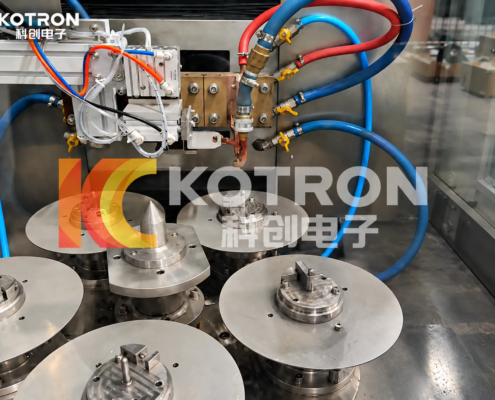 https://www.inductionheatingtreatment.com/wp-content/uploads/2026/10/flyweight-induction-hardening-marine-diesel-engine.webp
1086
1448
cui yanan
https://www.inductionheatingtreatment.com/wp-content/uploads/2025/12/kclogo2.webp
cui yanan2026-10-23 03:55:492026-10-23 03:55:49Induction Hardening of Flyweight Components for Marine Diesel Engines
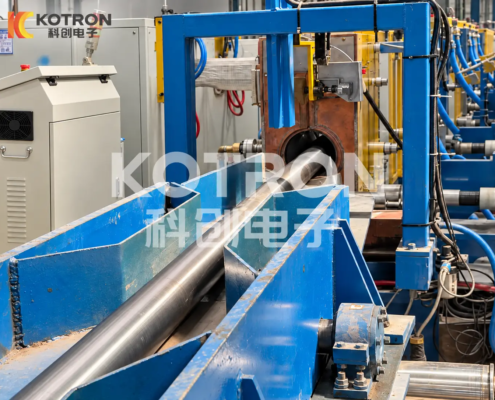 https://www.inductionheatingtreatment.com/wp-content/uploads/2026/10/titanium-alloy-bar-induction-heating-feeding-system.webp
1086
1448
cui yanan
https://www.inductionheatingtreatment.com/wp-content/uploads/2025/12/kclogo2.webp
cui yanan2026-10-22 09:09:312026-10-22 09:09:31Induction Heating of Titanium Alloy Bars for Hot Rolling
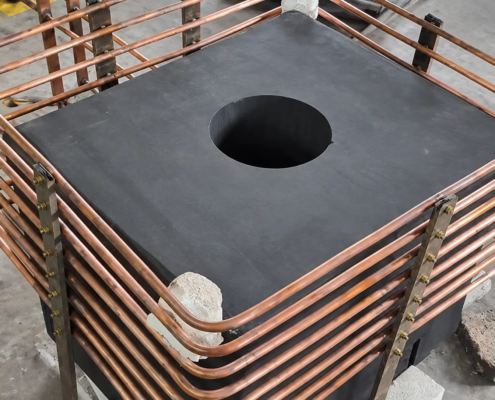 https://www.inductionheatingtreatment.com/wp-content/uploads/2026/10/graphite-mold-induction-heating-system.webp
1086
1448
cui yanan
https://www.inductionheatingtreatment.com/wp-content/uploads/2025/12/kclogo2.webp
cui yanan2026-10-21 06:20:102026-10-21 06:20:10Induction Heating System for Graphite Molds


