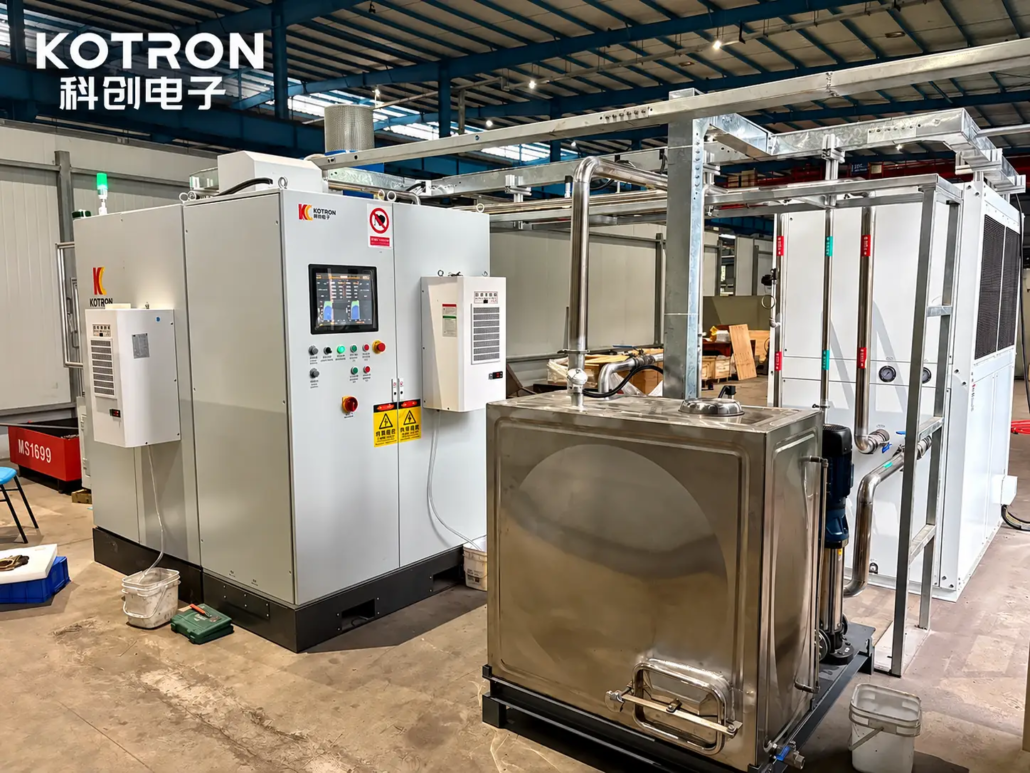
Máquina de endurecimento por indução contínua para colares de fixação
Ⅰ. Continuous Collar Induction Hardening Machine
Vídeo: Continuous induction hardening machine for fastener collars, showing the bulk feeding arrangement and enclosed processing equipment.
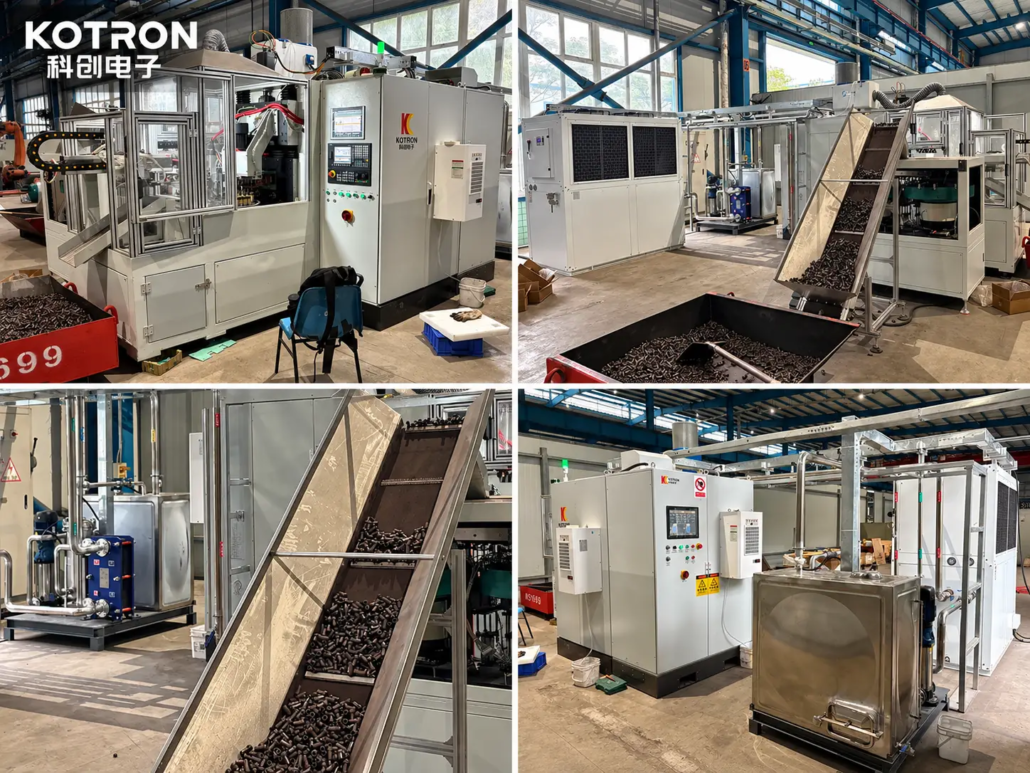
The demonstrated installation includes an inclined bulk-feeding conveyor, a circular vibratory feeder, an enclosed induction hardening station, a KOTRON control cabinet and connected auxiliary equipment.
The machine is arranged to handle small collar components in batches while coordinating their positioning and heat treatment. Operator displays and protective enclosures form part of the photographed installation.
Configuração do Equipamento Principal
| Componente | Função |
|---|---|
| Bulk Feeding Conveyor | Transfers loose collars from the supply hopper |
| Vibratory Feeder | Organizes components for subsequent handling |
| Workpiece Positioning System | Locates collars at the processing position |
| Fonte de Alimentação por Indução | Supplies electrical power for induction heating |
| Custom Inductor | Heats the specified region of each collar |
| Quenching Arrangement | Provides the cooling process required for hardening |
| Machine Control System | Coordinates the configured operating sequence |
| Protective Enclosure | Separates the processing mechanisms from the surrounding area |
| Equipamento Auxiliar | Supports operation of the heating and machine systems |
The configuration shown is specific to this installation. Heating tooling, workpiece positioning and quenching arrangements are selected for the application rather than supplied as identical structures on every machine.
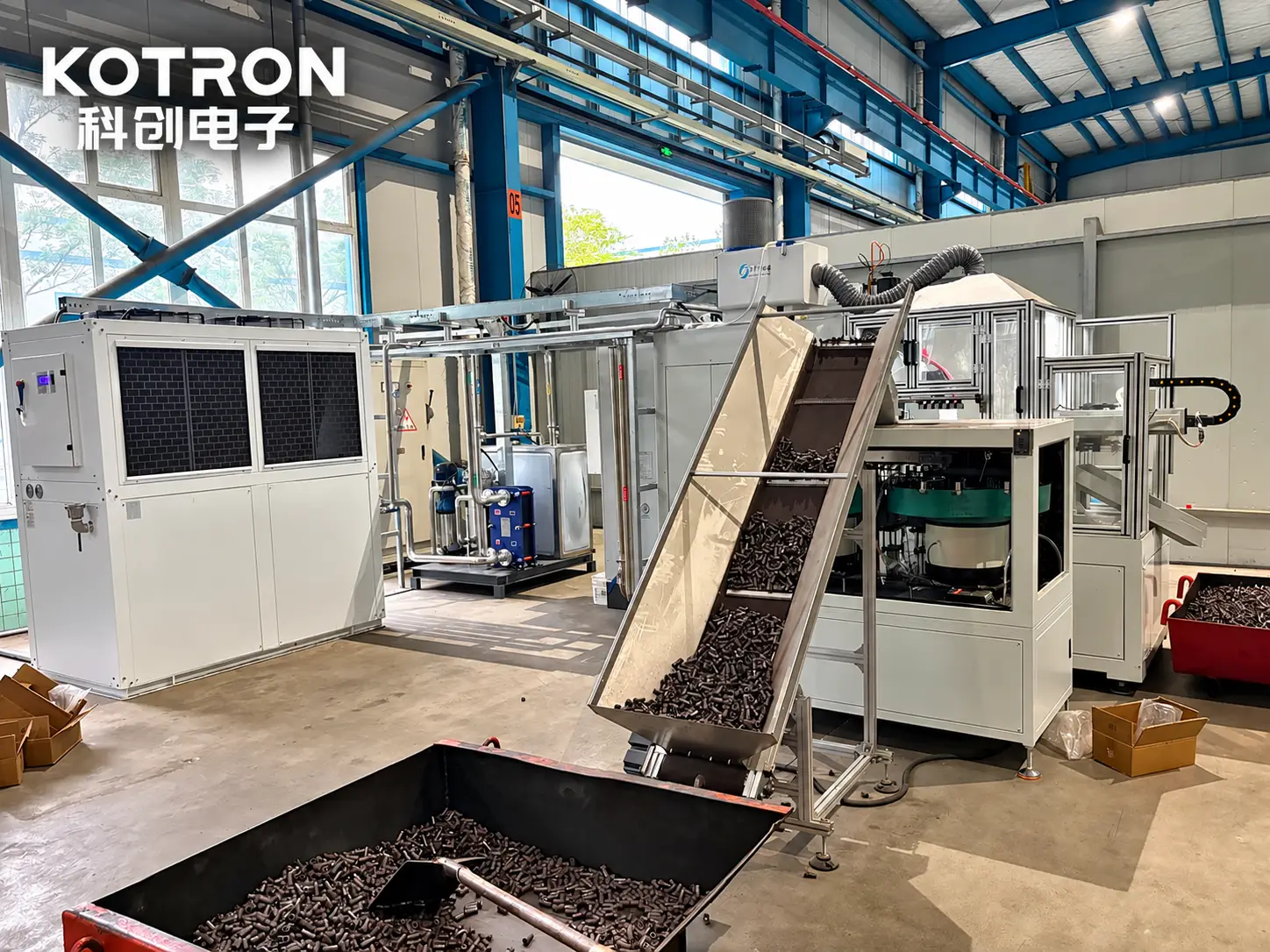
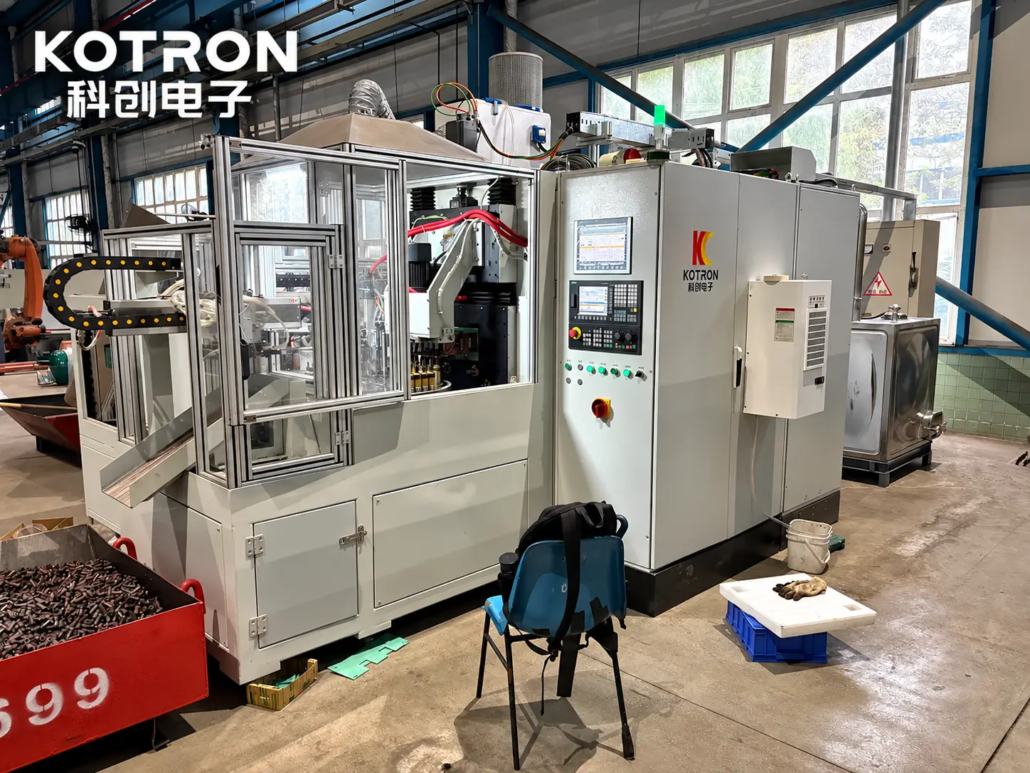
Complete collar induction hardening machine.
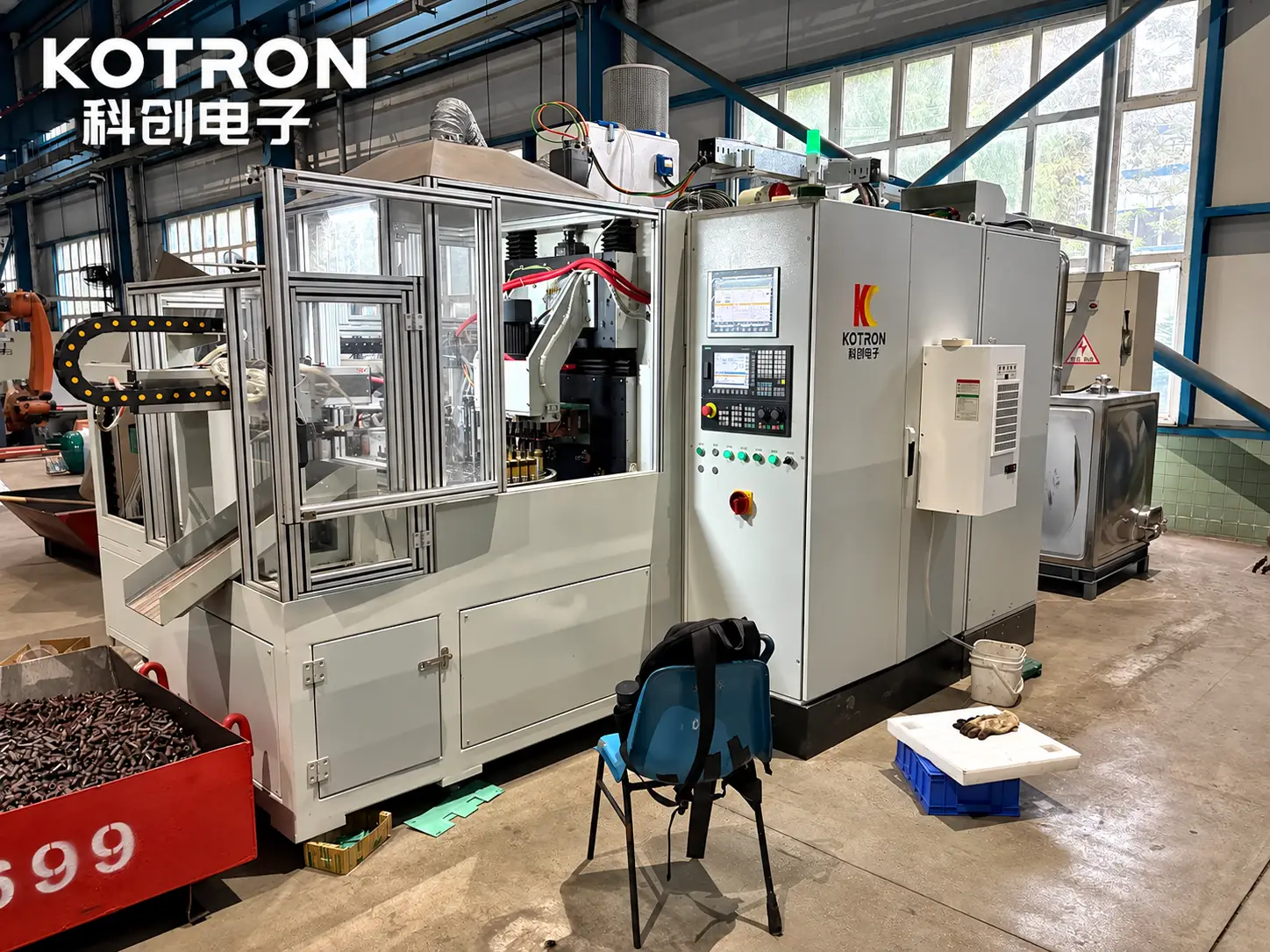
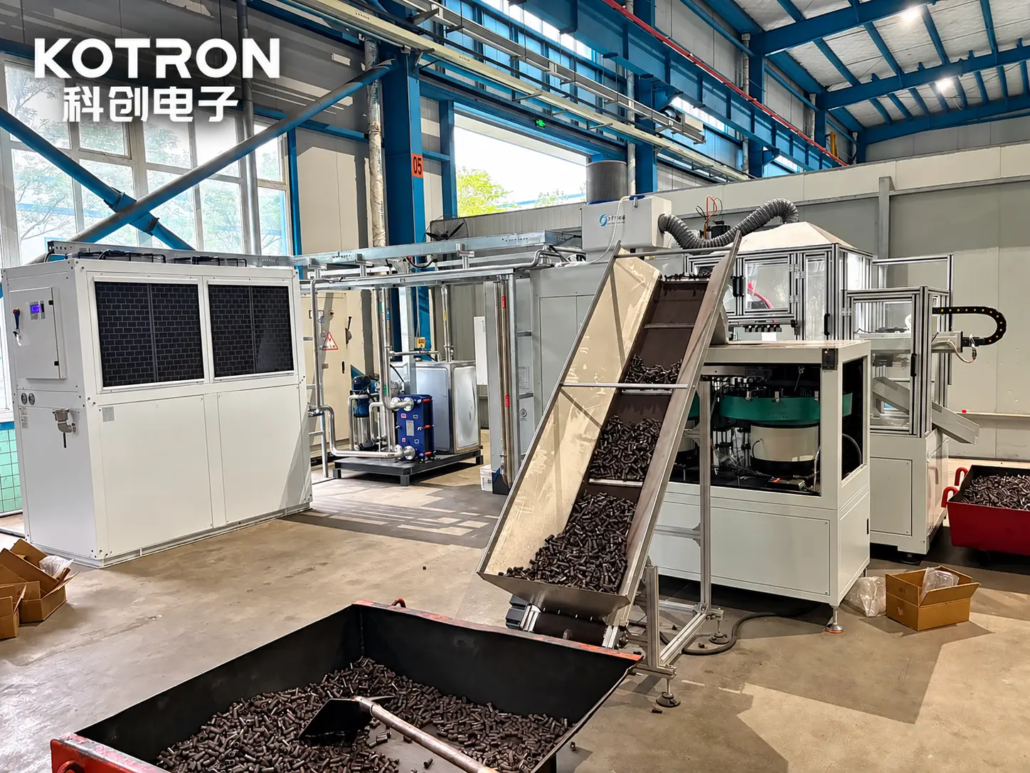
Continuous collar induction hardening production line.
Ⅱ. Automatic Feeding and Collar Positioning
The demonstrated system uses an inclined conveyor and vibratory feeder to handle small collars supplied in bulk.
Bulk Feeding and Orientation
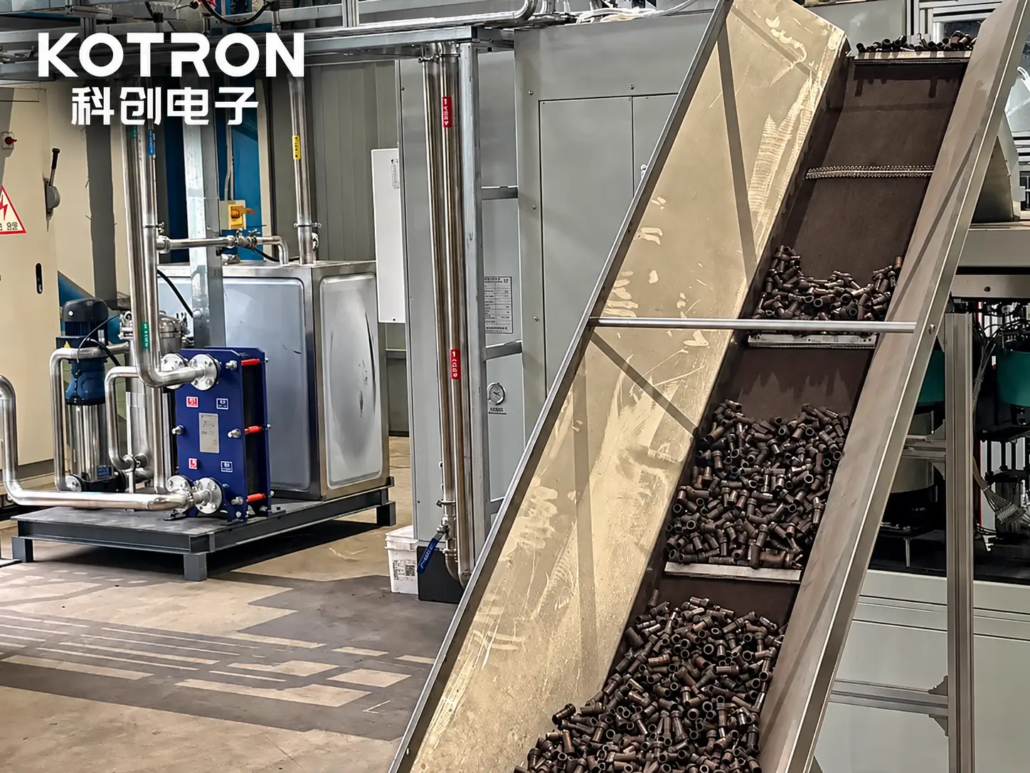
The inclined conveyor lifts loose collars from the supply hopper to the circular vibratory feeder, which organizes the components for subsequent machine handling.
Collar diameter, height, bore and end profile influence the required feeding tooling. Parts with different geometries may require adjustments to the orientation and delivery arrangement.
Positioning for Induction Hardening
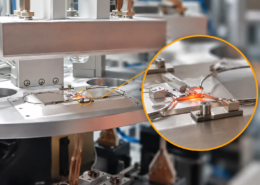
At the processing station, each collar must be located relative to the inductor so that the specified area can be heated.
The locating arrangement must support the workpiece while allowing sufficient access for induction heating and quenching. Fixture design and movement are established according to the collar geometry, hardening area and required processing cycle.
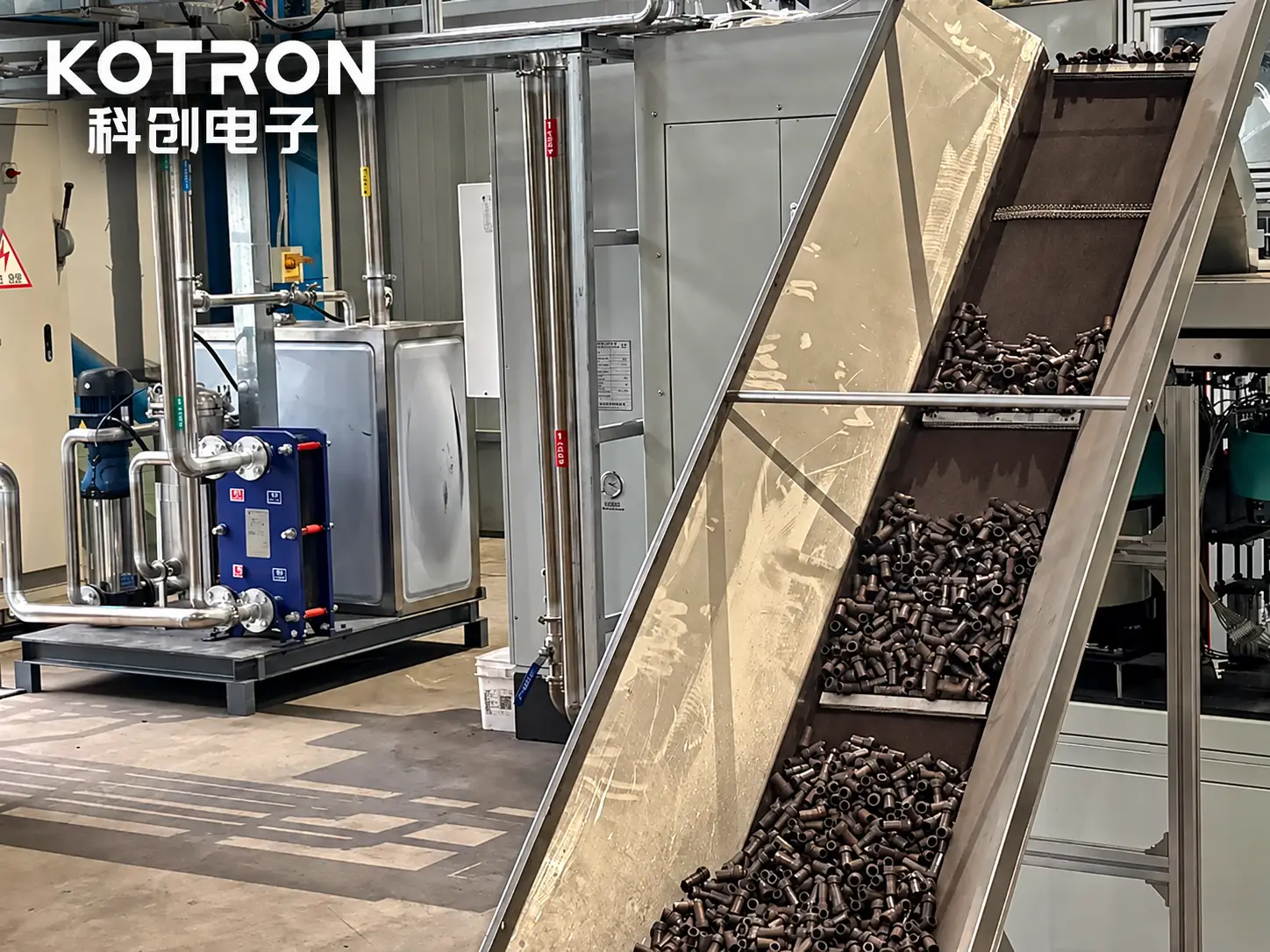
Bulk collar feeding conveyor and vibratory feeding unit.
Ⅲ. Induction Hardening and Quenching Process
The machine is intended for fastener collars with specified Endurecimento por indução requirements.
Collars used in fastening assemblies vary in grau de aço, geometry and mechanical function. Before developing the heating process, the required treatment must be confirmed against the component specification.
Some fastening collars are designed to deform during installation and require sufficient ductility. Induction hardening is therefore appropriate only where the material and final component requirements support that treatment.
Custom Inductor Design
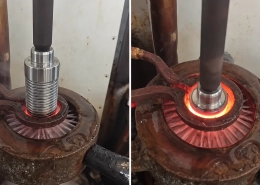
O indutor is designed around the actual collar geometry and target hardening area.
Diâmetro exterior, dimensões do furo, wall thickness and component height influence the heating arrangement. The inductor must also fit within the available clearance around the workpiece positioning system.
The objective is to produce the required heating pattern at the specified treatment area. Geometria do indutor, frequência de operação, power and heating time are evaluated together rather than selected independently.
Heating and Quenching Coordination
Induction hardening requires a suitable heating cycle followed by têmpera under conditions appropriate for the material and desired hardened structure.
Para produção contínua, heating and quenching must be coordinated with the machine’s positioning and workpiece-handling sequence.
The quenching method, cooling conditions and process timing are established according to the collar material, geometry and hardening specification. The photographed installation does not establish a universal quenching arrangement for other collar designs.
Process Verification
Where hardness or effective case-depth requirements are specified, suitable process trials and inspeção are needed to establish the operating conditions.
The final hardened properties depend on the steel grade, heating pattern and quenching conditions. They cannot be determined from the machine configuration alone.
Ⅳ. Machine Control and Equipment Customization
Kechuang supplies the collar induction hardening machine as an integrated equipment system, with the heating unit and processing mechanisms selected for the intended workpieces.
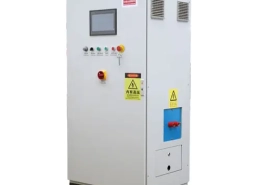
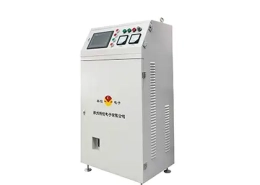
The photographed installation includes a KOTRON control cabinet with operator displays, an enclosed processing station and separate connected auxiliary units.
Induction Power Supply and Control
Power supply selection is based on the collar material, dimensões do componente, required heating area and inductor design.
The machine control system coordinates the operating functions included in the project, including workpiece positioning and the induction heating cycle.
The specific control functions, monitoring requirements and operating parameters are defined during equipment engineering.
Equipment Layout and Auxiliary Systems
The production line includes separate cabinets, industrial piping and supporting equipment arranged around the main processing machine.
The induction equipment requires suitable electrical connections and arrefecimento provisions. The exact supporting equipment is selected according to the installed system.
Equipment cooling and workpiece quenching serve different purposes and must be evaluated separately when establishing the complete machine configuration.
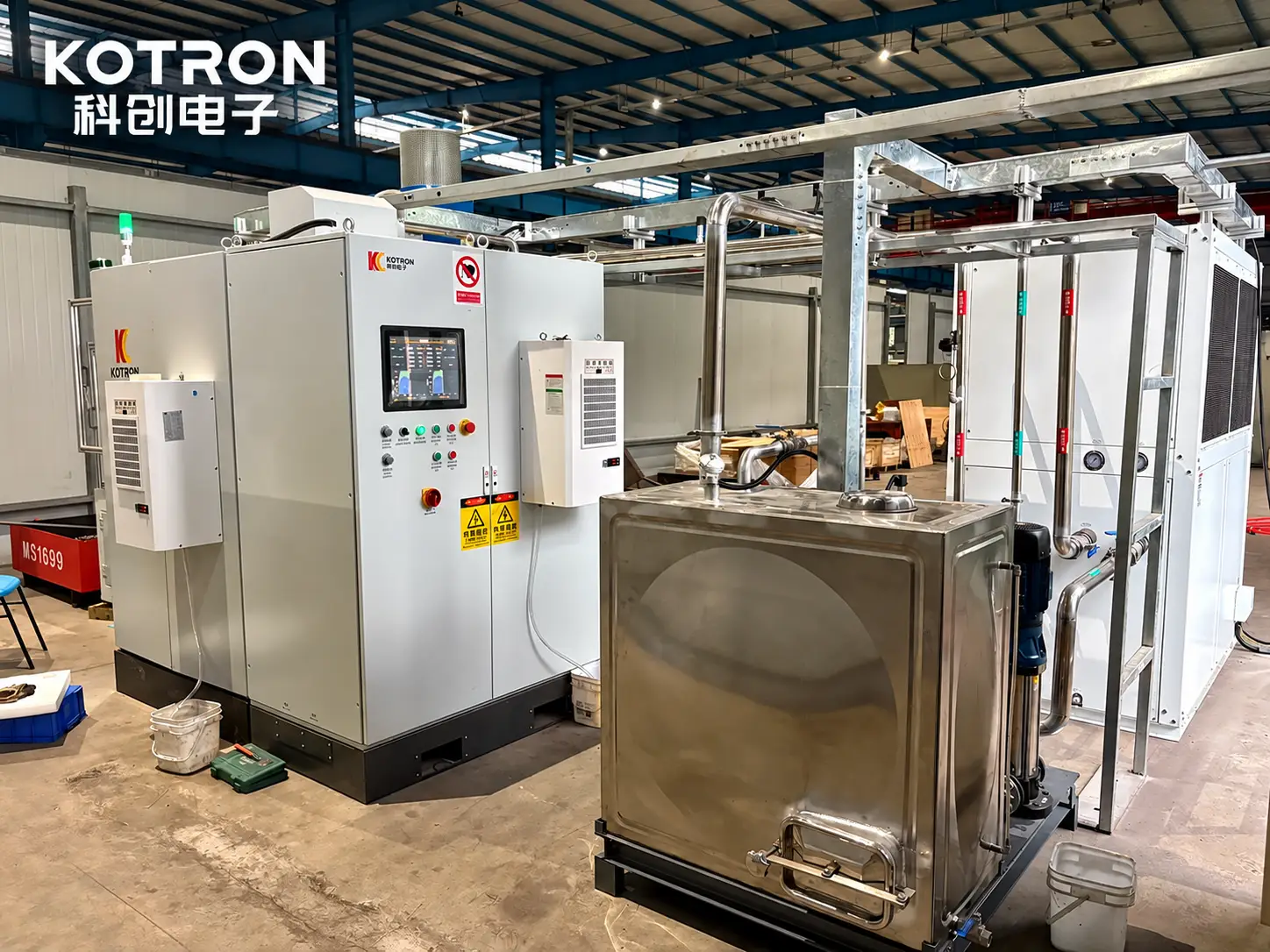
Enclosed hardening station, KOTRON control cabinet and auxiliary equipment.
Factors Affecting Machine Selection
| Fator de Seleção | Consideração de engenharia |
|---|---|
| Collar Dimensions | Determines feeding, positioning and inductor clearances |
| Material | Influences heating and quenching requirements |
| Área de endurecimento necessária | Determines the heating pattern and inductor design |
| Requisito de produção | Influences the processing sequence and machine layout |
| Workpiece Range | Determines whether different collar sizes require tooling changes |
| Installation Conditions | Affects equipment layout, utilities and integration |
A machine designed for one range of collar components should not be assumed to accommodate every collar geometry without engineering evaluation.
Perguntas frequentes
What collar components can this induction hardening machine process?
The machine is configured around the collar’s outside diameter, bore, height and end profile, so it handles a specific range of fastener collars rather than every geometry. Collars with different dimensions and end profiles usually require changes to the feeding tooling and inductor.
Can every fastener collar be induction hardened?
Não. Some collars are designed to deform during installation and must keep enough ductility, so induction hardening only suits collars where the material and final requirements support that treatment. The steel grade and component specification are confirmed before the heating process is developed.
How are the hardened area and case depth determined?
The target hardening area sets the inductor design and heating pattern, and effective case depth depends on the steel grade, heating cycle and quenching conditions. Both are established through process trials and inspection rather than from the machine configuration alone.
Ⅴ. Request a Customized Collar Induction Hardening Machine
Kechuang provides customized induction hardening equipment for fastener manufacturers requiring continuous treatment of collar components.
For a new production line or an existing process upgrade, our engineering team can evaluate the collar design, required hardening process and production conditions to develop an equipment proposal.
To begin, por favor forneça:
•Collar drawings or photographs
•Material ou classe de aço
•Main dimensions
•Área de endurecimento necessária
•Expected production quantity or capacity
Se já definido, dureza alvo, effective case depth and inspection requirements can also be included.
These details will help determine the appropriate induction heating configuration, workpiece tooling and quenching process.
Get a Customized Proposal for Your Collar Hardening Line
Send your collar drawings, material grade and hardening requirements — our engineering team will evaluate the feeding, inductor and quenching configuration for your production line.