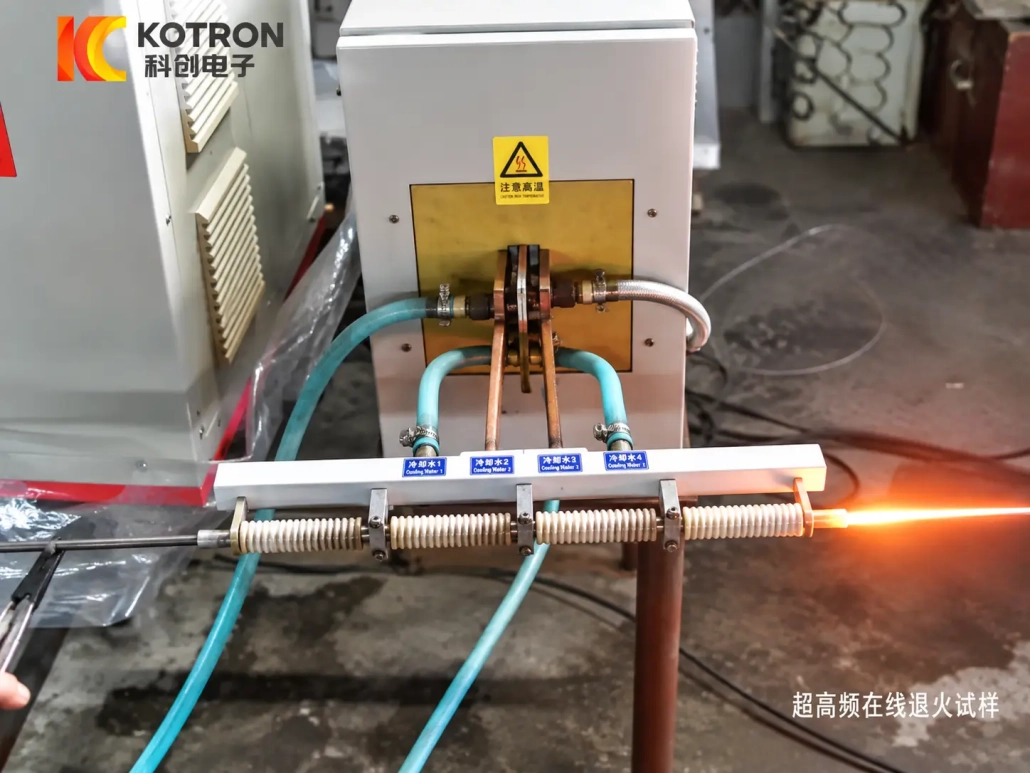
Continuous Induction Annealing Line for Wire
Ⅰ. See the Wire Annealing Line in Operation
Both videos show relatively fine wire moving continuously through the induction heating zone. The wire is heated while travelling through the inductor rather than being processed in a separate batch cycle.
The videos demonstrate the operating form of continuous wire annealing. Exact material grade, wire diameter, temperature, power and line speed depend on the individual project and should not be inferred from the footage.
Ⅱ. How Continuous Wire Induction Annealing Works
A typical line follows a simple process:
→
Induction Heating
→
Temperature Monitoring
→
Controlled Annealing
→
Cooling / Downstream Handling
As the wire travels through the inductor, its heating condition depends on more than electrical power alone. The main variables include wire material and diameter, line speed, effective heating length, induction power and the required temperature.
Line speed is particularly important. A change in speed also changes the time each section of wire remains inside the effective heating zone. The power supply and process controls therefore have to match the operating speed rather than work as an isolated heater.
This is the main difference between a continuous production line and a simple standalone heating operation: the thermal process has to follow the moving material.
Ⅲ. Temperature Control at Continuous Line Speed
Temperature stability is one of the main control issues in induction annealing for wire, especially at smaller wire diameters and higher production speeds.
KOTRON can configure the line with a Siemens PLC and non-contact infrared temperature measurement. According to the supplied product information, temperature can be linked with operating variables including line speed, current and voltage, and the stated temperature-control accuracy can reach 0.5% under the corresponding configuration.
In practice, the heating condition is influenced by several variables at the same time:
•Wire Speed
•Induction Power
•Heating Length
•Wire Diameter
•Material
•Target Temperature
For example, increasing power cannot compensate for every process change. If the line speed, wire diameter or material changes, the required heating condition may also change.
Infrared temperature feedback gives the control system a measured thermal reference. For continuous production, this is more useful than relying only on a preset electrical output, because the process can be adjusted around the actual heating condition of the moving wire.
Ⅳ. Induction Power and Heating Uniformity
The annealing line can be equipped with an IGBT induction power supply and DSP digital control. Depending on the project configuration, operating modes may include constant-current, constant-power and temperature-linked control.
Voltage, current, power, frequency and energy monitoring can also be incorporated where required.
The power supply is selected together with the process. Final selection depends on factors such as:
— wire material and diameter
— required temperature
— line speed
— effective heating length
— inductor design
— production requirement
The inductor is equally important. Coil geometry, wire position through the heating zone, line-speed stability and power stability all affect the temperature reached by the moving wire.
For this reason, heating uniformity is not determined by a single component. The inductor, power supply, wire path and temperature feedback have to be considered as one process.
Ⅴ. Wire Materials and Annealing Applications
The supplied KOTRON information covers wire diameters from 0.5 to 20 mm, with steel wire and copper wire among the supported materials.
The same equipment configuration should not automatically be applied to every wire. Material properties, diameter, required thermal condition and production speed can all change the power and inductor requirements.
Typical applications include continuous annealing where the wire requires heat treatment between or after other manufacturing stages. Depending on the production route, this may include intermediate or post-processing annealing.
The equipment can also be adapted for other wire heat-treatment processes where the material and process are suitable, but this page focuses specifically on steel wire annealing, copper wire annealing and other continuous annealing applications.
Ⅵ. Line Configuration and Equipment Selection
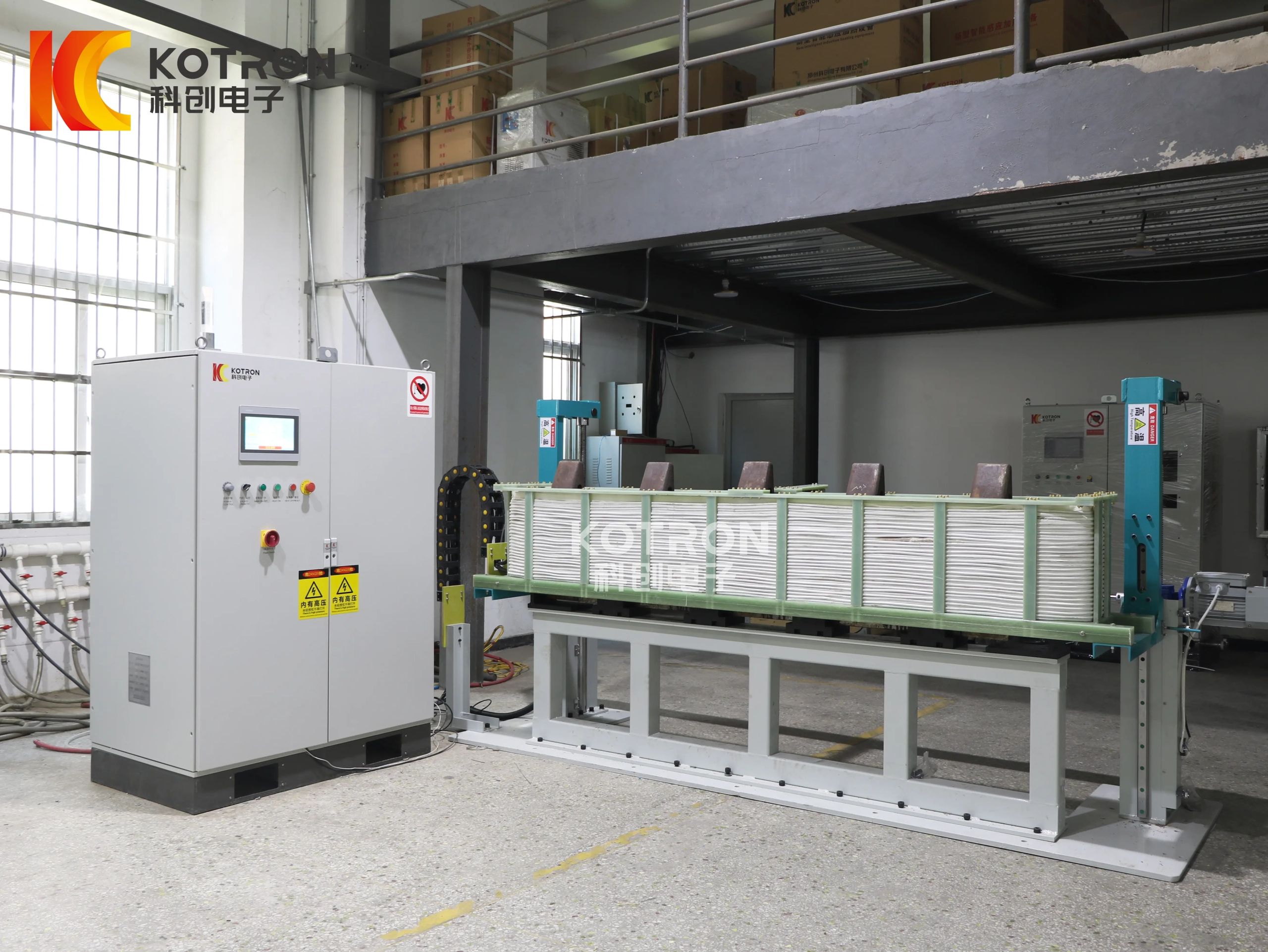
A wire induction annealing line is normally configured around the complete production requirement rather than selected only by nominal power.
Typical elements may include:
•Wire feeding or conveying section
•Induction heating section
•Inductor
•Non-contact infrared temperature measurement
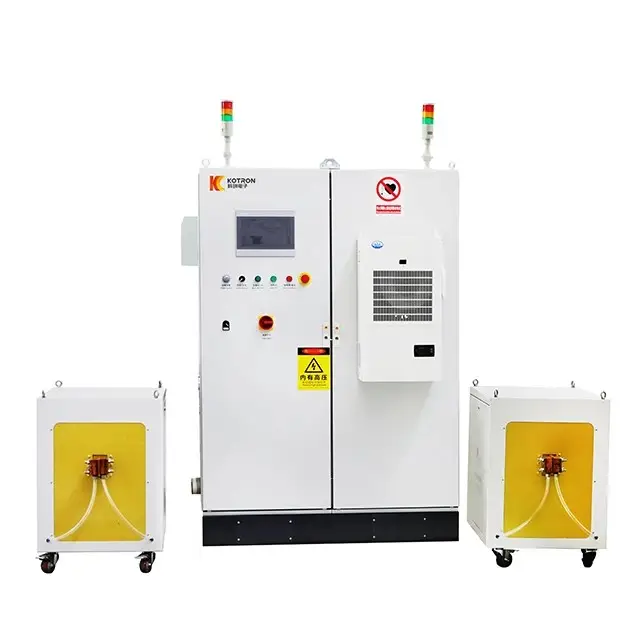
•Induction power supply
•Siemens PLC control
•Cooling or downstream handling
•Optional process and energy monitoring
| Item | Available Configuration |
|---|---|
| Wire diameter | 0.5–20 mm |
| Materials | Steel wire, copper wire |
| Heating method | Induction heating |
| Production mode | Continuous |
| Temperature measurement | Non-contact infrared |
| Main control | Siemens PLC |
| Temperature control | Closed-loop |
| Temperature-control accuracy | Up to 0.5% according to supplied product information |
| Communication | RS485 / RS422 / MODBUS |
| Process monitoring | Optional, according to system configuration |
The supplied product information also states that the line can be configured for 24-hour continuous operation.
For applications requiring production monitoring, the control system can incorporate voltage, current, power, frequency and energy data. Process records and production traceability can also be configured where required.
RS485, RS422 and MODBUS communication are available for integration with the relevant control architecture.
Power should not be selected from wire diameter alone. Two wires with the same diameter may require different configurations because of differences in material, line speed, target temperature or effective heating length.
Ⅶ. Send Us Your Wire Specification
For an initial evaluation, the basic information is:
— wire material
— wire diameter
— required annealing process or target temperature, if known
— required production rate or line speed, if available
If detailed process data is not yet available, the remaining conditions can be discussed during the technical evaluation.
KOTRON can then determine the appropriate induction power supply, inductor and control configuration for the required continuous wire annealing process.
Frequently Asked Questions
Click a question to expand the answer.
What wire diameters can this induction annealing line process?
The supplied KOTRON information covers wire diameters from 0.5 to 20 mm, with steel wire and copper wire among the supported materials.
What temperature-control accuracy can I expect?
With Siemens PLC control and non-contact infrared feedback, the stated accuracy can reach 0.5% under the corresponding configuration. The final value depends on the wire material, diameter, line speed and target temperature.
Can the line run continuously?
Yes. The supplied product information states that the line can be configured for 24-hour continuous operation.
How is the induction power selected?
Not from wire diameter alone. Power is selected together with the process: wire material and diameter, required temperature, line speed, effective heating length and inductor design all matter. Two wires of the same diameter can need different configurations.
What information do I need to provide for a technical proposal?
Wire material, wire diameter, required annealing process or target temperature (if known), and production rate or line speed (if available). KOTRON then determines the appropriate power supply, inductor and control configuration.
Ready to Configure Your Continuous Wire Annealing Line?
Send your wire material, diameter and target annealing process. KOTRON will determine the right induction power supply, inductor and control configuration.