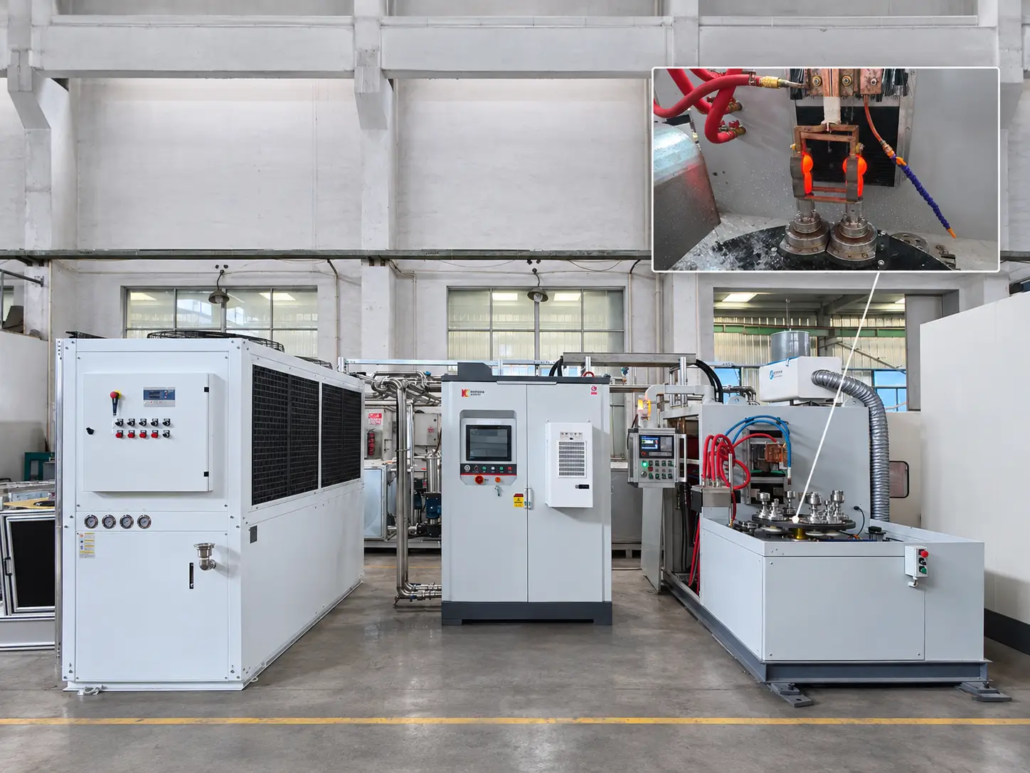
Rotary Table Ball Stud Induction Hardening – Two Studs per Heating Cycle
Ⅰ. Ball Stud Induction Hardening Process in Operation
The application video shows two ball studs positioned side by side at the induction heating station.
Each ball stud is held by an individual fixture mounted on the rotary table assembly. The heating components are arranged above the workpieces, while liquid cooling is visible in the surrounding processing area.
The heating sequence shows the ball ends of both workpieces reaching a visible red-hot condition within the induction heating assembly.
The setup demonstrates three important features:
•Simultaneous induction heating of two ball studs
•Separate workpiece fixtures mounted on a rotary table
•Localized heating and an associated quenching arrangement
Complete Equipment Layout
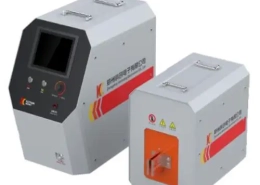
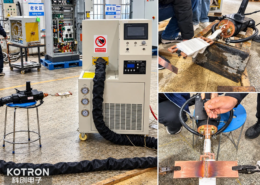
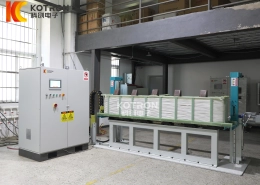
The system includes a large cooling equipment cabinet, a KECHUANG induction heating power supply cabinet and a rotary table processing machine.
The power supply is connected to the heating station through the required electrical connections, while the supporting cooling equipment serves the machine’s operating requirements.
A separate control panel is positioned near the processing station.
This arrangement brings the power supply, mechanical processing equipment and auxiliary systems together in a dedicated ball stud hardening setup.
Ⅱ. Rotary Table and Dual-Workpiece Fixtures
The rotary table supports the workpiece fixtures and positions the ball studs relative to the induction heating assembly.
Individual Workpiece Holding
Two separate fixtures hold the ball studs vertically, with the spherical ends facing upward.
Each fixture provides a defined mounting position for its workpiece. The spacing between the fixtures establishes the relative positions of the ball studs beneath the heating assembly.
Accurate positioning is important when two components are heated in the same operation. The ball ends must be correctly located relative to the heating components to achieve the intended treatment.
Rotary Table Arrangement
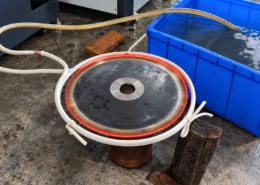
The workpiece holders are mounted on a circular rotary platform beneath the heating station.
The table forms part of the machine’s workpiece handling and positioning arrangement, allowing the mounted components to be presented to the processing area.
The required rotary movement and operating sequence are determined by the machine design.
Fixture and Heating Assembly Coordination
The paired workpiece arrangement requires attention to fixture spacing, workpiece height and the location of the heating components.
For different ball stud dimensions, the fixture and induction heating arrangement must be matched to the specified treatment area.
The visible equipment demonstrates a two-workpiece setup without requiring both components to share a single holding fixture.
Ⅲ. Simultaneous Induction Heating and Quenching
Ball studs used in steering, suspension and other mechanical assemblies may require localized heat treatment according to their material and operating conditions.
Induction hardening is used to produce a hardened region in suitable steels where specified surface properties are required.
Localized Heating of Two Ball Ends
During the demonstrated heating operation, both ball ends become visibly red-hot within the induction heating assembly.
The treatment is concentrated around the specified areas rather than heating the entire ball studs uniformly.
For paired processing, the heating arrangement must account for the position and geometry of both workpieces.
Heating power, frequency and heating duration are established according to the material, component dimensions and required hardening pattern.
Quenching Arrangement
The machine includes a liquid cooling arrangement associated with the induction hardening process.
The quenching system must accommodate the paired workpiece fixtures and provide suitable cooling conditions for the heated regions.
The quenching medium, delivery method and timing are selected according to the ball stud material and hardening requirements.
Consistency Between Two Workpieces
Simultaneous heating introduces an important process consideration: both ball studs must meet the specified heat treatment requirements.
Fixture positioning, heating conditions and quenching arrangements are therefore evaluated together.
Where specified, the following results should be checked for both workpieces:
•Surface hardness
•Effective hardened case depth
•Location and coverage of the hardened zone
•Workpiece dimensions after treatment
The required results are established through process development and inspection. Processing two components in one cycle does not by itself guarantee identical hardening results.
Ⅳ. Customized Ball Stud Induction Hardening Applications
KECHUANG provides induction hardening equipment and customized workpiece tooling for ball studs and other metal components requiring localized heat treatment.
This application demonstrates how a rotary table and dedicated fixtures can accommodate the simultaneous heating of two ball studs.
The appropriate machine arrangement depends on the ball stud dimensions, specified hardening area, material and production requirements.
Equipment Selection
For a similar application, the main considerations include:
— Ball diameter and stem dimensions
— Workpiece material and initial heat treatment condition
— Required location of the hardened zone
— Target hardness and effective case depth
— Number of workpieces to be processed per heating operation
— Production volume and workpiece handling requirements
The induction heating assembly, fixtures and quenching configuration are developed around the selected workpiece and process.
Request a Customized Ball Stud Hardening Solution
To discuss your application, please provide:
•Ball stud drawings or photos
•Material grade
•Ball diameter and overall dimensions
•Required hardening area
•Target surface hardness and effective case depth
•Expected production quantity
If your production requires rotary table handling or simultaneous heating of multiple workpieces, please also include the preferred processing arrangement.
KECHUANG can evaluate the induction heating system, rotary table configuration, workpiece fixtures and quenching requirements for your project.
Frequently Asked Questions
Click a question to expand the answer.
What ball studs can this rotary table setup harden?
Steering, suspension and similar ball studs that require localized hardening of the ball end. The fixture and induction heating arrangement are sized to the ball diameter and stem dimensions of each workpiece.
Why heat two ball studs in a single heating cycle?
Simultaneous heating of two workpieces improves throughput. The paired fixtures on the rotary table present both ball ends to the induction heating assembly in the same operation.
What results should be checked after hardening?
Surface hardness, effective hardened case depth, the location and coverage of the hardened zone, and workpiece dimensions after treatment — verified for both workpieces.
Can the setup be adapted to other ball stud dimensions?
Yes. The induction heating assembly, fixtures and quenching configuration are developed around the selected workpiece, hardening area and production requirements.
Customize Your Rotary Table Ball Stud Hardening Setup
Send your ball stud drawings, material grade and production details for a customized induction hardening solution.