
What Is an Induction Heating Machine? Mastering 5 Critical Types & How to Choose the Right One
Walk into any modern heat treating shop, and the first thing you notice is the absence of open flames. In their place: cabinets with digital displays, copper coils glowing faintly, and parts moving through heating stations in seconds. At the center of it all is the induction heating machine — the equipment that turns electricity into precisely controlled heat, without fire, without contact, and without the long warm-up times of traditional furnaces. This guide explains what these machines are, how they work, the five main types, and how to choose the right one for your application.
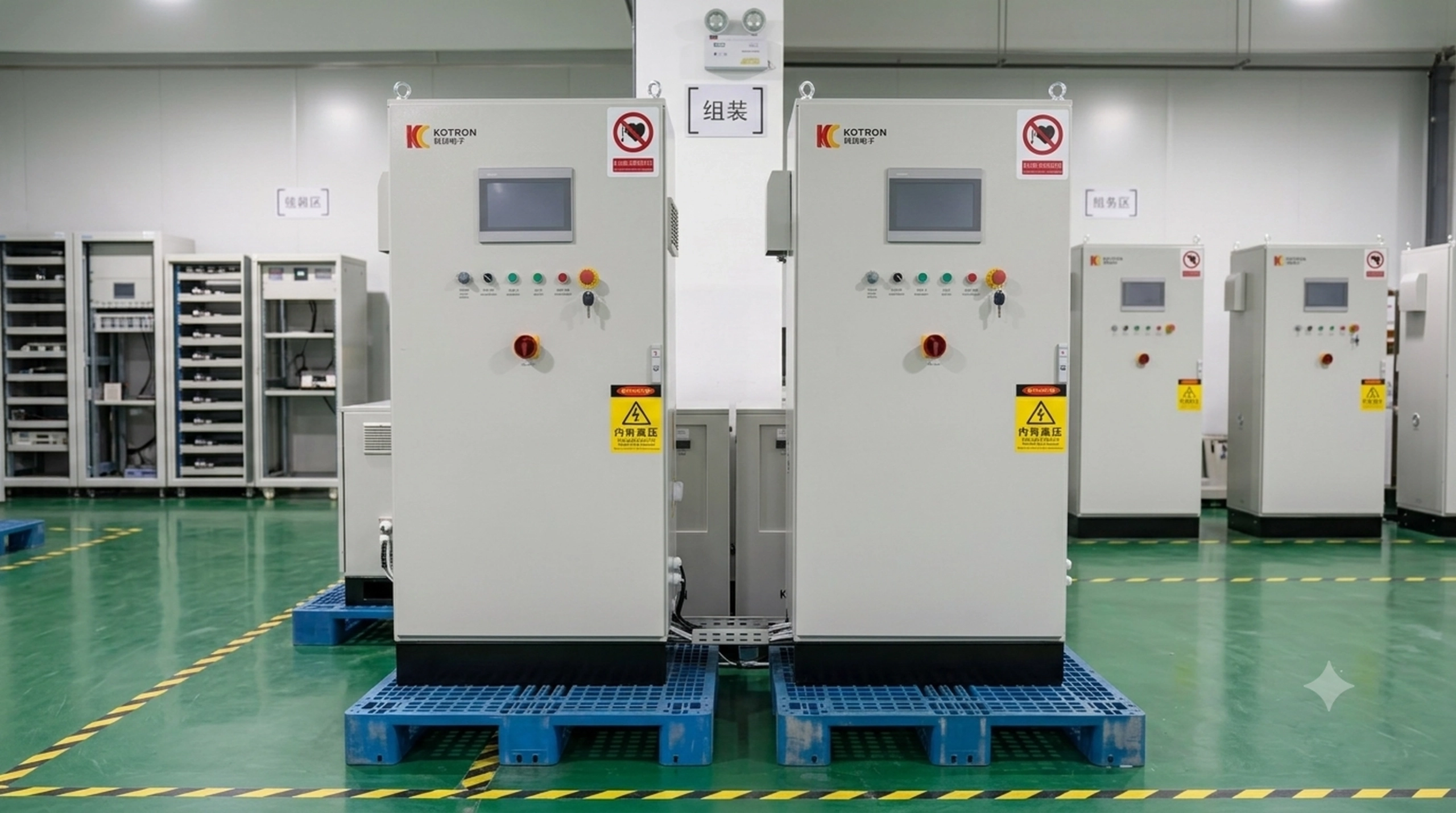
Table of Contents
1. What Is an Induction Heating Machine?
An induction heating machine is a piece of equipment that uses electromagnetic induction to heat electrically conductive materials — primarily metals — without direct contact or combustion. It consists of three core subsystems: a power supply that converts mains electricity into high-frequency alternating current, a work coil (inductor) that generates the magnetic field, and a cooling system that removes waste heat from the coil and power electronics.
The defining characteristic of an induction heating machine is that heat is generated inside the workpiece itself, not transferred from an external source. The machine does not get hot — the part does. This is the fundamental difference from flame heating, resistance heating, and furnace heating, and it is what gives induction its speed, precision, and energy efficiency.
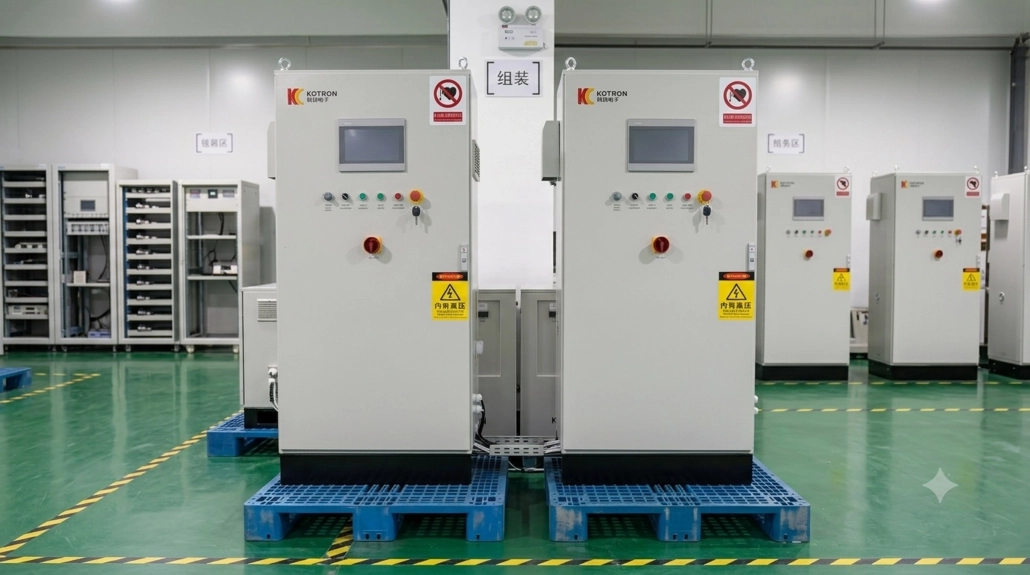
Induction heating machines range from compact handheld units the size of a welding power supply — used for bolt removal and small brazing jobs — to industrial cabinet systems the size of a refrigerator, delivering hundreds of kilowatts for continuous production hardening of gears, shafts, and bearing rings. Despite this range in scale, every machine operates on the same physical principle explained in our guide to how induction heating works.
2. How Does an Induction Heating Machine Work?
Every induction heating machine, regardless of size or application, follows the same four-step process.
Step 1 — Power Conversion. The machine takes incoming mains electricity (typically 380–480V three-phase for industrial units, or 220V single-phase for portable units) and converts it to DC using a rectifier. The DC is then switched at high frequency by an inverter — using IGBT or MOSFET transistors — to produce the high-frequency alternating current that drives the work coil. Modern machines use digital signal processing (DSP) control boards to manage this conversion with precise frequency and power regulation.
Step 2 — Magnetic Field Generation. The high-frequency current flows through the work coil — a shaped copper conductor positioned around or near the workpiece. As covered in our article on how induction coils work, the coil geometry determines where the magnetic field concentrates and therefore where the part heats. The alternating current creates an alternating magnetic field that expands, collapses, and reverses direction at the operating frequency.
Step 3 — Eddy Current Induction. The alternating magnetic field penetrates the surface of the conductive workpiece placed within or near the coil. By Faraday’s law of induction, this changing field induces circulating electric currents — eddy currents — within the metal. The penetration depth of these currents is governed by the frequency of induction heating: higher frequencies confine heating to a thinner surface layer, while lower frequencies drive current deeper into the part.
Step 4 — Resistive Heating. The workpiece has electrical resistance. As eddy currents flow through this resistive material, electrical energy converts to thermal energy (Joule heating, I²R losses), and the part temperature rises — rapidly. For magnetic steels below the Curie point (≈770°C), magnetic hysteresis contributes additional heating, making the process even more efficient until the material becomes non-magnetic.
The entire cycle — from room temperature to over 900°C at the surface — can take 2 to 10 seconds depending on part size and power density. This speed is what makes induction the dominant heating method for high-volume production heat treating.
3. Advantages of Induction Heating Machines
Compared to flame heating, gas furnaces, and resistance heating, induction heating machines offer five clear operational advantages.
Speed. Induction heats parts in seconds, not minutes. No warm-up time for the machine itself — it is ready the moment you switch it on. For production lines running thousands of parts per shift, this cycle-time advantage directly translates to higher throughput and lower cost per part.
Precision. By controlling frequency, power, coil geometry, and heating time, you can heat a specific zone to an exact depth while leaving adjacent areas cold. This is why induction hardening can produce a 2 mm wear-resistant case on a gear tooth surface while the gear core remains tough and ductile — a level of spatial control that flame hardening cannot match.
Energy Efficiency. A well-designed induction system achieves 80–90% energy transfer efficiency from the power supply input to the part surface. A typical gas furnace operates at 20–30% — most of the energy goes up the flue. Induction generates heat directly in the workpiece, not in the surrounding environment.
Clean and Safe Operation. No combustion, no open flame, no exhaust gases, no soot. The work environment stays cooler and cleaner. No emissions permits, no gas piping, no flammable fuel storage. Operators work next to the machine without exposure to flame or hot furnace walls.
Process Control and Repeatability. Modern induction machines use digital controllers with recipe storage, temperature feedback (pyrometer or thermal camera), and data logging. Once a process is dialed in, the machine reproduces the exact same heating cycle part after part — critical for quality assurance in automotive, aerospace, and bearing manufacturing.
4. Five Types of Induction Heating Machines
Induction heating machines are categorized by power level, frequency range, and intended application. The table below compares the five most common types.
| Machine Type | Frequency Range | Typical Power | Best For | Part Size | Typical Industries |
|---|---|---|---|---|---|
| Portable / Handheld | 10–50 kHz | 1–15 kW | Bolt removal, bearing installation, field repairs, small brazing | Small: bolts, bearings up to 300 mm OD | Maintenance, automotive repair, construction |
| Benchtop / Lab | 30–200 kHz | 5–30 kW | Small-part hardening, brazing, soldering, R&D, toolroom | Small: pins, small gears, cutting tools, fittings | Toolmaking, HVAC, R&D labs, dental/medical |
| Medium-Frequency Industrial | 1–10 kHz | 50–500 kW | Gear hardening, shaft hardening, bearing ring hardening, forging preheat | Medium–large: gears M4+, shafts Ø30–150 mm, bearing rings | Automotive, heavy machinery, bearing manufacturing |
| High-Frequency Industrial | 100–400 kHz | 20–200 kW | Shallow case hardening, small gears, cam lobes, thin-walled parts, cutting edges | Small–medium: cam lobes, small gears M2–4, thin rings, pins | Automotive, precision engineering, cutting tool manufacturing |
| Specialized / Dedicated | Application-specific | 20–1000+ kW | Billet heating for forging, seam annealing, wire heating, tube welding, continuous strip | All sizes: billets, tubes, wire, strip, rail | Steel mills, forging plants, pipe/tube manufacturing |
The frequency classification of these machines follows standard industry bands. For a deeper dive into why frequency matters and how to match it to your part, see our detailed guide to induction heating frequency classification.
5. How to Choose the Right Induction Heating Machine
Selecting the right machine comes down to answering five questions about your application. The order matters — each answer narrows the field.
1. What material are you heating? Carbon steel and cast iron heat efficiently with induction (both eddy current and hysteresis contributions below the Curie point). Non-magnetic materials — aluminum, copper, brass, stainless steel — require higher power density and often higher frequency. Material choice affects induction heating power selection directly.
2. What is the target temperature and case depth? Surface hardening to 2 mm depth on a gear requires medium frequency (1–10 kHz) at moderate power density. Through-heating a billet for forging needs low frequency and high total power. Shallow case depths under 1 mm demand high frequency (100+ kHz).
3. What is the part geometry? OD heating of shafts and rings points to helical coils and medium-frequency machines. ID heating of bores requires compact, concentrator-equipped coils and careful power matching. Discrete features like gear teeth or cam lobes need localized coil configurations — often with hairpin or shaped single-turn inductors. For complex parts, see our guides on gear induction hardening and shaft induction hardening for geometry-specific considerations.
4. What is your production volume? Low-volume or job-shop work favors flexible benchtop or medium-power machines with quick-change coils. High-volume production justifies dedicated machines with custom tooling, automated part handling, and integrated quench systems — higher upfront cost but dramatically lower per-part cost at scale.
5. What utilities are available? Industrial machines above 30 kW typically require three-phase 380–480V power. Water cooling is standard for the coil and power electronics — you need a reliable cooling water supply or a closed-loop chiller. Portable machines run on single-phase 220V and may use air cooling for the power supply, simplifying installation but limiting duty cycle and power output.
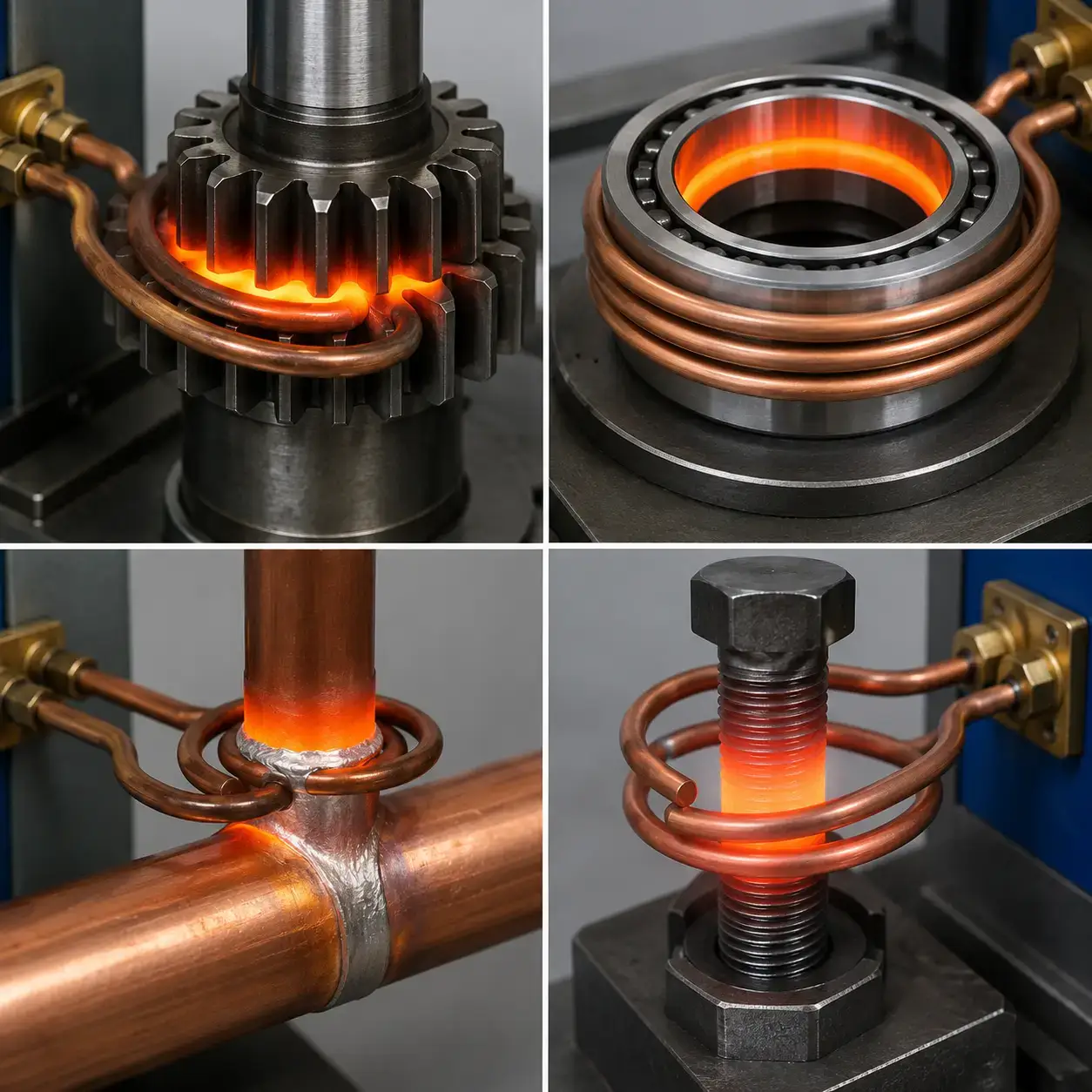
For video demonstrations of induction heating machines in operation, visit our video library or browse application examples on our applications page.
6. Summary & Quick Selection Guide
An induction heating machine is an investment in speed, precision, and process control. The right machine matches your material, part geometry, production volume, and facility constraints — and it does so with enough headroom to handle your next application, not just your current one.
🔑 Quick Selection Guide
| Need shallow case hardening? | → High-frequency machine (100–400 kHz), 20–200 kW |
| Hardening gears, shafts, bearings? | → Medium-frequency industrial machine (1–10 kHz), 50–500 kW |
| Bolt removal or bearing mounting? | → Portable handheld machine (10–50 kHz), 1–15 kW |
| Brazing or soldering? | → Benchtop machine (30–200 kHz), 5–30 kW |
| Billet heating or forging preheat? | → Specialized medium/low-frequency system, 100–1000+ kW |
To explore induction heating machines for your specific application — hardening, brazing, forging, bearing heating, or bolt removal — browse our product range or visit the induction heating and induction hardening solution pages for application-specific equipment recommendations.
Not Sure Which Machine Fits Your Application?
Send us your part specifications, material, and production targets. Our engineering team will recommend the right machine type, power level, and coil configuration — free technical assessment with no obligation.


