Automotive Axle Shaft Induction Hardening with a Horizontal CNC Machine
Ⅰ. Automotive Axle Shaft Hardening in Operation
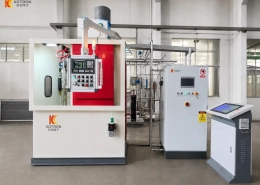
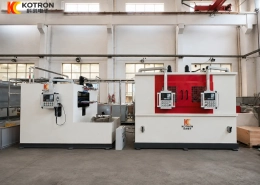
The video features Kechuang’s horizontal induction hardening machine built for axle shaft processing.
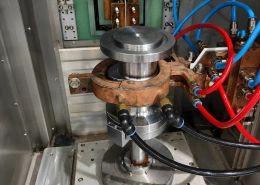
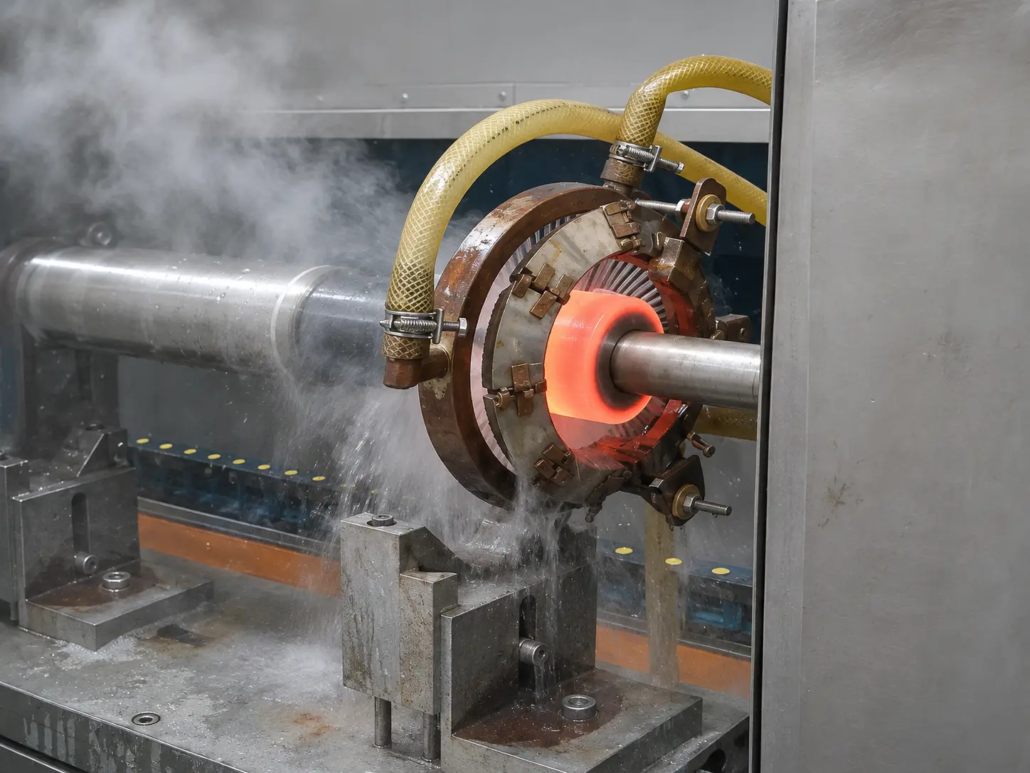
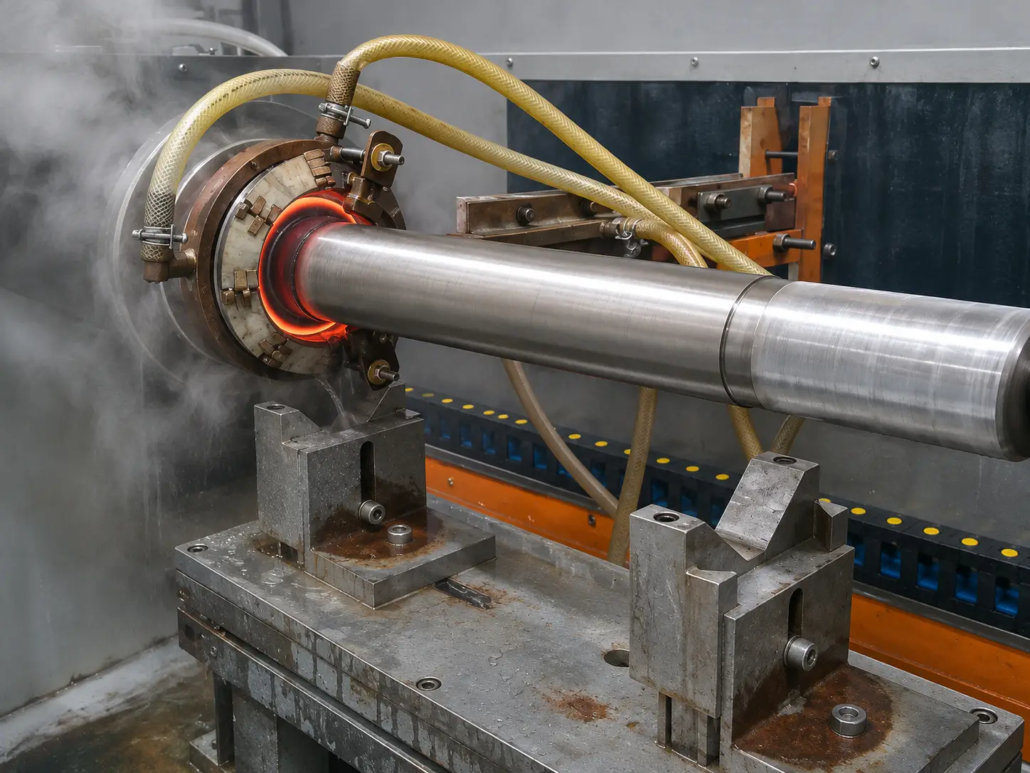
The shaft is held in a horizontal fixture, with an induction coil arranged around the section being treated. A movable platform carries the induction assembly and allows its position to be adjusted relative to the workpiece.
The equipment supports workpiece rotation and programmed scanning movements, providing two processing options: continuous scanning for extended hardened sections and segmented scanning for separate treatment areas.
These functions make the machine suitable for axle shafts with different hardening patterns.
Ⅱ. Axle Shaft Hardening Requirements
Automotive axle shafts may require surface hardening along the main shaft body or at specific sections identified in the component drawing.
The required treatment depends on the steel grade, shaft geometry, specified surface hardness and effective hardened case depth.
For an axle shaft with changing diameters or stepped sections, the induction coil must be positioned with suitable clearance from the workpiece. The fixture also needs to maintain shaft alignment during rotation and scanning.
In this application, the horizontal machine structure provides the workpiece support and space needed for the induction assembly to move along the shaft.
Ⅲ. Horizontal Clamping, Rotation and Movable Induction Platform
The machine uses a horizontal workholding arrangement with a workpiece rotation mechanism.
During processing, the shaft rotates while the induction assembly is positioned by the movable platform. These movements allow the heating position to follow the required treatment area.
The arrangement has three important functions:
•Horizontal clamping: Holds and supports the axle shaft during processing.
•Workpiece rotation: Rotates the shaft for circumferential heating.
•Induction platform movement: Adjusts the position of the induction assembly for scanning and alignment.
The relationship between shaft rotation and induction coil movement is important for maintaining the intended heating pattern.
For shafts with different lengths, diameters or end structures, the clamping distance, support positions, coil dimensions and machine travel can be adjusted.
Ⅳ. Continuous and Segmented Induction Scanning Hardening
This horizontal CNC machine supports two scanning methods.
Continuous Scanning Hardening
For an axle shaft requiring an extended hardened section, the induction assembly moves along the specified area while the workpiece rotates.
The scanning speed and heating conditions are controlled to produce the required treatment along the shaft.
Segmented Scanning Hardening
Some axle shafts require separate hardened areas rather than one continuous section.
The CNC system supports programmed scanning movements for these individual areas. The heating assembly can be repositioned between the specified sections according to the processing program.
The choice between continuous and segmented scanning is determined by the shaft drawing and heat-treatment requirements.
The machine’s movable induction platform and workpiece rotation mechanism provide the motion needed for these processing methods.
Ⅴ. Induction Heating, Quenching and Equipment Customization
The induction coil heats the specified area of the axle shaft. The heated region is then quenched under suitable conditions to develop the required surface hardness and case depth.
Kechuang’s horizontal hardening machine design can integrate induction heating with a spray-quenching arrangement. The coil geometry, heating conditions and quenching configuration are selected for the component being processed.
For other axle shaft projects, equipment adjustments may include:
— Distance between workpiece clamping points
— Additional shaft supports
— Induction coil diameter and heating width
— Scanning travel and programmed hardening positions
— Rotation and quenching arrangements
For example, a long axle shaft requiring continuous treatment may need a different scanning travel and support layout from a shorter shaft with several localized hardening areas.
Kechuang can adapt these parts of the machine without changing the basic horizontal hardening concept.
Ⅵ. Frequently Asked Questions
Click a question to expand the answer.
Can the machine perform both continuous and segmented scanning hardening?
Yes. This horizontal CNC induction hardening machine supports both methods. The scanning program is selected according to the hardened areas specified for the axle shaft.
Does the axle shaft rotate during induction hardening?
Yes. The machine is equipped with a workpiece rotation mechanism that operates with the movable induction assembly during processing.
Can the machine process axle shafts with different lengths and diameters?
The machine structure, fixtures, support positions, induction coils and scanning travel can be adapted for different axle shaft dimensions. The required configuration is evaluated from the actual workpiece.
Can the hardened area be customized?
Yes. The induction coil arrangement and scanning program can be developed for continuous or separate hardened sections, based on the workpiece drawing.
Ⅶ. Request an Automotive Axle Shaft Hardening Solution
Looking for a horizontal induction hardening machine for automotive axle shafts?
Send Kechuang your workpiece drawing or a few photos, along with a brief description of the areas requiring hardening.
We can discuss a suitable machine setup for your application.
Request an Automotive Axle Shaft Hardening Solution
Send us your workpiece drawing or photos and we will discuss the appropriate machine setup for your axle shaft hardening application.