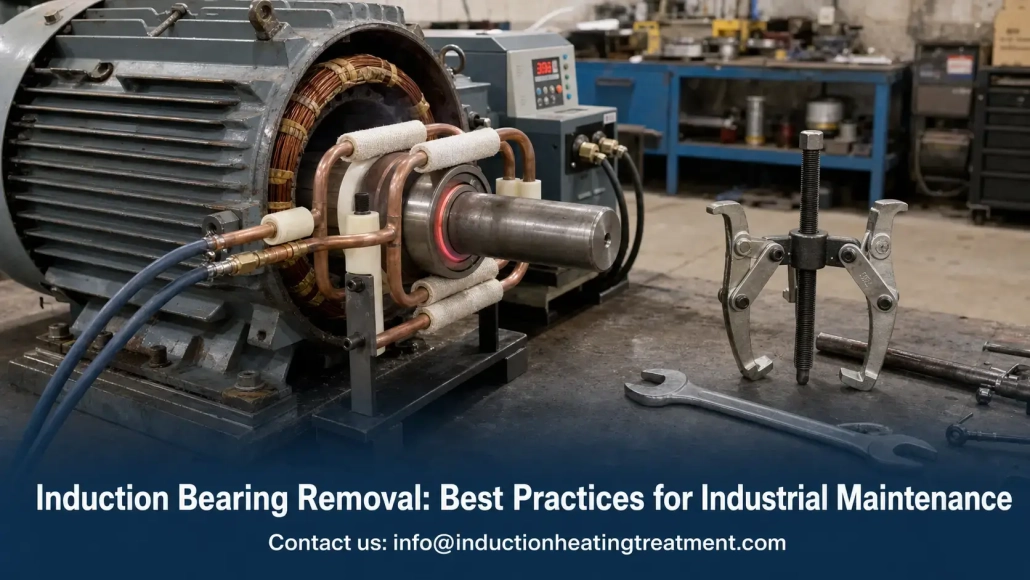
Induction Bearing Removal: 5 Best Practices to Protect Shafts and Cut Downtime
Induction bearing removal heats a seized bearing race until it expands off the shaft — no torch, no hours of fighting a hydraulic puller. The coil puts heat exactly where you need it: in the race, before the shaft has time to grow with it.
Every maintenance team knows the moment. The outer ring and rolling elements came off fine, and the inner race is still locked onto the journal by corrosion and interference fit. What happens in the next hour decides whether this stays a bearing change or becomes a shaft repair.
This guide covers the physics, the five practices that keep journals unscored, and what actually matters when you pick the equipment.
1. What Is Induction Bearing Removal?
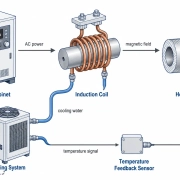
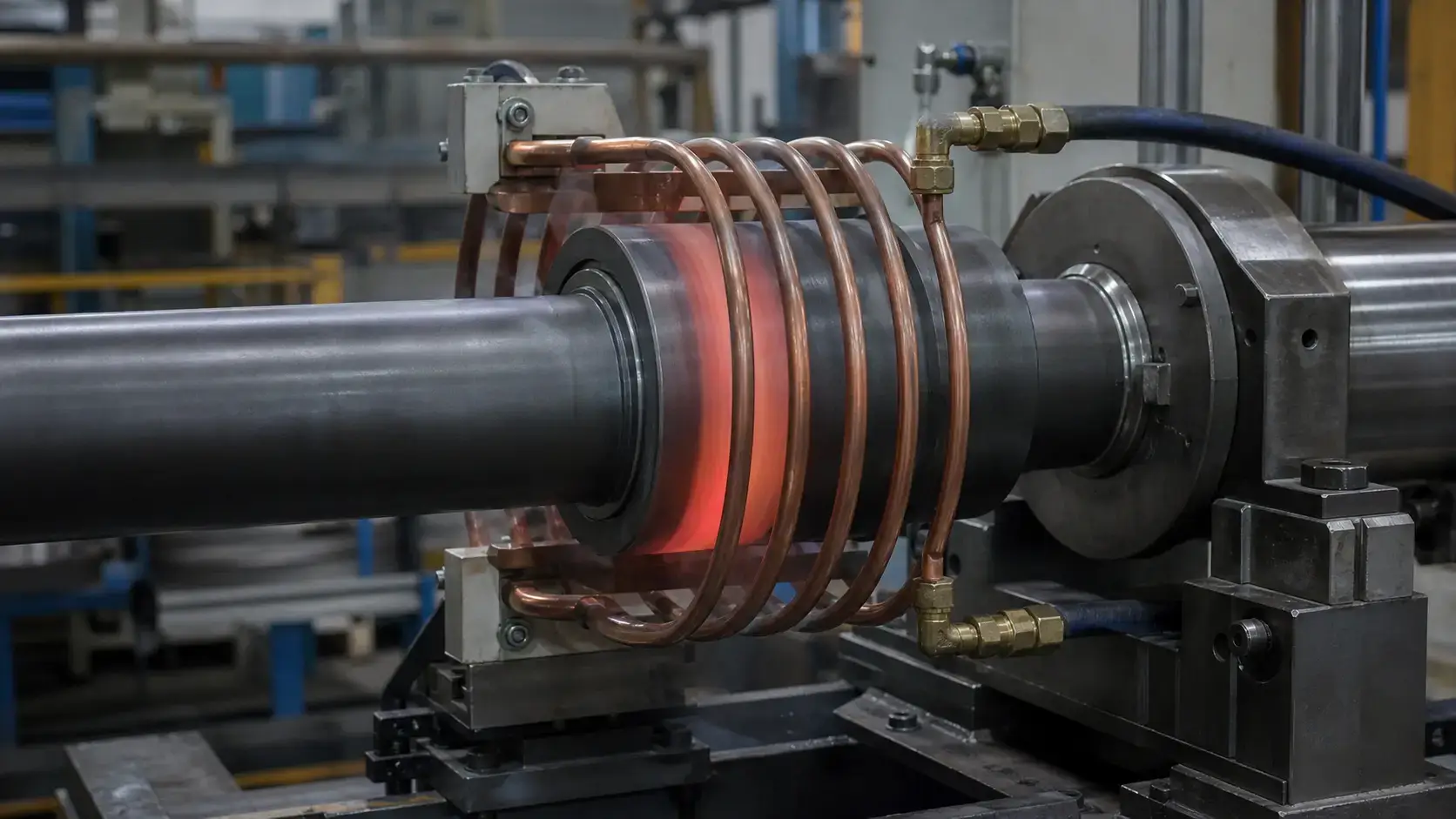
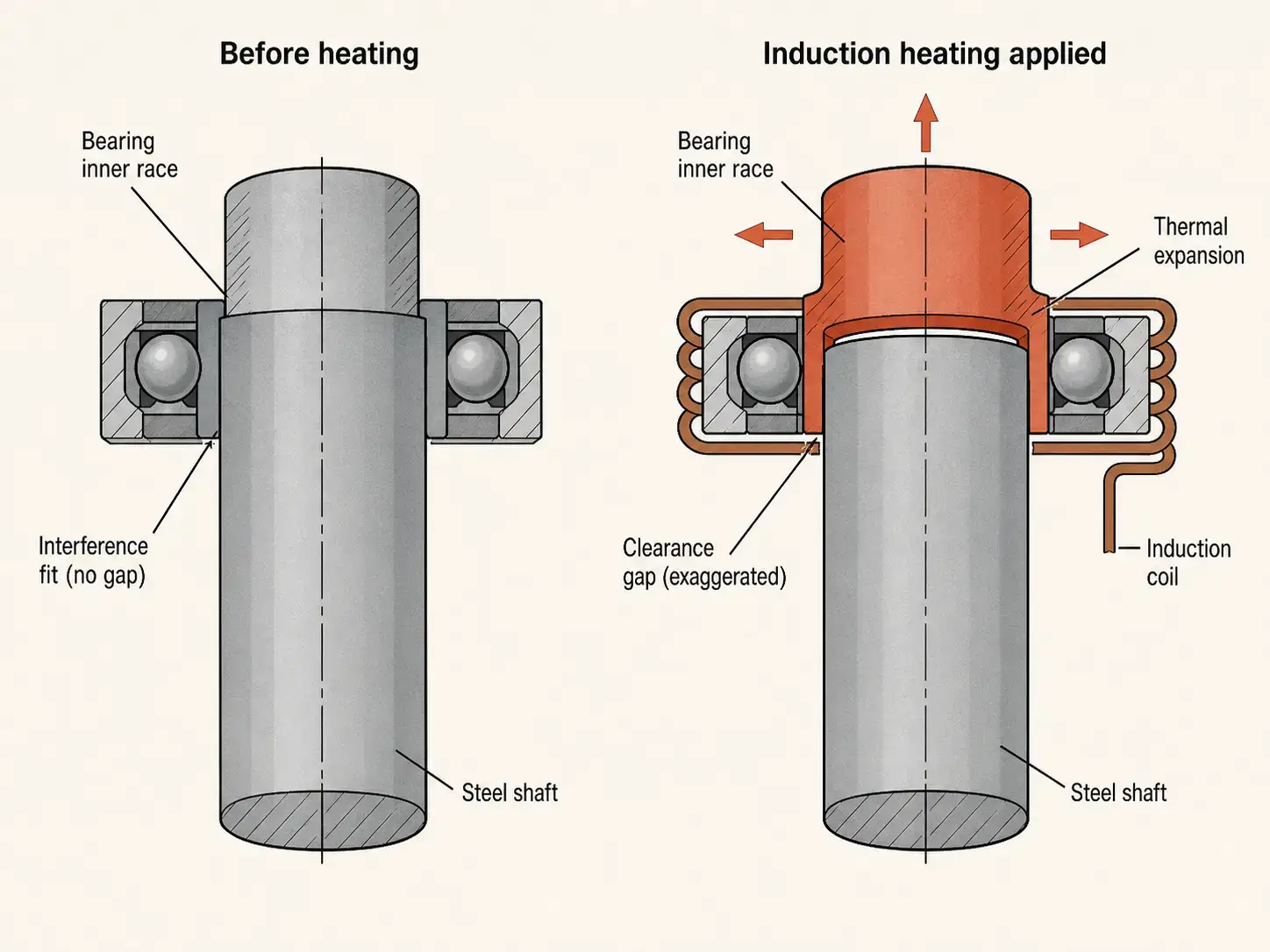
An induction coil wraps around the bearing race or fitted ring and induces eddy currents directly in it. The race heats from within, expands, and the interference fit that held it on the journal opens up. Pull it off while the shaft is still cool, and the job is done — often in under two minutes for a mid-size motor bearing.
The physics is the same electromagnetic induction used across heat treatment. The goal is different. Hardening chases metallurgical change; removal chases a temperature difference. You need the race 90–110°C hotter than the shaft underneath it, and you need that gap before conduction erases it.
It is the mirror image of induction shrink fitting: fitting heats a part to slide it on, removal heats a part to slide it off. Plants that already run a shrink fitting machine often cover both jobs with one system.
2. Why Induction Beats Torches and Pullers
Three methods dominate bearing removal: mechanical pulling, torch heating, and induction. The table shows where each one hurts.
| Factor | Induction | Torch | Puller Only |
|---|---|---|---|
| Shaft damage risk | Low — heat stays in the race | Hot spots temper journals | Scoring and galling |
| Heat control | Timed cycles, temperature feedback | Operator-dependent | None |
| Speed on seized fits | 30–90 seconds to expansion | Minutes, uneven | Hours on corroded fits |
| Fire safety | No open flame | Flame next to grease and oil | No flame, high stored force |
| Repeatability | Documented settings, same result | Varies by operator | Varies by fit condition |
A puller works fine on a bearing that wants to come off. On a corroded or galled fit, the force needed to break it free scores the journal or distorts the shoulder — and a scored journal on a large motor turns a routine bearing change into machining, sleeving, or a new rotor shaft.
Torch heat is whatever the operator’s wrist says it is. A hot spot on a hardened journal draws hardness locally, and you find out months later when the new bearing spins on a soft seat.
Induction removes the flame from the job. In plants with oil mist, grease, or combustible dust, that eliminates the fire watch and the hot work permit at many sites. Operators still handle a very hot part — the safety practices for PPE and hot-part handling apply in full.
It is also clean. No soot, no oxide bloom, no heat marks on the housing.
3. Where Induction Bearing Removal Works
The method fits any conductive fitted part that heats faster than whatever it sits on:
— Electric motor bearings and seized inner races
— Pump and compressor bearings
— Gears, sprockets, couplings, and sleeves on shafts
— Railway axle components
— Rolling mill bearings and chock maintenance
— Fan, blower, mining, and marine gearbox service
The highest-value case is the seized inner race. The bearing fails, the cage and rollers come out, and a ring of hardened steel stays behind on the journal. Cutting it off risks the shaft; grinding takes hours. A coil around the race expands it in under a minute, and it comes off with a fraction of the pulling force.
On large bearings and mill chocks, induction pairs with hydraulic pulling gear — the heat breaks the fit, the hydraulics handle the mass. Oversized parts need higher power and sometimes a custom coil. A small portable unit will not expand a 300 mm race faster than the heat soaks away into the shaft.
4. Five Practices That Protect the Shaft
The equipment heats fast. That is the point, and it is also the risk. Plan the job before you press start.
1. Inspect before you heat. Check for snap rings, shaft nuts, set screws, and tack welds. Induction expands metal; it does not unlock hardware. Heating against a locked component builds stress with nowhere to go.
2. Clean the heating zone. Grease and paint smoke at around 200°C, flame or not. Wipe down the race and everything near it — you want full visibility when you are about to pull a hot part.
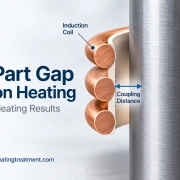
3. Couple the coil to the race, not the shaft. Coil geometry decides where the energy goes. A coil that heats the shaft along with the race cancels the clearance you are trying to create. This is the most frequent setup error, and it makes removal harder than doing nothing at all.
4. Heat fast, pull immediately. Slow heating gives conduction time to carry heat into the journal, and the shaft grows with the race. Reach removal temperature in 30–90 seconds where the part allows it, then pull without pause. Heating past that point only spreads the heat where you do not want it.
5. Set a shaft temperature limit before the job. Seals, lubricant, windings, and hardened surfaces all have limits — keep hardened journals below roughly 150°C and shield anything nearby that melts. Temperature sticks, an infrared sensor, or the machine’s own control will hold the line, but only if the limit was defined before power-on.
And pull with real tooling. Induction cuts the required force, but the race is still heavy and still 120°C — use a rated puller or lifting fixture, and keep hammers out of it.
5. Choosing the Equipment
Size the power supply to the largest race you expect and the removal time you need. Undersized power heats slowly, and slow heating on removal work defeats itself — the shaft catches up. The same logic as power selection for process heating applies here, with speed weighted heavier.
Frequency sets where the heat concentrates. Thin races take higher frequency and shallow heating; thick sleeves and chocks want lower frequency and deeper penetration. How frequency affects induction heating covers the mechanics.
Coil choice comes down to access:
| Coil Type | Best For |
|---|---|
| Split coil | Parts that cannot slide through a closed coil |
| Flexible cable | Large, irregular, or field assemblies |
| Rigid circular coil | Repeatable shop work on similar part sizes |
| Custom coil | Recurring removals in production maintenance |
Walk the plant with representative parts before buying. A bearing on an open shaft end is easy. A race inside a housing, tight against a shoulder, dictates the coil — and often rules out a standard yoke-style heater entirely.
Units above roughly 10–15 kW run water-cooled coils and leads, and duty cycle depends on the cooling system keeping up during back-to-back heats. For field work — mill stands, platforms, installed machines — weight, cable length, and input power decide more than nameplate kilowatts. Portable induction heaters cover most motor and pump bearing work; shop systems earn their place on volume and big parts.
6. When Induction Is Not the Answer
Skip induction when:
— The coil physically cannot reach the race
— Nearby seals, windings, or polymer parts cannot be shielded from heat
— The component is mechanically locked and cannot move once expanded
— The shaft is already damaged and the assembly is coming apart anyway
— The site cannot supply the electrical or cooling requirements
In those cases, cutting, hydraulic pressing, or full teardown is the safer call. Induction earns its keep on parts worth protecting — when the shaft is scrap anyway, a grinder is cheaper.
Key Takeaway
Induction bearing removal wins by heating the race faster than the shaft can follow — the fit opens, the puller does almost nothing, and the journal stays untouched. Speed is the discipline: fast heat, immediate pull, a temperature limit set before anyone touches the power button. Match the coil to your worst-access part, and the equipment pays for itself the first time it saves a rotor shaft.
FAQ
Q: Can induction bearing removal damage the shaft?
A: Only through slow heating or a badly placed coil — both push heat into the journal instead of the race. Fast heating, correct coil coupling, and a defined shaft temperature limit keep the journal cold and unscored.
Q: How hot does the race need to get?
A: Hot enough to open the interference fit — typically 90–110°C above the shaft temperature for standard fits, higher for heavy interference or corrosion. The number that matters is the difference between race and shaft, and it decays within seconds once heating stops. Pull immediately.
Q: Can a bearing mounting heater also handle removal?
A: Sometimes. Shrink fitting and removal share the same physics, and one machine covers both jobs when the parts fit its coil and power range. Seized races and large assemblies usually demand more power and more coil options — split coils or flexible cables — than a small mounting heater offers.
Stop Sacrificing Shafts to Seized Bearings
Send us your worst removal job — the seized race, the tight housing, the shaft you cannot afford to score. We will spec the power, frequency, and coil that gets it off.