
Is Induction Heating Safe? 4 Essential Safety Facts & Best Practices for Operators
Is induction heating safe? If you are evaluating induction heating equipment for your workshop or production line, safety is likely your first concern — and for good reason. Any technology that heats metal to over 1000°C in seconds deserves a serious safety conversation. The short answer is: yes, induction heating is safe when operated correctly. It is inherently safer than flame heating, gas furnaces, and resistance heating in many ways. But like any industrial equipment, it has specific risks you need to understand. This article covers the 4 essential safety facts every operator and buyer should know.
📋 Table of Contents
- How Safe Is Induction Heating Compared to Traditional Methods?
- Fact 1: No Open Flame — Reduced Fire & Explosion Risk
- Fact 2: Electromagnetic Fields — What the Research Actually Says
- Fact 3: Burn Hazards — The Number One Real Risk (and How to Prevent It)
- Fact 4: Electrical Safety — Standards, Grounding & Shock Prevention
- 5 Safety Best Practices for Induction Heating Operators
- 2 Common Safety Myths Debunked
- Key Takeaway
- Frequently Asked Questions
How Safe Is Induction Heating Compared to Traditional Methods?
Before diving into specific risks, let’s put things in perspective. When people ask “is induction heating safe,” they are usually comparing it to alternatives they already know — gas torches, flame furnaces, or resistance heaters. Here is how induction stacks up:
| Safety Factor | Induction Heating | Gas/Flame Heating | Resistance Furnace |
|---|---|---|---|
| Open Flame | ✅ None | ❌ Present | ✅ None |
| Combustible Gas Risk | ✅ None | ❌ High | ✅ None |
| Ambient Heat Exposure | ✅ Localized | ❌ Widespread | ⚠️ Radiant |
| Burn Risk to Operator | ⚠️ Moderate | ❌ High | ❌ High |
| Fume / Exhaust Emission | ✅ Minimal | ❌ Significant | ⚠️ Varies |
| Electrical Hazard | ⚠️ Present | ✅ Minimal | ❌ High |
The takeaway is clear: induction heating eliminates the two biggest hazards of traditional heating — open flame and combustible fuel. Its risks are more controlled and manageable with proper training and PPE. Now let’s look at each safety dimension in detail.
Fact 1: No Open Flame — Reduced Fire & Explosion Risk
This is the single biggest safety advantage of induction heating. Because heat is generated inside the workpiece itself through electromagnetic induction, there is no flame, no hot exhaust, and no combustible gas supply line. In a workshop where flammable cutting oils, solvents, or dust may be present, this fundamentally changes the risk profile.
A gas furnace operating at 1200°C radiates heat into the entire room. An induction coil heats only the target part — the surrounding air stays cool. For a deeper dive into how this process works, read our guide on how induction heating works.
Practical implication: In many facilities, switching from gas to induction can reduce fire insurance premiums and simplify ventilation requirements. No fuel storage, no gas leak detectors, no combustion exhaust ducting.
Fact 2: Electromagnetic Fields — What the Research Actually Says
One of the most common questions people search for is “is induction heating bad for health?” The concern is understandable — we are talking about powerful electromagnetic fields (EMF). But the science is reassuring.
Industrial induction heating operates at frequencies ranging from 50 Hz to several hundred kHz — well below the ionizing radiation range (X-rays, gamma rays). According to the International Commission on Non-Ionizing Radiation Protection (ICNIRP), the EMF levels at standard operator distances (1–2 meters from the coil) fall within occupational exposure limits. The key variable is distance: EMF field strength drops off rapidly as you move away from the coil — following the inverse-square law, doubling your distance reduces exposure to roughly one-quarter.
Who should take extra precautions? Operators with active medical implants — specifically pacemakers and insulin pumps — should consult their physician and the equipment manufacturer before working near induction heating systems. Most modern equipment includes EMF shielding and warning signage for this reason.
Fact 3: Burn Hazards — The Number One Real Risk (and How to Prevent It)
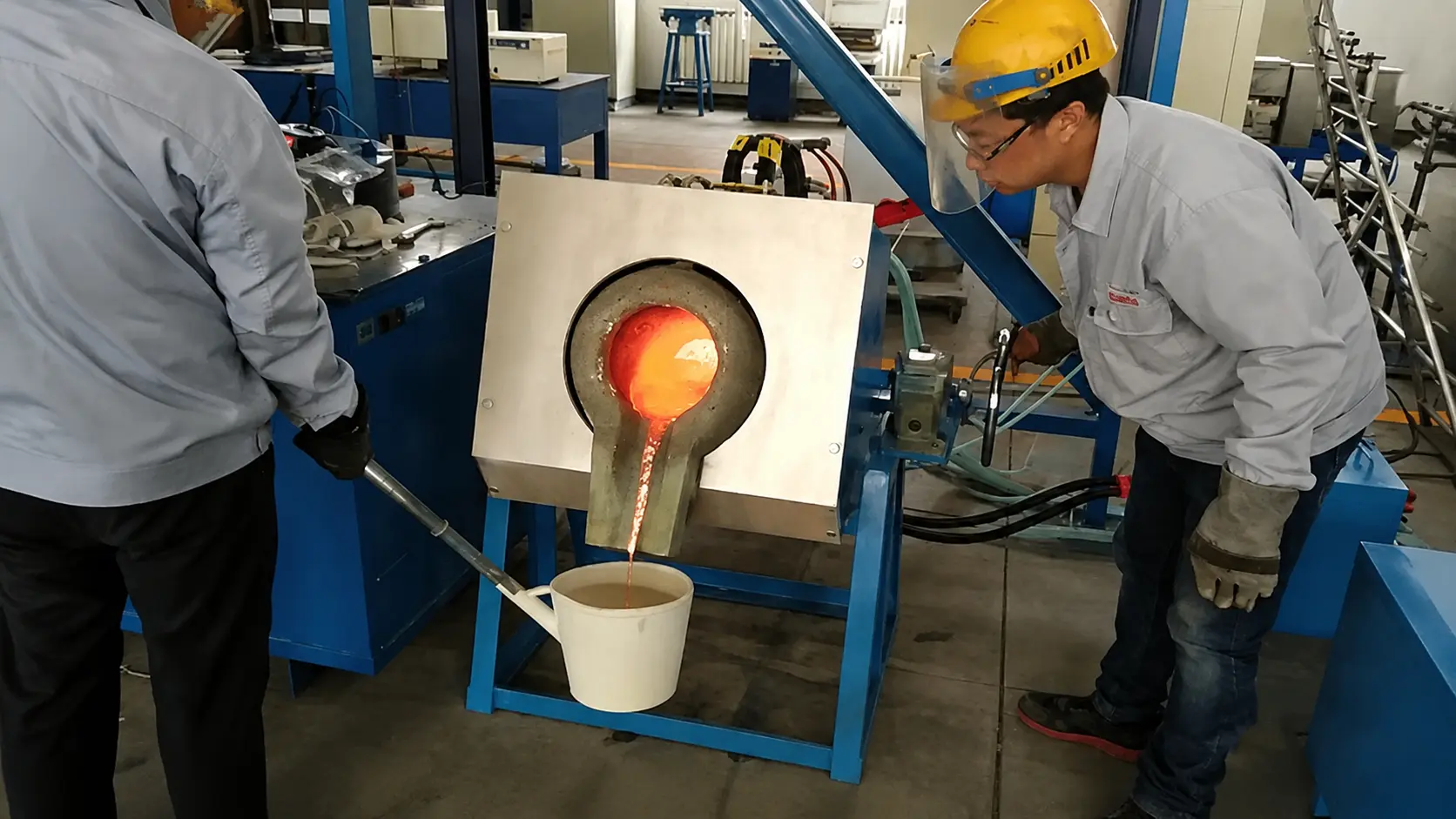
Let’s be direct: does induction heating burn you? Yes — if you touch a workpiece that just came out of the coil, you will get burned. The workpiece itself can reach 800–1200°C, and unlike a gas flame, it does not look obviously dangerous once removed from the coil. The part may appear dark but still be hot enough to cause a severe burn. This is the most common real-world injury in induction heating shops.
How to prevent burns:
- Always wear heat-resistant gloves rated for the maximum workpiece temperature
- Mark a clearly visible hot-part drop zone with heat-resistant matting
- Use infrared temperature sensors rather than touching parts to check if they are cool
- Never handle a freshly heated part with bare hands — assume it is hot until confirmed otherwise
- Keep a burn first-aid kit at the workstation
Fact 4: Electrical Safety — Standards, Grounding & Shock Prevention
Induction heating equipment runs on high-voltage, high-current electricity. So “can you get shocked by an induction heater?” is a legitimate question. The answer: modern industrial induction heaters are designed with multiple layers of electrical protection, but improper maintenance or DIY modifications can create shock hazards.
Here are the safety design features built into every properly manufactured induction heating system:
- Ground-fault protection — the power supply continuously monitors for leakage current and shuts down within milliseconds if a fault is detected
- Interlock safety switches — access panels and coil connections trigger automatic power cutoff when opened
- Emergency stop (E-stop) — a prominently placed mushroom button that instantly kills all power to the coil
- Insulated coil design — work coils are electrically insulated to prevent accidental contact with live conductors
Regarding standards: does OSHA have induction heater standards? OSHA does not have a single standard dedicated to induction heating, but the technology falls under several existing regulations — including 29 CFR 1910 Subpart S (Electrical Safety) and 29 CFR 1910.132 (PPE). In Europe, applicable standards include IEC 60519-1 (Safety in electroheating installations) and the EMC Directive 2014/30/EU. Always verify that your equipment carries the relevant certifications (CE, UL, or equivalent) for your region.
5 Safety Best Practices for Induction Heating Operators
These are the non-negotiable daily habits that keep your workshop safe:
- Wear the right PPE every time — Heat-resistant gloves, safety glasses (ANSI Z87.1 or equivalent), long-sleeve natural-fiber clothing, and steel-toe boots. Synthetics melt — don’t wear them.
- Inspect coils before every shift — A damaged or loose coil connection can arc and create both an electrical and burn hazard. Replace worn coils immediately.
- Mark the hot zone clearly — Use floor tape or paint to designate the area around the machine where hot parts are handled. Only trained operators enter this zone.
- Check cooling flow at startup — Verify that your water or air cooling is running before you energize the coil. A dry start can destroy a power supply in seconds.
- Train every operator — Never assume a new hire “figures it out.” Formal training on startup, shutdown, emergency procedures, and what to do if something goes wrong should be mandatory.
2 Common Safety Myths Debunked
Myth 1: “Induction heating causes cancer.”
False. The electromagnetic fields used in induction heating are non-ionizing — they do not have enough energy to damage DNA or cause cancer. This is the same category of radiation as radio waves and Wi-Fi signals. Decades of occupational health research have found no causal link between industrial EMF exposure and cancer at levels below ICNIRP limits.
Myth 2: “If the coil is not glowing red, the machine is safe to touch.”
Dangerously false. The induction coil itself may remain cool to the touch (it is water-cooled), while the workpiece inside it is at forging temperature. Never use visual cues alone to judge safety — always use temperature instruments and follow lockout/tagout procedures before touching any part of the system.
Key Takeaway
✅ Is induction heating safe?
- Yes — safer than gas/flame heating in all key metrics: no open flame, no fuel storage, no exhaust fumes
- The number one real risk is contact burns from hot workpieces — preventable with PPE, training, and clear zone marking
- EMF exposure at operator distance is within international safety limits — pacemaker users should consult a physician
- Modern equipment includes ground-fault protection, safety interlocks, E-stop, and thermal monitoring
- Compliance with OSHA 29 CFR 1910 / IEC 60519-1 / CE marking ensures baseline electrical safety
- Most accidents are caused by bypassing safety features or skipping training — not by inherent danger in the technology
Frequently Asked Questions
Is induction heating safe for operators with medical implants?
Operators with pacemakers, insulin pumps, or other active implanted medical devices should consult both their physician and the equipment manufacturer before working near induction heating systems. Most manufacturers specify a minimum safe distance (typically 1–2 meters), but individual risk varies by implant type and machine power level. When in doubt, post clear EMF warning signage and restrict access for affected personnel.
Does induction heating produce harmful fumes?
Induction heating itself produces no combustion fumes — there is nothing burning. However, heating certain workpieces can release fumes from surface contaminants such as cutting oil, anti-rust coating, or paint residue. Standard workshop ventilation is generally sufficient, but if you are heating oil-coated parts in high volume, localized fume extraction is recommended.
What happens if the cooling system fails during operation?
Every properly designed induction heating system includes flow sensors that trigger an automatic shutdown within seconds of detecting low coolant flow. The power supply, capacitors, and coil are all monitored. If your system lacks flow monitoring, it should be retrofitted — this is not optional safety equipment. For detailed guidance, see our article on induction heating water cooling systems.
Need a Safe, Certified Induction Heating System?
Our equipment meets international safety standards — CE, ISO, and full compliance documentation available. Tell us your application and we’ll recommend the right machine with complete safety specifications.


