In forging production, induction heating rapidly heats metal billets (e.g., steel, copper, aluminum) to the temperature required for forging (typically 800℃~1250℃), suitable for preheating components like crankshafts, connecting rods, gears, and flanges prior to forging. Compared with traditional coal-fired/gas-fired furnaces, induction heating enables precise control over the heating area and temperature of billets, avoiding local overburning or uneven heating. It also reduces heating time by more than 50%, significantly improving forging precision and production efficiency. Additionally, it features no open flames or exhaust gases, complying with environmental protection requirements.
In the hot rolling or extrusion processes of pipes, profiles, and wires, induction heating is used for continuous online heating of metal base materials to ensure good plasticity during rolling/extrusion. Examples include induction heating of pipe billets before hot rolling of seamless steel pipes and preheating of billets before extrusion of aluminum profiles. This enables automated continuous production with a heating temperature uniformity error of ≤±5℃, substantially reducing material waste.
Induction quenching is one of the most mature applications of induction heating. It rapidly heats the surface (or local areas) of metal workpieces using high-frequency/medium-frequency induction current, followed by rapid cooling to achieve the performance requirement of “hard surface and tough core”.
- Application Scenarios: Surface quenching of critical components such as automotive crankshafts, camshafts, gears, bearings, machine tool guide rails, and engineering machinery track shoes;
- Advantages: Controllable quenching layer depth (0.5mm~10mm), minimal deformation, no need for extensive subsequent finishing, and production efficiency 3~5 times that of traditional flame quenching.
- Tempering: Induction heating performs low-temperature tempering (150℃~350℃) on quenched workpieces to eliminate internal stress, stabilize the structure, and prevent workpiece cracking;
- Annealing: Used for annealing cold-rolled steel plates, copper pipes, aluminum foils, etc. Induction heating achieves uniform softening, restoring material plasticity for subsequent processing (e.g., stamping, stretching).
Induction normalizing of cast steel and iron castings refines grains, improves the structure, and enhances workpiece strength and toughness, suitable for performance optimization of heavy machinery castings and automotive component blanks.
Induction melting furnaces heat metals using eddy currents generated by electromagnetic induction, suitable for melting precious metals (gold, silver, platinum) and special metals (titanium, zirconium, nickel-based alloys). Key benefits include:
- Rapid melting speed and uniform metal composition;
- Good crucible tightness, reducing metal oxidation loss;
- Precise temperature control, enabling vacuum melting (for high-end alloy production).
In casting production lines, induction heating insulates molten steel/iron in transfer ladles to maintain a constant pouring temperature, preventing casting defects such as cold shuts and shrinkage cavities.
Leveraging the principle of thermal expansion and contraction of metals, induction heating locally heats components (bearings, gears, bushings) to expand them for assembly with shafts; conversely, heating components facilitates disassembly. This replaces traditional hammering and press-fitting methods, avoiding component damage.
In the metal surface treatment industry, induction heating is used for drying and curing powder coatings and electrophoretic coatings. Compared with hot air drying, it improves heating efficiency by over 40% and enhances coating adhesion.
Though not a core metal processing scenario, induction heating is also applied to preheating food cans before sealing and heat-sealing plastic packaging films (an extended application of industrial heating).
- High Efficiency & Energy Conservation: Thermal efficiency reaches 80%~90%, far exceeding traditional resistance heating (40%~50%) and flame heating (30%~40%);
- Precise Control: Heating temperature, area, and time can be precisely adjusted via power supply parameters, ensuring high product consistency;
- Environmental Protection & Safety: No smoke, harmful gas emissions, or open flames, reducing fire risks and improving workshop operating conditions;
- Automation Compatibility: Integratable with robots and conveyor lines for fully automated production, lowering labor costs.

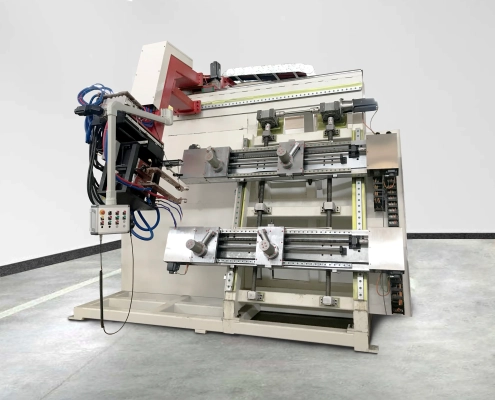 https://www.inductionheatingtreatment.com/wp-content/uploads/2026/08/Inclined-vertical-raceway-quenching-machine-tool-scaled.webp
1920
2560
cui yanan
https://www.inductionheatingtreatment.com/wp-content/uploads/2025/12/kclogo2.webp
cui yanan2026-08-04 03:02:572026-09-22 08:37:01Inclined Vertical Raceway CNC Quenching Machine
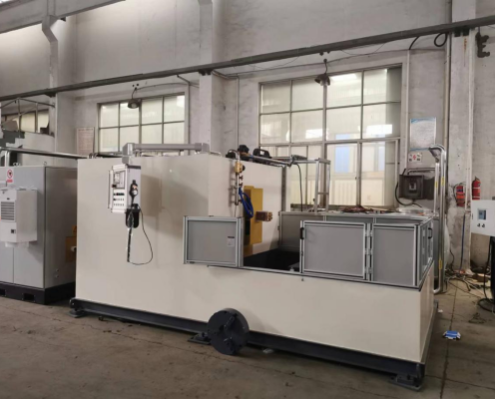 https://www.inductionheatingtreatment.com/wp-content/uploads/2026/07/Dual-station-gantry-quenching-equipment-1.png
401
534
cui yanan
https://www.inductionheatingtreatment.com/wp-content/uploads/2025/12/kclogo2.webp
cui yanan2026-07-31 05:41:162026-09-22 08:33:17Gantry Dual-Station Slewing Bearing Internal Gear Induction Hardening Machine
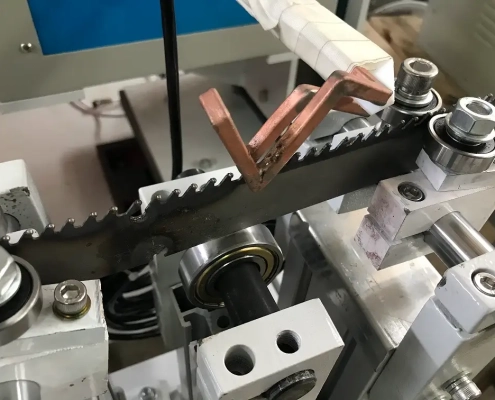 https://www.inductionheatingtreatment.com/wp-content/uploads/2025/12/Saw-Blade-Induction-Quenching-Treatment-Machine.webp
756
1008
inductionheatingtreatment
https://www.inductionheatingtreatment.com/wp-content/uploads/2025/12/kclogo2.webp
inductionheatingtreatment2025-12-11 09:10:062025-12-30 07:13:55Saw Blade Induction Quenching Treatment Machine


