IV.Why Automatic Blade Flipping Matters?
For double-edged blades, both sides must deliver comparable cutting performance throughout their service life. Even minor differences in heating position or process conditions can cause variations in hardness or wear resistance between the two edges.
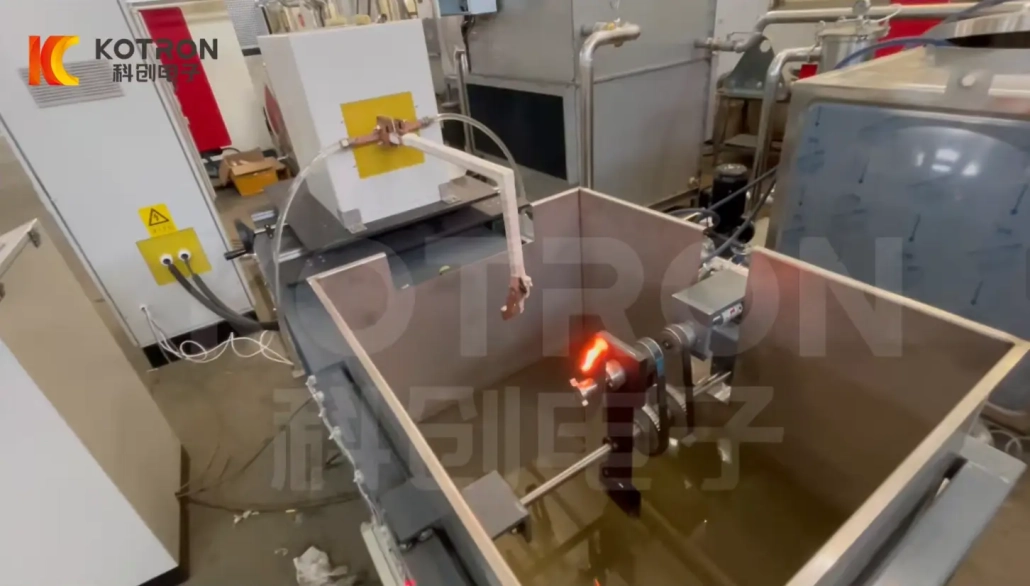
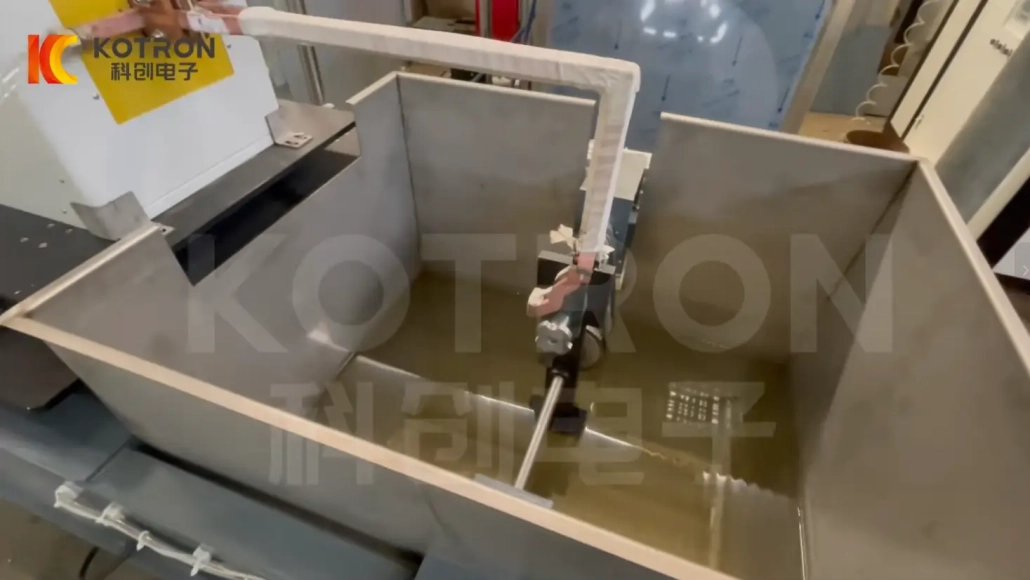
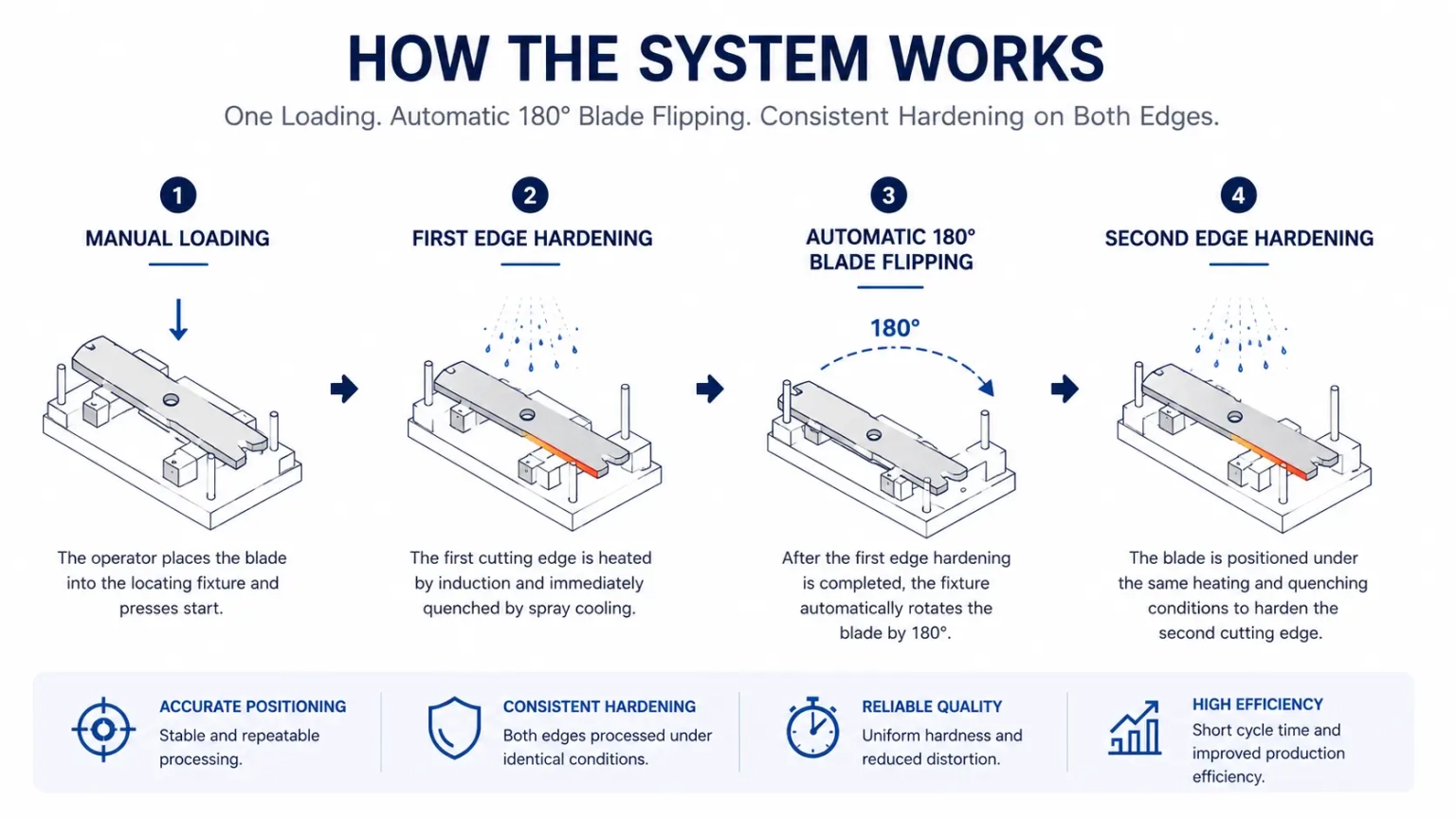
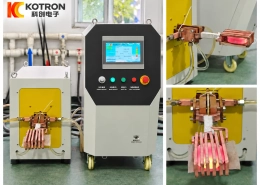
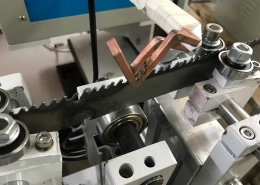
The automatic flipping mechanism solves this problem by keeping the workpiece within the same fixture throughout the entire hardening cycle. After the first edge is completed, the blade is rotated automatically—without being removed and repositioned by hand. This ensures the second edge is processed under the same induction coil, with the identical heating path and process parameters as the first.
Eliminating manual handling between cycles also reduces production time and operator intervention, but the real value lies in repeatability: every blade, every cycle, receives the same balanced heat treatment, regardless of batch size.
This makes the system particularly suitable for manufacturers producing lawn mower blades, mulching mower blades, wood chipper blades, and other double-edged industrial tools where balanced edge performance is essential.
Key Advantages at a Glance
- No manual repositioning between hardening cycles
- Identical heating conditions for both cutting edges
- Reduced handling time during production
- Improved consistency across large production batches