
Induction Annealing
Induction annealing is a high-efficiency, eco-friendly metal heat treatment process powered by induction heating technology. Designed to refine metal microstructure, this advanced technique involves heating workpieces to a precise temperature via electromagnetic induction, holding the temperature for a controlled duration, and then cooling them slowly. Its core goals are to eliminate internal stress, soften materials, enhance ductility and toughness, and optimize machinability—laying a solid foundation for high-quality downstream processing.
How It Works: Controlled, Uniform & Reliable
- Targeted Induction Heating
Workpieces are placed inside a custom-designed induction coil. When alternating current flows through the coil, a high-frequency magnetic field is generated, inducing eddy currents within the metal. The thermal effect of these currents heats the workpiece uniformly—either across the entire surface or in specific localized areas—to the optimal annealing temperature (typically above the metal’s recrystallization point).
- Precision Holding & Slow Cooling
The workpiece is held at the target temperature for a preset time to ensure consistent internal microstructure transformation. It is then cooled slowly (via furnace cooling, air cooling, or other regulated methods). This gradual cooling allows deformed metal grains to recrystallize into uniform, fine equiaxed grains, effectively eliminating residual stress accumulated during casting, forging, or cold working.
Why Choose Induction Annealing?
- Clean & Green Production
The process produces no open flames, combustion exhaust, or excessive noise. It also requires a smaller footprint compared to traditional annealing equipment, aligning with strict global environmental standards and supporting sustainable manufacturing practices.
- Uniform Heating & Consistent Quality
Electromagnetic induction enables precise temperature control, avoiding the hot spots and uneven heating issues common in traditional furnace annealing. This ensures consistent mechanical properties across every workpiece, reducing rejects and improving product reliability.
- Energy Efficiency & Time Savings
Not like furnace annealing—which requires preheating the entire furnace body—induction annealing directly heats the workpiece. This cuts heating time by up to 70% and minimizes heat loss to the surrounding environment, slashing energy costs and boosting production throughput.
- Flexible & Fully Automable
By adjusting coil design, current frequency, and heating duration, the process can be tailored to workpieces of all sizes and shapes—from tiny precision components to large structural parts. It integrates seamlessly with automated production lines, enabling unmanned, continuous operation for mass manufacturing.
Typical Application
Welding Post-Treatment: Annealing welded joints to eliminate welding stress, reducing the risk of deformation or cracking in critical components like pressure vessels and structural steel.
Precision Component Manufacturing: Refining the microstructure of precision shafts, gears, and molds to ensure dimensional stability during high-precision machining and extend service life.
Metal Forming & Fabrication: Softening cold-rolled steel sheets, drawn wires, and stamped parts to prevent cracking during bending, stretching, or deep drawing processes.
| Induction Annealing | Traditional Furnace Annealing |
|---|---|
| Ultra-high: Directly heats workpiece; no heat loss on furnace body. Cuts heating time by 60–80%. | Low: Needs to preheat furnace first; massive heat dissipation to surroundings. Heating time is 3–5 times longer. |
| Excellent: Precise control via coil design and current parameters; no local overheating or cold spots. Consistent hardness and microstructure across workpieces. | Poor: Temperature gradient exists inside furnace; easy to cause uneven heating. Workpiece performance varies greatly in batches. |
| Low: Energy utilization rate reaches 85%+; only consumes power during workpiece heating. | High: Energy utilization rate is less than 40%; large energy waste on furnace insulation and heat dissipation. |
| Minimal: Localized heating (if needed) reduces overall thermal stress; slow cooling process is controllable. | Severe: Whole-piece heating leads to large thermal expansion and contraction; high deformation rate for precision components. |
| Fully compatible: Seamlessly integrates with automated production lines; supports unmanned continuous operation and batch processing. | Low compatibility: Relies on manual loading/unloading; difficult to connect with automatic systems; high labor cost. |
| Eco-friendly: No open flame, no exhaust gas, low noise; small equipment footprint, suitable for clean workshops. | Polluting: Furnaces fueled by coal, gas or oil produce exhaust emissions; high noise; large space occupation. |
| High: Custom induction coils can be designed for irregular or complex-shaped workpieces; supports local annealing. | Low: Only suitable for overall annealing of regular workpieces; cannot realize targeted heating for specific areas. |
 https://www.inductionheatingtreatment.com/wp-content/uploads/2025/12/Automotive-anti-collision-beam-pipe-induction-heating-treatment-production-line-1-1.webp
606
1080
inductionheatingtreatment
https://www.inductionheatingtreatment.com/wp-content/uploads/2025/12/kclogo2.webp
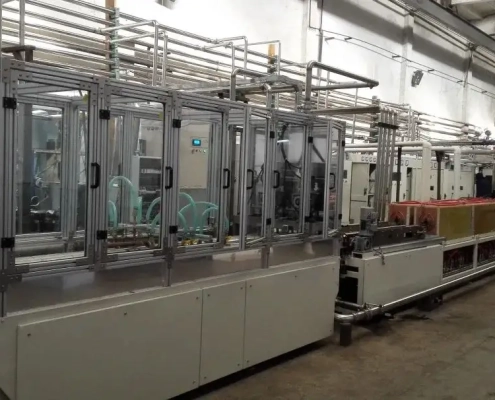
inductionheatingtreatment2025-12-11 08:45:072025-12-30 07:14:49Automotive anti-collision beam pipe induction heating treatment production line
 https://www.inductionheatingtreatment.com/wp-content/uploads/2025/12/steel-wire-induction-heating-production-line.webp
1000
1000
inductionheatingtreatment
https://www.inductionheatingtreatment.com/wp-content/uploads/2025/12/kclogo2.webp
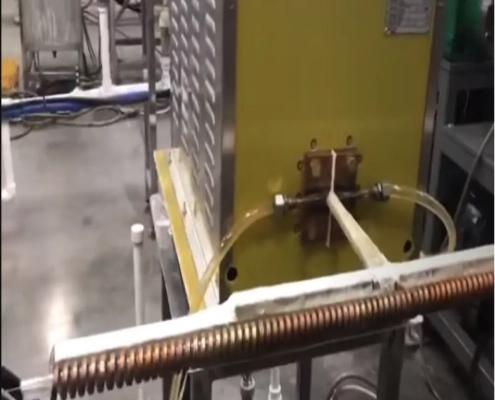
inductionheatingtreatment2025-12-11 07:39:072025-12-30 07:15:02Induction heating treatment production line for Steel wire
 https://www.inductionheatingtreatment.com/wp-content/uploads/2025/11/Induction-Heating-Treatment-Processing-Center-.webp
1908
1785
inductionheatingtreatment
https://www.inductionheatingtreatment.com/wp-content/uploads/2025/12/kclogo2.webp
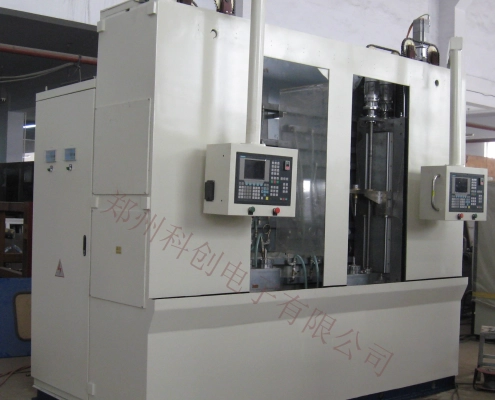
inductionheatingtreatment2025-11-05 03:45:542025-12-30 07:15:56Induction Heating Treatment Processing Center


