
Induction Heating Treatment in Oil & Gas
In the high-risk, harsh operating environments of the oil and gas sector—where extreme pressures, corrosive conditions, and non-negotiable safety standards are the norm—induction heating technology stands out with its transformative, efficiency-driven features, serving as a pivotal solution to revolutionize core processes across the upstream, midstream, and downstream value chains.
Abandoning the drawbacks of traditional heating methods (flame heating, resistance heating), such as low energy efficiency, uneven temperature distribution, and prominent open-flame safety hazards, induction heating leverages the principle of electromagnetic induction to enable target metal components to generate heat internally. This non-contact heating mode reduces heat transfer losses by up to 50%, delivers pinpoint localized temperature control with minimal heat-affected zones (HAZ), and eliminates harmful emissions and fire risks. These advantages make induction heating the preferred choice for oil and gas applications where reliability, safety, and cost-effectiveness are paramount.
- Boosting Wellsite Productivity and Reliability
Induction heating is a critical enabler for upstream drilling and production activities:
Drill String Heat Treatment: Enables rapid, uniform heating of drill pipe joints for welding and quenching/tempering processes, enhancing mechanical strength and corrosion resistance to withstand extreme downhole pressure and abrasive conditions.
Hydrate Prevention: Preheats wellbore fluids and pipeline sections to inhibit hydrate formation, eliminating pipeline blockages that cause costly production downtime.
On-Site Equipment Maintenance: Portable induction heating systems enable quick, flame-free heating for component repair and fitting, significantly cutting maintenance time and reducing operational disruptions.
- Pipeline : Ensuring Safe and Efficient Pipeline Network Operation
Pipeline Welding: Achieves high-quality induction brazing and fusion welding of large-diameter steel pipelines, producing weld joints with superior strength and airtightness that fully meet the industry’s stringent pressure standards, and is suitable for large-scale pipeline laying projects.
Anti-Corrosion Coating Curing: Delivers uniform, controllable heating for the curing of external pipeline anti-corrosion coatings, improving coating adhesion and durability, and extending the service life of pipelines in corrosive soil and marine environments.
Emergency Repair: Enables rapid localized heating of damaged pipeline sections for hot-tapping and emergency patch welding, eliminating the need for full pipeline shutdown and minimizing economic losses caused by network outages.
- Refining and Processing: Optimizing Process Stability and Equipment Longevity
Reactor and Heat Exchanger Heating: Provides stable, adjustable heat sources for various refining reaction units, precisely controlling reaction temperatures to improve product yield and quality consistency.
Key Component Heat Treatment: Conducts quenching and tempering processes on critical equipment parts such as pumps, valves, and pressure vessels, enhancing their wear resistance and fatigue resistance, extending equipment maintenance intervals, and reducing operation and maintenance costs.
Clean Production Assurance: The flame-free, smoke-free heating process meets the explosion-proof and environmental protection requirements of refining workshops, reducing potential safety hazards and helping enterprises comply with strict environmental regulations.
 https://www.inductionheatingtreatment.com/wp-content/uploads/2026/09/bent-copper-tube-induction-brazing.webp
1086
1448
cui yanan
https://www.inductionheatingtreatment.com/wp-content/uploads/2025/12/kclogo2.webp
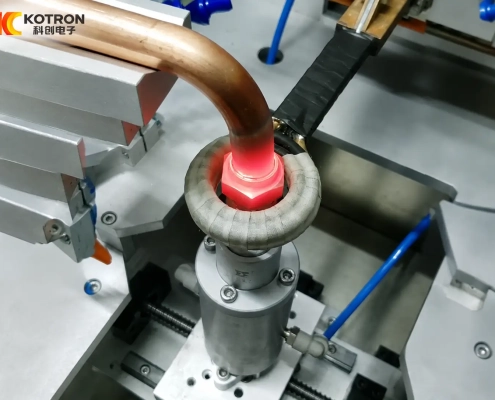
cui yanan2026-09-04 03:43:192026-09-08 03:49:35Induction Brazing for HVAC & Refrigeration Copper Components
 https://www.inductionheatingtreatment.com/wp-content/uploads/2025/12/Copper-Tube-Manifold-Welding-1.webp
500
500
inductionheatingtreatment
https://www.inductionheatingtreatment.com/wp-content/uploads/2025/12/kclogo2.webp
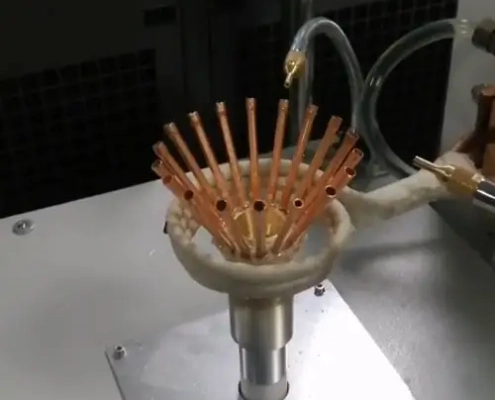
inductionheatingtreatment2025-12-18 01:53:592026-08-05 07:23:24Copper Tube Manifold Welding


